


One milliliter of a USD $200 face serum contains, on average, 18 to 22 drops. The dropper tube inner diameter determines how many drops your customer gets per actuation. Few brands specify it. Fewer suppliers explain why it matters.
Custom dropper design requires specifying four independent components: bottle body, collar, dispensing tube, and bulb material, with each selection affecting dosing accuracy, chemical compatibility, and leak-free performance.
Most cosmetic brands ordering custom dropper packaging for the first time specify only two things: bottle size and color. They miss the engineering decisions that determine whether the product ships on time, passes leakage testing, and delivers a consistent drop volume throughout the product lifecycle. This article covers the six design specification areas that separate a functional dropper from a field failure, written from the perspective of a cosmetic packaging manufacturer in China that produces these assemblies daily.
What Is a Custom Dropper Assembly? The Four Components Every Brand Must Specify
A dropper bottle assembly is a four-component dispensing system that includes a bottle body, a collar or cap, a dispensing tube (pipette), and a compressible bulb. Each component must be specified independently. Matching the collar thread count to the bottle neck finish is essential to prevent leakage. Missing this specification is the most common sourcing error cosmetic brands make.
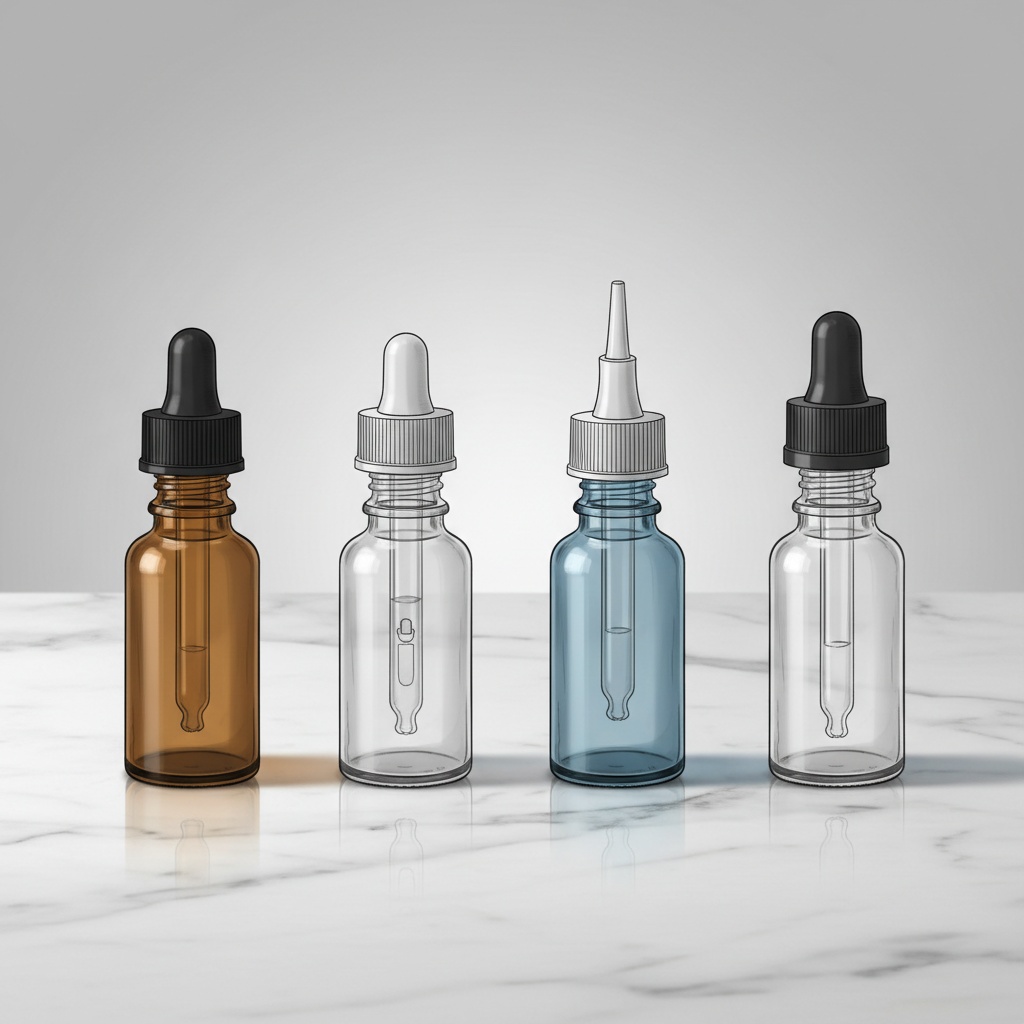
The bottle body holds the formulation. The collar threads onto the bottle neck and locks the assembly in place. The tube extends from the collar down into the liquid, and the bulb provides the suction force that draws formulation up through the tube. These four parts are sourced from different material families and often from different production lines within the same factory.
The mistake brands make is treating the dropper as a single SKU. They order a “30mL amber glass dropper bottle” without specifying the neck finish standard, bulb material, tube inner diameter, or collar threading. According to the Closure Manufacturer Association’s neck finish standards guide, common cosmetic dropper neck finishes include 18/400, 18/410, 20/400, 20/410, and DIN 18. The first number is the neck outer diameter in millimeters. The second is the thread count per inch. A mismatch of even one thread count between bottle and collar causes cross-threading and leakage during the inversion test.
A neck finish is a standardized thread specification that defines the outer diameter and threading pattern of a bottle opening, ensuring interchangeable fitment between bottle bodies and closure assemblies from different manufacturers. Specifying neck finish at the sampling stage, not after production tooling begins, eliminates the single most common cause of dropper assembly rejection.
For brands already familiar with general dropper types and selection criteria, Oulete maintains a reference guide on how to select the correct dropper for your application. The article you are reading now goes deeper into the custom design and manufacturing specification process.
Types of Dropper Assemblies: Which Format Fits Your Formulation?
Four dropper assembly formats cover the full range of cosmetic dispensing applications. Selection depends on formulation viscosity, dosing precision requirements, and target price point.
The classic rubber bulb pipette remains the most widely used format for cosmetic serums, facial oils, and tinctures. According to Packaging Digest, the standard glass dropper bottle assembly consists of a glass or plastic tube, a compressible bulb, and a metal or plastic collar that crimps onto the bottle neck. This three-piece construction dates to pharmaceutical dispensing and dominates the premium skincare category.
The push-button dropper (also called a Euro dropper or controlled-flow insert) is a press-to-open mechanism fitted into the bottle neck. According to Virospack’s product documentation, this format releases a controlled number of drops per actuation without requiring a separate pipette tube. Flow rate is determined by orifice diameter, typically 0.5 to 1.5mm. Essential oil brands and clinical skincare lines favor push-button droppers for their precision.
The integrated screw-cap dropper combines bulb, tube, and cap into a single assembly. According to Tricorbraun’s dropper closure reference, this reduces assembly steps, lowers contamination risk during filling, and is common in pharmaceutical-grade cosmetic packaging.
The child-resistant dropper cap uses a push-and-turn mechanism. According to Berry Global, this format is standard in pharmaceutical and nutraceutical packaging and is growing in the CBD and hemp serum category.
Dropper Assembly Format Comparison
| Assembly Type | Best Applications | Viscosity Range (cPs) | Dosing Precision | Relative Cost | MOQ (Standard) |
|---|---|---|---|---|---|
| Rubber Bulb Pipette | Serums, facial oils, tinctures | 1 – 200 | Moderate (user-dependent) | Low | 1,000 |
| Push-Button (Euro) | Essential oils, clinical serums | 1 – 50 | High (orifice-controlled) | Medium-High | 3,000 |
| Integrated Screw-Cap | Pharmaceutical cosmetics, CBD | 1 – 150 | Moderate-High | Medium | 3,000 |
| Child-Resistant Cap | CBD, nutraceuticals, hemp oils | 1 – 100 | Moderate | High | 5,000 |
Oulete + rubber bulb pipette assemblies + MOQ from 1,000 units with full neck finish specification. This is the format most cosmetic brands start with, and it offers the widest customization flexibility for bottle shape, tube length, bulb material, and collar finish.
Dropper Bottle Materials: Glass vs. Plastic from a Manufacturer’s Perspective
Material selection for the bottle body is a chemistry decision first, an aesthetics decision second. The formulation chemistry must be compatible with the container material before color, finish, or brand perception enter the conversation.
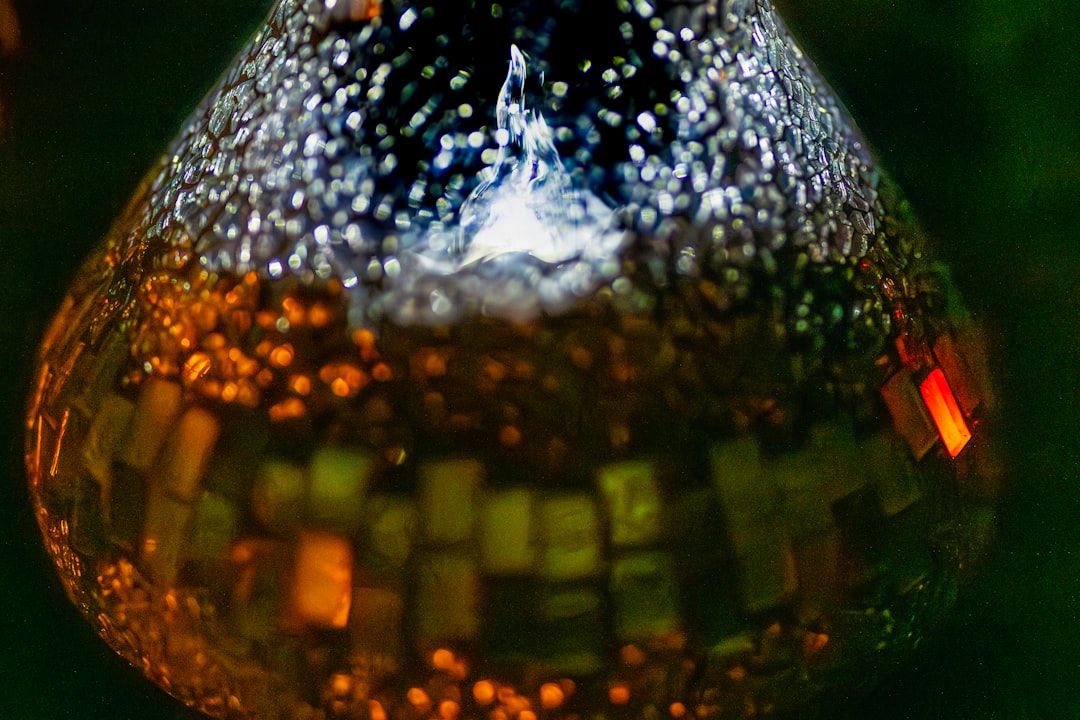
According to SGD Pharma’s glass type selection guide, borosilicate glass (Type I) offers the highest chemical resistance and is suitable for acidic or high-alcohol formulations. Soda-lime glass (Type III) serves standard cosmetic applications at lower cost. Amber glass filters UV light at wavelengths below 450nm, extending shelf life for light-sensitive actives like vitamin C and retinol. Clear, amber, frosted, and cobalt blue are standard colorways for glass dropper bottles.
Borosilicate glass is a Type I pharmaceutical-grade glass composed of silica and boron trioxide that provides superior chemical resistance to acids, alkalis, and alcohol-based formulations, making it the required container material for high-potency cosmetic serums with acidic or high-alcohol formulations.
Plastic dropper bottles serve different market segments. According to Topfeelpack’s material comparison, PP is chemical-resistant and compatible with most cosmetic formulations including moderate alcohol content. PET offers clarity but lower chemical resistance. PETG combines glass-like clarity with improved impact resistance. For brands evaluating PETG specifically, Oulete has published a detailed comparison of PETG bottles for cosmetic applications.
According to Grand View Research, the global glass packaging market for cosmetics was valued at USD 18.9 billion in 2023. Glass dominates premium skincare dropper bottles due to perceived luxury, superior chemical inertness, and consumer sustainability perception.
Post-consumer recycled (PCR) PP can replace 20 to 50 percent of virgin material in plastic dropper bottle bodies without affecting structural integrity or dropper fitment. However, PCR content above 30% in colorless bottles produces a slight grey-green tint. Brands requiring optical clarity must specify clear PCR grades, which carry a 15 to 25 percent cost premium over standard PCR. Oulete manufactures with PCR content ranging from 10% to 50% across PP and PE grades. For the technical properties of recycled cosmetic packaging materials, see our research on PCR sustainable packaging.
Bulb Material Selection: TPE vs. Silicone vs. Natural Rubber
The bulb is the component that contacts formulation vapor and, during use, direct liquid. Chemical compatibility between bulb material and formulation is non-negotiable. A bulb that degrades releases particles into the product and creates a consumer safety issue.
According to Smithers research on rubber versus silicone performance, natural rubber bulbs offer low cost and good elasticity but degrade with exposure to oils, essential oils, and alcohols. Shore A hardness typically ranges from 40 to 60. Natural rubber is only appropriate for water-based, oil-free products.
TPE (thermoplastic elastomer) is an injection-moldable polymer that combines rubber-like elasticity with thermoplastic processing efficiency, offering latex-free chemical resistance suitable for most mid-range cosmetic formulations at 30 to 40 percent of silicone’s cost per unit. According to Kraiburg TPE, TPE bulbs provide improved chemical resistance to oils and moderate alcohol concentrations, are free from natural rubber allergens, and can be color-compounded. Shore A hardness ranges from 30 to 70.
According to Dow’s silicone healthcare packaging data, silicone bulbs withstand 95%+ alcohol concentrations, concentrated essential oils, and temperature extremes from -60 degrees C to +200 degrees C. Shore A hardness ranges from 20 to 80. Silicone bulbs are required for premium formulations and pharmaceutical-grade droppers. The cost trade-off: silicone runs 2 to 3 times the unit price of TPE.
Silicone bulbs withstand exposure to 95%+ alcohol concentrations, concentrated essential oils, and pH extremes, making them the required choice for high-performance serum formulations. TPE bulbs cover most mid-range cosmetic formulations at significantly lower cost. Natural rubber bulbs are only appropriate for water-based, oil-free products.
Bulb Material Compatibility Matrix
| Formulation Type | Natural Rubber | TPE | Silicone |
|---|---|---|---|
| Water-based serums (alcohol < 5%) | Compatible | Compatible | Compatible |
| Alcohol-based toners (10-20%) | Not recommended | Compatible | Compatible |
| Essential oil blends | Not compatible | Limited (test required) | Compatible |
| High-alcohol formulas (> 50%) | Not compatible | Not compatible | Compatible |
| Vitamin C / low pH (< 3.5) | Degrades | Compatible | Compatible |
| CBD / hemp oil extracts | Not compatible | Compatible | Compatible |
With latex allergy awareness growing, major cosmetic brands now require latex-free documentation for all rubber-contact components. Natural rubber bulbs require a Certificate of Conformance stating latex-free status, or an alternative material must be substituted. Oulete defaults to TPE for standard cosmetic dropper production and supplies silicone bulbs for formulations that require it.
Dosing Accuracy: How Tube Inner Diameter Controls Drop Volume
Dropper tube inner diameter directly controls dosing volume. A 0.8mm ID tube delivers approximately 20 drops per mL for water-like serums. Increasing the ID to 1.2mm reduces drops per mL to approximately 12. Brands targeting precise dosing for potent actives should specify tube ID at the sampling stage, not after production.
According to the European Pharmacopoeia’s dropper calibration standard, one drop dispensed from a glass pipette dropper standardizes at approximately 0.02 to 0.05mL depending on tube inner diameter and formulation viscosity. Water-like serums (1 to 5 cPs) produce smaller drops. Oil-based formulations (50 to 200 cPs) produce larger drops.
According to pharmaceutical packaging fluid mechanics research (CRC Press), tube IDs of 0.8mm produce approximately 18 to 22 drops/mL for water-like serums, 1.0mm ID produces 14 to 18 drops/mL, and 1.2mm ID produces 10 to 14 drops/mL. This relationship follows the Hagen-Poiseuille equation for laminar flow through narrow tubes.
Dropper tube inner diameter is the measurement of the dispensing tube’s internal bore width that governs the volumetric flow rate and resulting drop size, functioning as the primary engineering parameter for calibrating dosing precision in cosmetic dropper assemblies.
Tube length is the other dimension that must be specified. According to Berlin Packaging’s dropper design specifications, standard tube lengths are 60mm, 75mm, 90mm, 100mm, and 120mm. The tube must reach within 3 to 5mm of the bottle base to maximize product evacuation without touching the base (which restricts suction). A 10mL bottle pairs with a 60mm tube. A 30mL bottle pairs with a 90mm tube. A 50mL bottle pairs with a 120mm tube.
Oulete + glass dropper tubes + custom ID specification from 0.8mm to 1.2mm matched to formulation viscosity data provided during sampling.
Customization and Decoration: What the Factory Floor Actually Offers
Customization for dropper bottles breaks into five categories, each with different MOQ thresholds and lead time implications.
Bottle color options differ by material. Glass dropper bottles come in clear, amber, frosted, and cobalt blue from standard molds. Plastic dropper bottles (PP, PET, PETG) accept any Pantone color via masterbatch compounding. Custom glass colors require custom mold runs.
Collar finish defines the visual and tactile quality of the dropper cap. Aluminum collars can be anodized or lacquered in Pantone-matched colors. PP collars accept matte or gloss finishes. Chrome-effect plating is available for premium positioning. According to APackagingGroup’s customization guide, custom bulb colors require minimum 5,000 to 10,000 units to justify color compounding costs. Standard bulb colors (black, white, clear, amber) ship from stock tooling.
Decoration methods for glass dropper bottles include screen printing (1 to 4 colors), hot stamping (metallic foil), acid-etched frosting, sleeve labeling, and UV printing. According to UK Pack China’s decoration comparison, screen printing minimum runs are typically 1,000 units. Hot stamping requires 3,000+ units to be cost-effective. Plastic bottles accept all methods except acid etching.
Closure types extend beyond the standard aluminum screw collar. According to Gerresheimer’s dropper product portfolio, options include child-resistant PP caps with integrated dropper inserts, tamper-evident band variants, and measured dropper (syringe-style) caps for pharmaceutical applications.
Oulete + dropper bottle decoration + full in-house screen printing and hot stamping with ISO 9001 and GMP certified production. The factory operates 20 injection molding machines with annual capacity exceeding 20 million sets, covering collar, bulb, and plastic bottle body production under one roof in Shaoxing.
MOQ Summary by Customization Level
| Customization | MOQ | Tooling Cost | Lead Time |
|---|---|---|---|
| Stock dropper assembly (standard colors) | 1,000 | None | 15-20 days |
| Custom collar color (anodize/lacquer) | 3,000 | None | 20-30 days |
| Custom bulb color (compounding) | 5,000-10,000 | None | 25-35 days |
| Custom tube length (non-standard) | 5,000 | None | 20-30 days |
| Screen printing (1-4 colors) | 1,000 | Plate fee varies | 20-25 days |
| Hot stamping (metallic foil) | 3,000 | Die fee varies | 25-30 days |
| Custom bottle mold (unique shape) | 3,000-5,000 | $2,000-8,000 | 45-60 days |
Quality and Testing: What to Require from Your Dropper Supplier
Six tests separate a production-ready dropper assembly from a prototype that looks good in a photo but fails in the field.
Leakage testing (inversion test) is the baseline quality gate. The standard leakage test for dropper bottles involves filling the bottle to 90% capacity, assembling the complete dropper, inverting the bottle 180 degrees, and holding for 24 hours. Acceptable leakage is below 0.1% of fill weight. According to Packaging Technology and Science, this internal standard aligns with general cosmetic packaging durability expectations. Suppliers who cannot perform this test on your specific bottle-dropper combination should not be approved for production.
Drop count validation confirms dosing consistency. Manufacturers count drops per mL under controlled conditions: 25 degrees C plus or minus 2 degrees, inverted at 60-degree angle, 1-second intervals. According to the ICH Q1A(R2) stability testing guideline, pharmaceutical GMP guidelines require validation of dispensing systems, and cosmetic manufacturers apply similar protocols internally.
Physical impact testing follows ASTM D5276 for drop test simulation of loaded containers. Failure modes include glass fracture, bulb ejection, and collar loosening under shipping conditions.
Chemical compatibility testing is required for EU and US markets. According to EU Cosmetics Regulation 1223/2009, packaging materials must not migrate harmful substances into the product. For plastic droppers and bulbs, extractables and leachables (E&L) studies are increasingly required by premium brands.
Certifications to verify before approving a dropper supplier: ISO 9001 quality management, GMP manufacturing practice, and SGS test reports for material safety. Oulete maintains all three certifications and provides test reports with each production lot.
For brands comparing dropper performance against other dispensing formats, our guide on airless vs. dropper bottles covers the trade-offs in formulation protection, dosing precision, and cost.
Sustainability in Dropper Design: PCR, Mono-Material, and Refillable Options
Sustainability requirements are reshaping dropper design specifications. Three trends are driving the change.
According to the Ellen MacArthur Foundation, glass dropper bottles are recyclable in most municipal systems. Plastic dropper bottles with multi-material assemblies (glass tube plus rubber bulb plus aluminum collar) complicate end-of-life recyclability. PCR content of 20 to 50 percent is achievable in PP dropper bottles without compromising structural integrity.
According to Packaging Europe, mono-material dropper design is a 2024-2025 trend toward all-PP or all-PE dropper assemblies that eliminate glass tubes and metal collars to improve recyclability. The trade-off is lower perceived premium value compared to glass tube designs.
Oulete + PCR plastic dropper bottles + 10% to 50% recycled content in PP and PE grades with SGS certification for recycled material traceability.
Frequently Asked Questions About Custom Dropper Design
What neck finish do I need for a cosmetic dropper bottle?
The most common neck finishes for cosmetic dropper bottles are 18/400 and 18/410 for 10mL to 15mL bottles, and 20/400 or 20/410 for 30mL to 50mL bottles. DIN 18 is the European standard used primarily in the essential oil industry. The first number is the neck outer diameter in millimeters, and the second is the thread count per inch. Always confirm that your bottle and dropper assembly share the same neck finish specification before ordering production quantities.
Can I use a glass tube with a plastic dropper bottle?
Yes. Glass pipette tubes are routinely paired with PP and PETG plastic dropper bottles. The collar assembly bridges the two materials and handles the seal. The key specification is matching the tube length to the bottle interior height so the tube sits 3 to 5mm above the bottle base. Material mixing does complicate end-of-life recyclability, so brands with sustainability requirements should consider mono-material PP tube alternatives.
What is the minimum order for custom color dropper bulbs?
Standard bulb colors (black, white, clear, amber) are available from stock tooling with MOQs as low as 1,000 units. Custom Pantone-matched bulb colors require color compounding with MOQs of 5,000 to 10,000 units depending on the TPE or silicone supplier’s minimum batch size. For launches below 5,000 units, selecting a stock bulb color and customizing the collar instead is the more cost-effective approach.
How do I specify dropper tube diameter for my formulation?
Start with your formulation viscosity measured in centipoise (cPs). Water-like serums (1 to 5 cPs) work well with 0.8mm ID tubes producing 18 to 22 drops per mL. Medium-viscosity serums (10 to 50 cPs) pair with 1.0mm ID tubes at 14 to 18 drops per mL. Oil-based formulations (50 to 200 cPs) need 1.2mm ID tubes at 10 to 14 drops per mL. Request sample tubes in your target ID and test with your actual formulation at controlled temperature before locking the specification.
What certifications should a dropper bottle supplier hold?
At minimum, verify ISO 9001 for quality management systems, GMP for manufacturing practice standards, and SGS test reports for material safety and migration testing. For EU market distribution, packaging must comply with EU Cosmetics Regulation 1223/2009 for extractables and leachables. For products containing essential oils or high-alcohol formulations, request chemical compatibility test data specific to your formulation type and contact materials.
What is the price range for custom glass dropper bottles from China?
Glass dropper bottles (10mL, clear, 18/400 neck) range from USD $0.25 to $0.45 per unit at MOQ 3,000 to 5,000 FOB Ningbo or Shanghai. Amber coloring adds $0.05 to $0.08 per unit. Screen printing (1 color) adds $0.08 to $0.15 per unit. Hot stamping adds $0.12 to $0.20 per unit. PP dropper bottles (30mL, clear, 20/400) range from $0.18 to $0.30 per unit at MOQ 5,000. Custom bottle mold tooling runs $2,000 to $8,000 depending on complexity and material.
The dropper assembly your customer holds is a piece of precision engineering. Every component, from the tube bore to the bulb durometer to the collar thread pitch, contributes to whether the product dispenses correctly, seals reliably, and survives shipping. Specify each variable at the sampling stage. Test with your actual formulation under controlled conditions. And request a leakage test report before you approve production.
Oulete provides custom dropper assembly sampling with full formulation compatibility testing from our Shaoxing facility. Send us your formulation data and bottle design requirements, and our engineering team will spec the complete assembly, from neck finish to tube ID to bulb material, and ship tested samples within 15 days. Contact Oulete to start your custom dropper design project.