


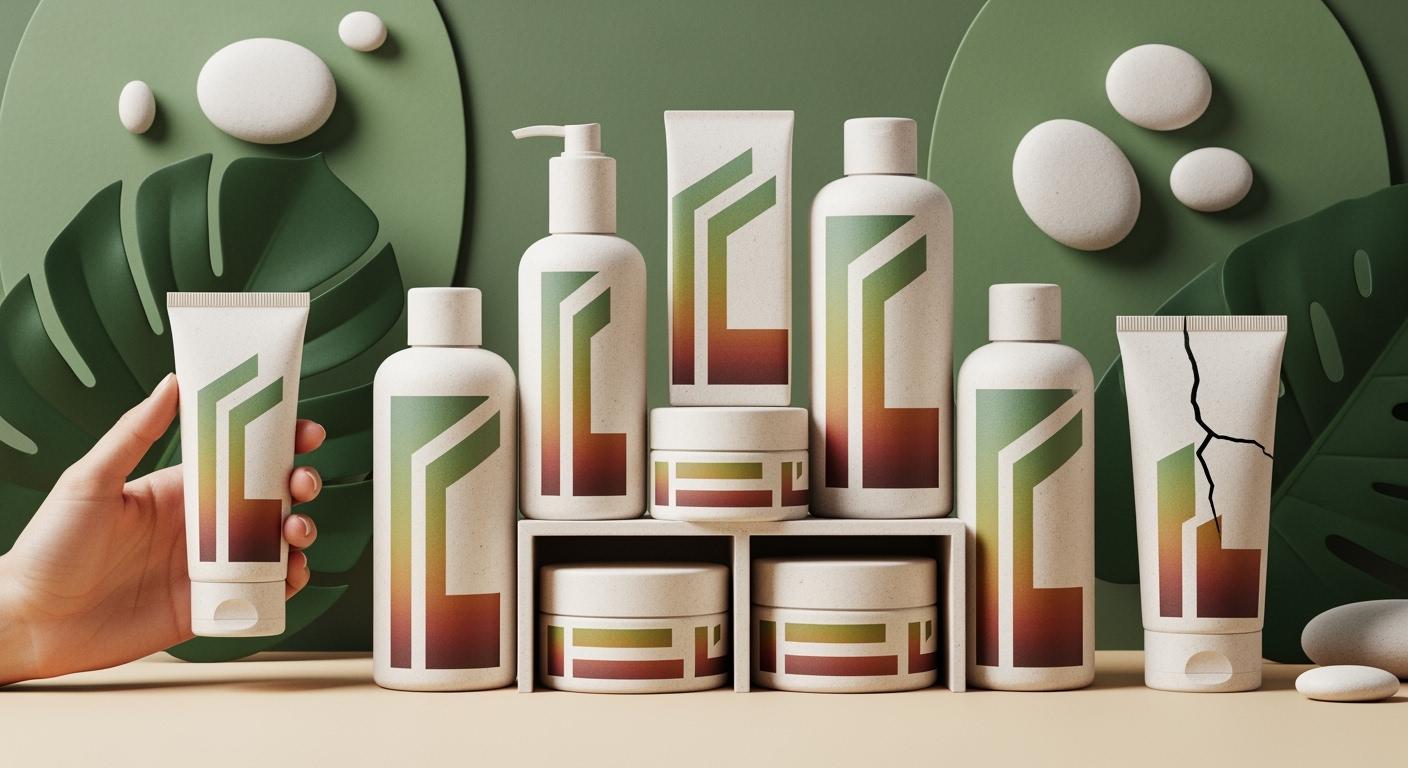
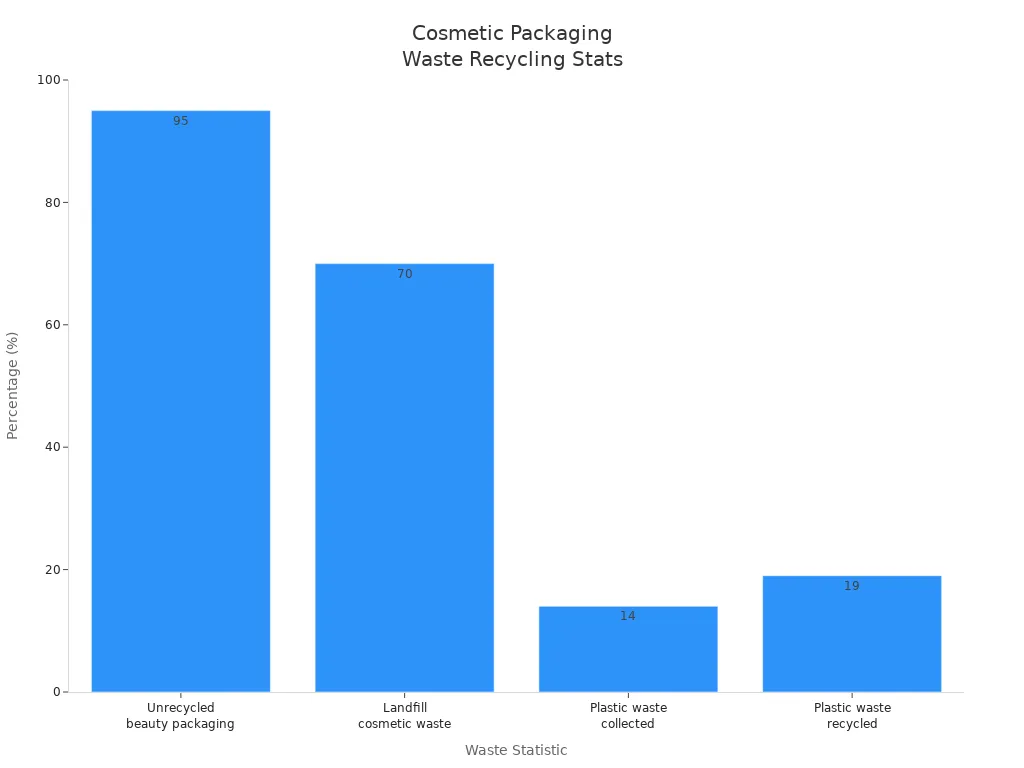
You want packaging that helps with recycling and is good for the environment. Monomaterial cosmetic packaging uses only one material for everything. This makes it easier for recycling centers to sort. People now want brands to use eco-friendly packaging. In the last five years, more people want mono-material packaging. This is because they care about the Earth. But most cosmetic packaging waste is not recycled.
| Statistic Description | Percentage |
|---|---|
| Beauty packaging waste that goes unrecycled | 95% |
| Cosmetic packaging waste ending up in landfills | 70% |
| All plastic waste collected for recycling | 14% |
| Actual plastic waste that gets recycled | 19% |
Key Takeaways
- Monomaterial packaging uses just one material. This makes recycling easier for centers. They can process it faster and with less trouble.
- Picking monomaterial packaging can help your brand look eco-friendly. It can bring in customers who care about the planet.
- Monomaterial packaging is simple to recycle. But it might not protect sensitive products as well as multimaterial packaging.
- Think about what your brand wants and what your products need. This will help you choose between monomaterial and multimaterial packaging.
- Talk to suppliers to find the best materials and designs. Try to balance recycling, product safety, and how your brand looks.
What Is Monomaterial Cosmetic Packaging?
Definition and Key Features
Monomaterial cosmetic packaging is used in many beauty products now. This packaging uses just one material for the main parts. For example, a bottle might be all plastic or a jar could be only glass. Companies pick mono-material packaging because it helps recycling. You do not have to pull apart different materials before recycling. This way, brands can reach their sustainability goals and make less waste. Mono-material packaging often uses plastic, glass, or aluminum. The simple design makes recycling easier and keeps more packaging out of landfills.
Tip: If you choose mono-material packaging, you help recycling work better and support the environment. This choice can also make your supply chain run smoother.
Monomaterial vs. Multimaterial Packaging
It is important to know how monomaterial packaging is different from multimaterial packaging. Monomaterial packaging uses one material everywhere. Multimaterial packaging uses layers or parts made from different things. For example, one package might have paper, plastic, and aluminum together. The table below shows the main differences:
| Feature | Monomaterial Packaging | Multimaterial Packaging |
|---|---|---|
| Structure | Made from a single type of material | Composed of multiple materials |
| Composition | Includes materials like paper, monomaterial plastics, glass, and metal | Combines layers of different materials like paper, plastic, and aluminum |
| Recyclability | Generally easier to recycle due to uniformity | More complex recycling process due to material separation |
| Functionality | Offers basic protection and functionality | Provides advanced barrier properties and durability |
| Design Flexibility | Limited to the properties of one material | Allows for creative designs and unique packaging solutions |
Monomaterial packaging makes recycling easy. Multimaterial packaging gives more design choices and better protection, but it is harder to recycle. You need to pick the type that works best for your brand and your goals for the environment.
Pros of Monomaterial Cosmetic Packaging
Recyclability Benefits
You want packaging that is simple to recycle. Monomaterial packaging uses just one material. This makes it easy for recycling centers to sort. The simple design helps stop recycling from getting mixed up. When you use monomaterial cosmetic packaging, recycling rates can go up. Sorting is faster and cleaner, so recycled materials are better. Groups like the U.S. Flexible Packaging Association and CEFLEX in Europe support mono-material packaging. They say it helps recycling and cuts down on pollution. The U.S. Association of Plastic Recyclers also says mono-material packaging boosts recycling and keeps things clean.
- The U.S. Flexible Packaging Association wants everyone to use recyclable, mono-material flexible packaging.
- CEFLEX in Europe tries to change multimaterial packaging into mono-materials for better recycling.
- The U.S. Association of Plastic Recyclers says mono-material packaging is important for better recycling.
Tip: If you pick mono-material packaging, you make recycling easier and help cut waste.
Sustainability and Environmental Impact
Mono-material packaging helps you reach your green goals. You use less stuff and less energy to make it. This means you make less carbon and help the planet. Mono-material cosmetic packaging makes it easy for people to sort their trash. You show you care about the Earth by using packaging that fits recycling rules. This matches what people want from brands and makes your brand look good.
- Mono-material packaging makes recycling simple for people.
- You use less material and energy when making it.
- You give people what they want with eco-friendly products.
Brand Loyalty and Eco-Positioning
You earn trust from customers when you use green packaging. Now, brands care more about being eco-friendly than just looking nice. People want to know how you help the planet. Fancy brands use eco-friendly materials to meet these needs. This makes your brand stronger and keeps customers coming back. Small and clean beauty brands use green packaging to stand out and get buyers who care about the Earth. Mono-material packaging helps you share your story and show you care about the environment.
Beauty brands use mono-material packaging in ads to show they care about the Earth. You make recycling easy and stop trash from getting mixed up. This helps the planet and shows you are responsible. People who care about the Earth notice these things and stay loyal to brands that use green packaging.
Note: When you use mono-material packaging, you connect with people who care about the planet and want to support good brands.
Supply Chain and Series Development
Mono-material packaging makes your supply chain easier. You save money by making things simpler. Using one material means less work and easier management. You do not have to sort different parts, so recycling is simple. This helps you make many products with the same material, like PP airless bottles. You can make useful, recyclable packaging for your products.
| Cost Implications | Description |
|---|---|
| Initial Costs | You might pay more at first for new materials and changes in how you make things. |
| Long-term Benefits | Better recycling and following rules can help you save money later. |
| Economic Trade-offs | You spend more at first, but you save later with easy recycling and lower fees for green packaging. |
Tip: Mono-material packaging helps you make many products with the same material. This makes your supply chain smoother and your brand greener.
Limitations of Monomaterial Packaging
Performance and Protection Challenges
You want your products to stay safe and fresh. But monomaterial packaging can make this hard. Many beauty products need strong barriers. These barriers keep out air, light, and water. Mono-material packaging does not always protect as well as multimaterial packaging. Some formulas can react with the packaging. This can change the product or make it go bad faster. You need to check if the material works with your formula.
Here is a table that shows common performance challenges:
| Challenge | Description |
|---|---|
| Safety Standards and Material Compatibility | Material choices affect stability, safety, and user experience. |
| Multi Component Systems and Functional Fit | Most beauty packs are a system, not a single piece, leading to compatibility issues. |
| Sustainability vs. Formula Protection and Cost | Brands face pressure to improve sustainability while ensuring formula protection. |
You might also have problems with how parts fit together. For example: neck sizes and threads may not match between the bottle and pump. Droppers may not reach the bottom of the bottle. Wipers may be too tight or too loose for the wand.
Cosmetic packaging must protect the product and be green. You can use refillable packs or recycled materials. But this can make it harder to keep your product safe and fresh.
Design and Decoration Constraints
You want your packaging to look nice and stand out. Mono-material packaging can limit your design choices. It can be hard to make special shapes or add cool features. Some materials do not allow bright colors or shiny looks. You may need to spend more money to make mono-material packaging look like multimaterial packaging.
- Limited strength and functionality: Mono-material packaging may not protect well against oxygen or moisture.
- Less flexible design: It can be hard to achieve creative features with just one material.
- Technological barriers: Competing with multimaterial packaging often needs more investment.
You may need to accept simple designs or fewer decoration choices if you pick mono-material.
Component and Structure Complexity
Most cosmetic packaging uses more than one part. You need pumps, lids, or applicators for many products. Mono-material packaging tries to make all parts from the same material. This helps with recycling and cuts down on pollution. But it can be hard to make all parts work well together. Pumps and lids often need different materials to work best. If you use only one material, you may have to give up some features.
Mono-material designs can make recycling easier. This is because closures and bottles use the same plastic. Still, you may have problems with how things fit and work. You must test your packaging to make sure it works for your product.
Premium Look and Feel Limitations
You want your brand to look fancy and feel special. Mono-material packaging can make this hard. Many luxury brands want a certain look and feel. This is hard to get with just one material. You may not get the same shine, weight, or smoothness as with multimaterial packaging. Some effects, like metallic finishes or glass-like looks, are not possible with mono-material.
One big challenge is making packaging look fancy and still be green. You may need to choose between a premium look and being eco-friendly. In the past, pumps and airless packs used mixed materials for a high-end feel, but these are hard to recycle.
“Aesthetic is still the parameter that our customers use to judge and to evaluate the packaging”
“They say, I cannot accept this defect”
Luxury beauty brands often have tough choices. You want to be green, but your customers want perfect packaging. You must decide what is most important for your brand.
Monomaterial vs. Multimaterial: Key Differences
Recycling and End-of-Life
You want packaging that is easy to recycle. Monomaterial cosmetic packaging makes this simple. Recycling centers can sort it fast because it uses one material. This means less work and more recycling happens. Multimaterial packaging is harder for recycling centers. They must pull apart layers and pieces. This takes longer and costs more money. Many multimaterial packages end up in landfills.
Here is a table that shows how recycling and end-of-life outcomes are different:
| Type of Packaging | Recyclability | Complexity for Recycling Facilities |
|---|---|---|
| Monomaterial | High | Low |
| Multimaterial | Low | High |
Tip: If you want your product to be greener, pick mono-material packaging. It makes recycling easier and helps cut down on waste.
Functional Flexibility
You need packaging that keeps your product safe and fresh. Mono-material packaging sometimes does not block air or water well. This can make products go bad faster. Multimaterial packaging uses layers to stop air and water. This keeps products good for longer. Multimaterial packs also handle heat better. Mono-material packaging is getting better, but it still has some problems.
The table below compares how flexible each type is:
| Aspect | Mono-Material Packaging | Multi-Material Packaging |
|---|---|---|
| Barrier Performance | Usually lets in more air and water, so shelf life is shorter | High barrier from many layers |
| Heat Resistance | Not as good with heat, but new materials help | Handles heat better with things like PET or nylon |
| Recycling Infrastructure | Recycling systems are still growing in many places | More recycling systems are ready for multi-materials |
Note: You have to choose between better protection or easier recycling when picking packaging.
Cost and Production Factors
You want to keep costs low and make things simple. Monomaterial packaging can help with this. Using one material means fewer steps and less work. You might pay more at first for new tools or materials. But later, you save money because recycling is cheaper and making things is faster. Multimaterial packaging costs more to make. It needs more steps and special machines. You also pay more for waste and recycling.
- Mono-material packaging saves money over time and is easier to make.
- Multimaterial packaging gives more design choices but costs more and is harder to make.
If you want to make your supply chain simple and save money, mono-material packaging is a good idea. But you need to think about if you want special features or a fancy look.
Mono-Material Innovation and Adoption
Advances in Mono-Material Packaging
There are many new ideas in monomaterial packaging today. These changes help fix old problems and meet new needs. Here are some important updates:
- New materials like polyolefins, PET bottles, and recycled plastics give more choices.
- Biodegradable options and molded fiber inlays help the environment.
- Smart features like QR codes and NFC chips help you recycle better.
- Airless and dip-tube mono PP pumps now fit many designs.
- Mono-material jars and refillable packs replace older mixed-material ones.
- Lightweight glass alternatives lower your impact and keep products safe.
- Using mono-material packaging cuts down on multi-layered plastics, microplastics, and water use.
Material science lets you build better barriers against moisture, oxygen, and light. You can use coatings and additives to protect your products while still using green materials.
Practical Adoption Challenges
You may face real problems when you switch to monomaterial cosmetic packaging:
- Some products need better performance than mono-material options can give.
- Many recycling systems are not ready for all types of monomaterial packaging.
- You might need to spend a lot on research, development, and new equipment.
- Ultra-high barrier needs and special uses still push the limits of mono-material innovation.
You must think about these problems before making a change.
When to Choose Mono-Material Solutions
You should pick mono-material packaging if you want to:
- Focus on being green and clear recycling goals.
- Use simple shapes and logic for your product line.
- Make series SKUs with a unified look and material.
- Offer modern, useful, or simple designs.
Mono-material packaging works best when you want to show your brand cares about the planet and keep your supply chain easy.
When to Balance with Multimaterial
You may need to use multimaterial packaging if you:
- Want a fancy look, special decoration, or unique shapes.
- Need strong barrier protection for sensitive formulas.
- Value complex features or compatibility over easy recycling.
- Sell in places where recycling systems are not ready for mono-material options.
Tip: You do not have to pick only one way. Many brands use both mono-material and multimaterial packaging to meet different needs.
Supplier Guidance for Brands
Strategic Packaging Decisions
You should think about more than just eco-friendly claims when picking packaging. Suppliers help you make smart choices for your brand. They give you new materials that make packaging work better and look nicer. When you work with suppliers, you can make special packaging that helps your brand stand out. You can also use smart packaging to connect with customers.
Professional suppliers like Oulete help you decide if monomaterial cosmetic packaging is right for your product, brand, and how you make things. Oulete is good at PP, PCR, refillable airless, and custom designs. They help you step by step so your packaging fits your product and market. You can use a Product Lifecycle Management system to make things faster and easier. Suppliers help you save money and keep your products safe. They also help your supply chain grow and follow rules.
Tip: Ask your supplier for advice on packaging that fits your brand, not just what sounds green.
Customization and Material Selection
You need to pick materials and designs that work for your product and your customers. Suppliers help you choose options that are good for recycling and keep your products safe. They also make sure your packaging follows all rules and supports your brand.
Here is a table showing what to look for when picking materials and customization:
| Criteria | Description |
|---|---|
| Recyclability | Materials should be easy to recycle to help the planet. |
| Compatibility | Must work with recycling systems for easy processing. |
| Regulatory Compliance | Should meet all rules to keep things legal and green. |
| Design Flexibility | Custom options should let you make different designs and still work well. |
| Barrier Properties | Materials should protect the product and be recyclable. |
| Sustainability Messaging | Clear messages about being green can build trust and make your brand stronger. |
When you pick the right materials, recycling is easier, your green message is clear, and customers trust you more. Suppliers help you meet store and local recycling rules. They also make design and buying easier.
Note: The right supplier helps you balance looks, protection, and recycling. Oulete gives expert help for custom packaging that fits your needs.
You have big decisions with monomaterial cosmetic packaging. It makes recycling easier and helps the planet. But you might lose some product quality and fancy looks. Think about these trade-offs:
- Recycling and being green make your brand better.
- Product quality and design can limit what you pick.
- Suppliers help you make smart choices.
Talk to suppliers who know a lot. They help you pick packaging that matches your goals and keeps your products safe.
FAQ
What is the main benefit of monomaterial cosmetic packaging?
Monomaterial packaging makes recycling simple. Recycling centers can sort it quickly. Your brand can meet green goals and make less trash.
Can monomaterial packaging protect sensitive skincare formulas?
Protecting some formulas can be hard. Monomaterial packaging gives basic protection. Sensitive formulas may need stronger barriers from multimaterial packaging.
Is monomaterial packaging always cheaper to produce?
You may spend more money at first for new tools or materials. Later, you save money because recycling and making things is easier. You should check the costs for your own project.
How does monomaterial packaging affect brand image?
Using monomaterial packaging shows you care about the planet. People who like green brands will notice this. You might have to choose between looking fancy and being eco-friendly.
What should you ask your supplier about monomaterial options?
Ask your supplier if the material works with your product, if it can be recycled, and if you can change the design. Your packaging should fit your product, follow rules, and help your brand.