

Most B2B buyers sourcing nail polish bottles focus on shape and color first. That instinct costs them months of reformulation when a solvent-incompatible container warps on the shelf. Nail polish bottles are specialty glass or PP plastic containers, typically 5 to 15 ml, engineered with solvent-resistant walls, a precision wiper insert, and a cap-integrated brush applicator to deliver smooth, controlled lacquer dispensing. Getting the material, neck standard, and brush system right before committing to a mold saves more money than any volume discount.
According to News.Market.us, the global nail polish market reached USD 13.1 billion in 2025 and is projected to grow at 8.8% CAGR through 2035. That growth translates directly into packaging demand. According to Strategic Revenue Insights, the nail polish packaging market alone is projected to reach USD 1.5 billion by 2033 at a 5.2% CAGR. For brand owners and contract fillers, understanding bottle specifications is no longer optional.
Why Glass Remains the Standard Material for Nail Polish Bottles
Nail polish formulas contain aggressive solvents including acetone, toluene, naphtha, xylene, and ketones. These chemicals permeate and degrade most polymer plastics within weeks. According to the FDA, nail polish packaging materials must not render product contents injurious to health, a requirement that disqualifies most polymer plastics due to solvent permeation.
Soda-lime glass provides inert, non-reactive containment that withstands indefinite contact with solvent-based formulas. The glass manufacturing process involves batch melting at approximately 1,600 degrees Celsius followed by blow-forming into precision molds. This produces walls with consistent thickness and chemical uniformity that no injection-molded plastic can replicate for solvent-based applications.
Polypropylene (PP) is the only validated plastic alternative for nail polish bottles. PP has passed both chemical compatibility and fire resistance testing for nail polish solvents. Standard PET, PETG, and most other plastics fail these tests. For brands prioritizing weight reduction, shipping cost savings, or sustainable material content, PP bottles manufactured on injection molding equipment present a viable path forward.
Glass dominates the retail shelf because consumers associate its weight and clarity with premium quality. PP serves a growing niche for sample sizes, travel kits, subscription boxes, and brands with aggressive sustainability mandates that require PCR (post-consumer recycled) content in every component.
Anatomy of a Nail Polish Bottle: Three Components That Determine Performance
Every nail polish bottle system consists of three interdependent components. Mismatching any one of them causes leaking, poor application, or formula degradation during storage.
The bottle body holds the formula and defines shelf presence. Glass bottle bodies range from clear (for standard lacquer) to dark amber or opaque coatings (for UV-sensitive gel formulas). The base is intentionally thick on most nail polish bottles to lower the center of gravity and prevent tipping during brush loading. Wall thickness must remain consistent to avoid stress fractures during shipping.
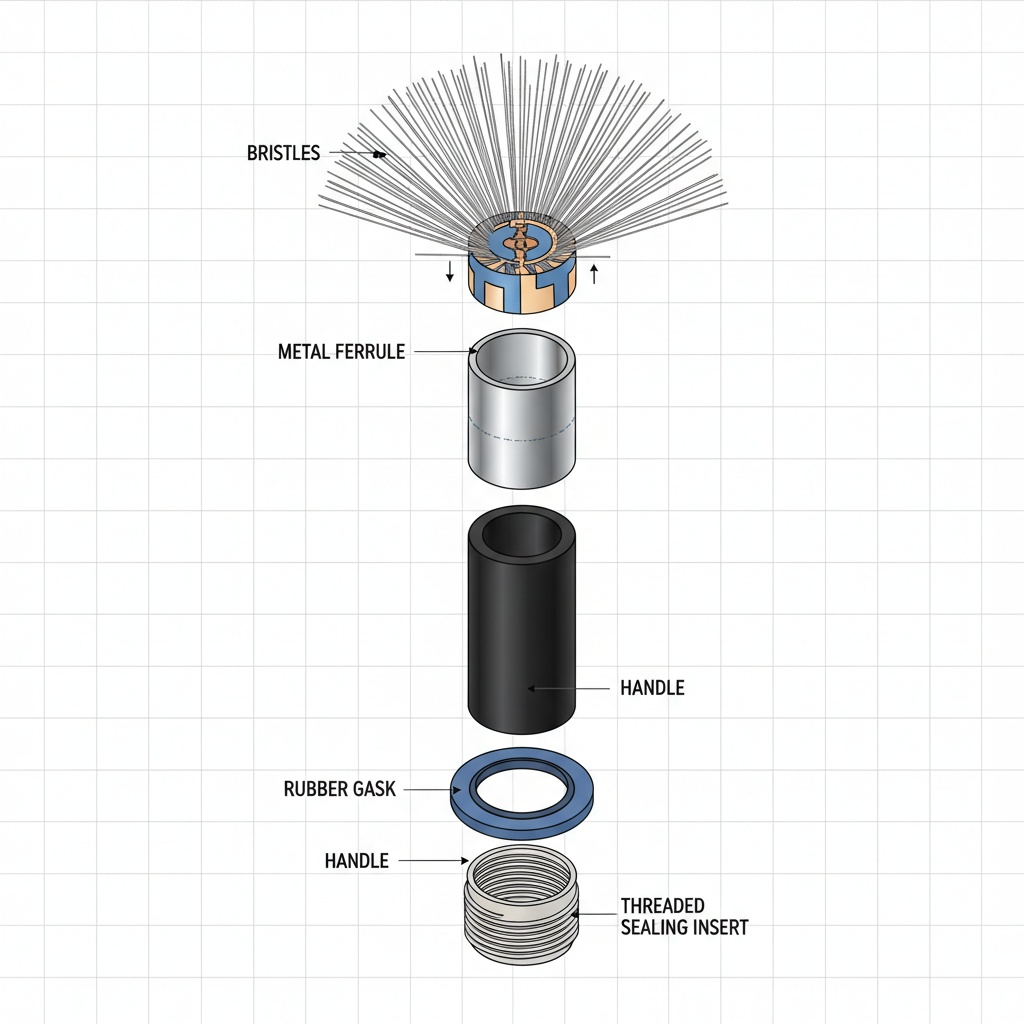
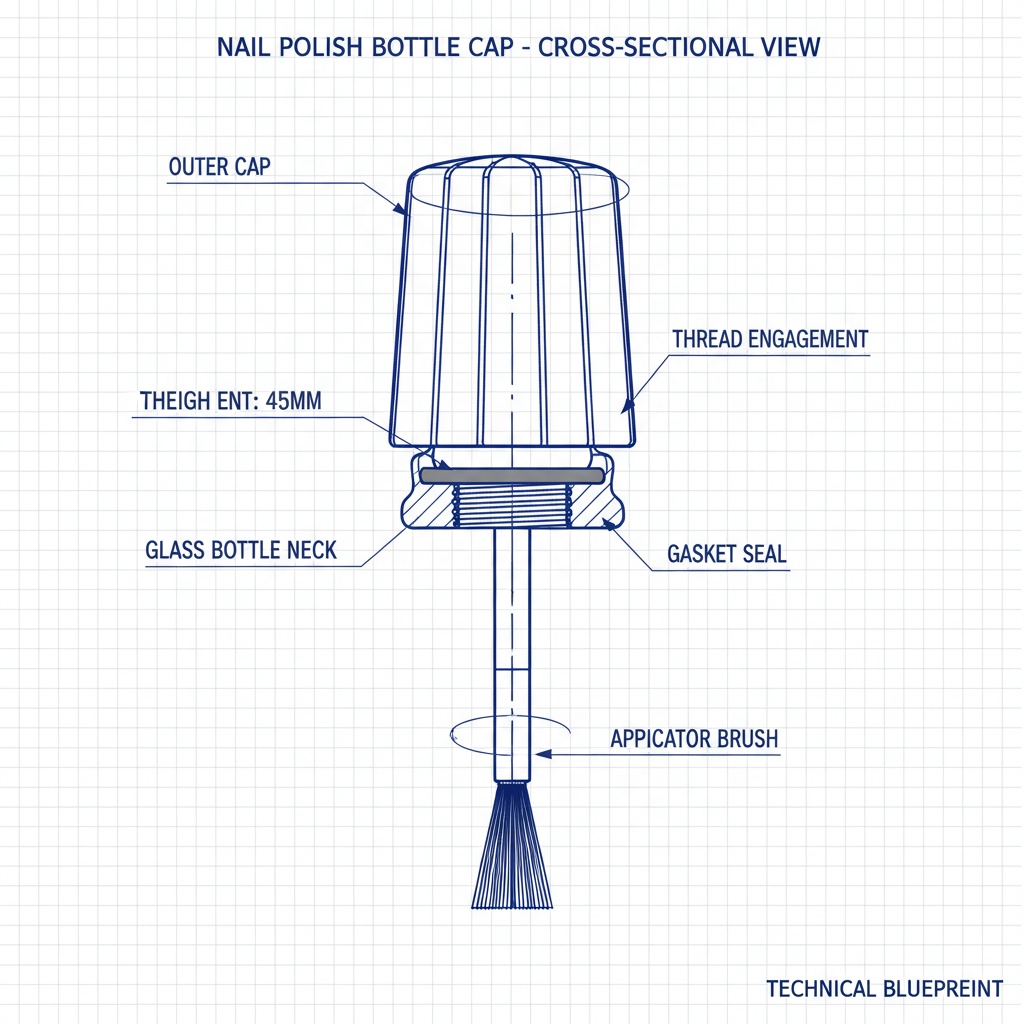
The wiper insert is the most overlooked yet most critical component. A wiper insert is a precision-molded PE or PP ring that seats inside the bottle neck opening, controlling brush loading volume and providing a secondary solvent-evaporation seal against the brush stem when the cap is closed. This small ring sits inside the neck opening. When a user pulls the brush out, the wiper strips excess formula from the bristles, controlling the deposit amount per stroke. A wiper insert with the correct inner diameter ensures that each brush stroke delivers a consistent film thickness. Too loose, and the brush carries excess formula that floods cuticles. Too tight, and the brush comes out nearly dry, forcing multiple coats.
Nail polish bottles use wiper inserts made from PE or PP because these materials resist the same solvents as the formula. The wiper also provides a secondary seal against the brush stem, reducing solvent evaporation when the cap is closed. This dual function of dose control and sealing makes the wiper insert a precision component, not a commodity gasket.
The cap-and-brush assembly combines the applicator, stem, and closure into a single unit. The brush stem length must match the internal depth of the bottle so bristles reach the bottom without bending. Bristle materials range from standard nylon to DuPont-grade nylon for premium lines and plant-based bristles for sustainability-focused brands. The cap itself provides the grip, the seal against the wiper, and the brand’s primary tactile touchpoint.
Nail Polish Bottle Types: Regular Lacquer vs. UV Gel vs. Hybrid
Not all nail polish bottles are interchangeable. The formula type dictates the glass specification, brush width, and light-blocking requirements. This distinction is absent from most competitor guides but critical for B2B sourcing decisions.
Regular lacquer bottles use clear soda-lime glass. The transparency showcases formula color, which drives retail purchase decisions. Standard solvent-based lacquer is not UV-sensitive, so clear glass presents no compatibility risk. Most retail nail polish on store shelves uses this configuration.
UV gel polish bottles require dark or opaque glass. UV and LED gel formulas cure (harden) when exposed to ultraviolet light. If stored in clear glass near any UV source, the formula begins to gel inside the bottle, rendering the product unusable. Iron-oxide pigmented glass or opaque spray coatings block UV transmission. Gel formulas also tend to be more viscous, requiring wider brush heads for even application.
Hybrid formula bottles fall between the two. These products combine aspects of lacquer and gel chemistry, often using modified photoinitiators that are less UV-sensitive than pure gel. Some hybrid formulas tolerate amber or tinted glass rather than fully opaque bottles, but the specification must be confirmed through stability testing before committing to a bottle type.
| Feature | Regular Lacquer Bottle | UV Gel Polish Bottle | Hybrid Bottle |
|---|---|---|---|
| Glass type | Clear soda-lime | Dark/opaque UV-blocking | Amber or tinted |
| UV protection | Not required | Full UV blocking required | Recommended |
| Typical viscosity | Low to medium | Medium to high | Medium |
| Brush width | Standard (flat or thin) | Wide (flat or fan) | Standard to wide |
| Common neck size | 13/415 | 13/415 or 15/415 | 13/415 |
| Primary market | Retail consumer | Professional salon | Both |
This table reflects specifications sourced from manufacturer product listings and industry practice. Brands developing gel lines that default to clear glass risk product recalls due to in-bottle curing. Confirming the UV-blocking specification before mold approval avoids this failure mode entirely.
Sizes, Shapes, and Neck Standards for Wholesale Sourcing
Nail polish bottle capacity, shape, and neck finish determine retail positioning, cap compatibility, and shipping economics. These three specifications form the foundation of any sourcing brief.
Capacity ranges follow established market tiers. The 5 ml size serves sample kits, subscription boxes, and promotional giveaways. The 7 to 10 ml range is the global retail standard, balancing formula volume against shelf space. The 12 to 15 ml size targets professional and salon channels where per-application cost matters more than portability. Most buyers start with a 10 ml standard for retail launch, then expand into 5 ml minis and 15 ml pro sizes once the line gains distribution.
Shape options range from round cylinders (the most common and cost-effective mold) to square, rectangular, hexagonal, and specialty forms like hearts or skulls for limited editions. Round bottles offer the lowest mold cost and the most efficient packing density for shipping. Square and rectangular bottles provide a larger label surface area and a more modern shelf profile. Specialty shapes command the highest mold investment and typically require higher MOQs to justify the tooling.
Neck finish standards govern cap interchangeability. The 13/415 neck finish is the dominant standard for nail polish bottle caps and brushes in global wholesale, with 15/415 used for professional and larger-volume formats. The 18/415 finish appears in oversized or specialty bottles. Specifying a non-standard neck size limits cap and brush sourcing options and increases per-unit cost. For brands planning to offer multiple bottle shapes within a single line, standardizing on 13/415 across all SKUs allows a single cap-and-brush assembly to fit every bottle.
| Capacity | Typical Use | Common Shape | Standard Neck |
|---|---|---|---|
| 5 ml | Sample, mini, subscription | Round | 13/415 |
| 7-10 ml | Retail standard | Round or square | 13/415 |
| 12-15 ml | Professional, salon | Round or rectangular | 13/415 or 15/415 |
Related specialty packaging formats like solid perfume containers and roll-on deodorant bottles share some of these sizing conventions but use entirely different closure systems and filling processes.
Cap and Brush Selection: The Sourcing Decisions Most Buyers Get Wrong
The cap-and-brush assembly accounts for the majority of end-user complaints about nail polish products. A bottle with a beautiful shape and perfect formula will fail commercially if the brush delivers uneven coats or the cap does not seal properly. Yet most B2B buyers spend the bulk of their sourcing time on the bottle body and far less on the applicator system.
Brush types serve different formula viscosities and application techniques. Flat brushes provide fast, wide coverage and are the standard for consumer lacquer. Thin or detail brushes target nail art applications where precision matters more than speed. Fan brushes spread gel formulas in a single pass and dominate professional salon products. The brush type must match the formula viscosity and target user skill level.
Brush lengths are specified in relation to bottle depth. Common measurements include short stems for 5 ml minis, medium stems for 7 to 10 ml retail bottles, and long stems for 12 to 15 ml professional sizes. The stem must be long enough for bristles to reach the bottle bottom without the cap lifting away from the neck. Conversely, an overly long stem causes the brush to bend against the bottom, splaying bristles and ruining application consistency.
Bristle materials determine application feel and sustainability profile. Standard nylon bristles perform adequately for most lacquer formulas. Premium DuPont nylon provides finer, more consistent bristle tips for smoother single-coat application. According to GlobalGrowthInsights, in 2023, Essie launched a nail polish line using 25% recycled glass bottles with 93% recycled plastic caps and plant-based bristle brushes, setting an industry benchmark for sustainable nail polish packaging.
Cap styles and materials serve both functional and aesthetic roles. Flat caps stack efficiently for shipping and storage. Domed and rounded caps feel more comfortable during application and convey premium positioning. PP caps are the standard for cost-effective production. Aluminum, bamboo, and wood caps serve premium and eco-conscious market segments. The cap must maintain a compression seal against the wiper insert under temperature fluctuations during shipping and warehousing.
| Formula Type | Recommended Brush | Bristle Material | Cap Style |
|---|---|---|---|
| Standard lacquer | Flat, medium width | Nylon or DuPont nylon | Flat or domed PP |
| Gel polish | Wide flat or fan | DuPont nylon | Domed PP or aluminum |
| Nail art lacquer | Thin detail | Fine-tip nylon | Flat PP |
| Eco/clean formula | Flat, medium width | Plant-based bristle | Bamboo or PCR PP |
Applicator engineering shares principles with other precision cosmetic dispensing systems. The tolerance relationships between brush, wiper, and neck mirror those in dropper design and serum vial packaging, where the insert controls dose consistency.
Glass vs. PP Nail Polish Bottles: The B2B Decision Matrix
No competitor in the current SERP provides a structured side-by-side comparison of glass and PP for nail polish bottles. This gap leaves B2B buyers without the framework they need to make an informed material decision. The table below addresses that gap directly.
| Decision Factor | Glass | PP (Polypropylene) |
|---|---|---|
| Solvent resistance | Inert to all nail polish solvents | Passes chemical compatibility testing; only plastic approved |
| Weight | Heavier; increases shipping cost per unit | Lighter; reduces freight cost |
| Breakage risk | Fragile; requires partitioned packaging | Virtually unbreakable |
| Shelf perception | Premium; weight and clarity signal quality | Acceptable for sample/travel; improving with finish options |
| MOQ (typical) | 5,000-10,000 units from most glass suppliers | As low as 1,000 units from injection molding manufacturers |
| PCR content options | Recycled cullet available (ISO 14021) | PCR PP available at 10-50% content |
| Decoration options | Spray paint, frosted, silk screen, hot stamp | Silk screen, hot stamp, in-mold labeling |
| Lead time (custom mold) | Typically 15-30 days | Typically 10-20 days |
| Recyclability | Infinitely recyclable in glass stream | Recyclable in PP stream (code 5) |
| Best use case | Retail shelf, premium positioning, salon | Samples, travel, subscription, PCR sustainability goals |
Oulete operates 20 injection molding machines with 20M+ sets annual capacity. For brands evaluating PP nail polish bottles, the ability to source the bottle, cap, brush assembly, and surface decoration from a single ISO 9001, CE, SGS, and GMP certified factory eliminates split-sourcing risks and reduces lead time. Oulete’s MOQ of 1,000 units positions PP nail polish bottles as accessible for indie brands and product launches that cannot meet the 5,000 to 10,000 unit minimums common among glass specialists.
PP nail polish bottles with verified PCR content represent a tangible sustainability claim. Unlike vague “eco-friendly” marketing language, PCR material at 10 to 50% content is testable, certifiable, and increasingly required by retailers with plastic reduction commitments.
Regulatory Compliance and Sustainability Trends Shaping Nail Polish Packaging
Regulatory requirements and sustainability mandates are converging to reshape how nail polish bottles are specified, manufactured, and labeled. Buyers who treat compliance as an afterthought face shipment rejections, retailer delistings, and costly repackaging.
FDA requirements under the Federal Food, Drug, and Cosmetic Act mandate that nail polish packaging materials must not render contents injurious to health. Ingredient labeling must list components in descending order of predominance with lettering no smaller than 1/16 inch. Brand name, product identity, net quantity, and manufacturer address are required on the principal display panel. For a detailed breakdown of cosmetic packaging compliance, see the FDA cosmetic packaging compliance guide.
Child-resistant packaging is triggered by specific ingredients. Under CPSC and Poison Prevention Packaging Act (PPPA) enforcement, containers holding nail removers with more than 500 mg of acetonitrile per unit require child-resistant closures. Methacrylic acid primers also trigger this requirement. Buyers selling nail care systems (polish plus remover) must evaluate whether any component in the kit triggers child-resistant packaging rules.
MoCRA implications are arriving. The US Modernization of Cosmetics Regulation Act (2022) introduced new traceability requirements. QR-traceable batch codes for every production run are becoming standard for US and EU exports. Nail polish bottle labeling must accommodate these codes without compromising the brand’s visual design.
EU REACH restrictions apply to plastic cap and brush stem materials. Certain phthalates (DBP, DEHP) used as plasticizers in plastic components are restricted. GPI-13 and GPI-15 neck standards are gaining cross-market acceptance for refillable and cross-cap compatible systems, supporting modular packaging architectures.
According to GlobalGrowthInsights, sustainable packaging influences nearly 36% of nail polish buyers’ purchasing decisions, while clean and vegan nail polish adoption influences around 48% of buyers. These consumer preferences are forcing brands to source packaging with measurable environmental credentials.
According to GlobeNewswire, the PCR-rich glass container market stood at USD 10.5 billion in 2025 and is projected to reach USD 21.04 billion by 2035, with Asia Pacific driving the fastest growth. This trajectory signals that PCR content requirements will tighten across both glass and plastic packaging categories.
Key sustainability innovations entering nail polish packaging in 2026 include PCR caps made from bio-polyamide or PCR ABS, modular snap-fit brush systems designed for recyclability, bio-ash glass additives derived from rice husk that reduce manufacturing CO2 output, and compostable labels replacing traditional PE film. Manufacturers with PCR material capability and certifications covering ISO 9001, SGS, and GMP are positioned to meet these emerging requirements without supply chain disruption.
Customization and OEM Sourcing Workflow
Sourcing custom nail polish bottles follows a structured workflow. Skipping steps or rushing approvals leads to mold rework, formula incompatibility, or shipment delays.
Step 1: Define the bottle specification. Lock down capacity (5, 7, 10, or 15 ml), shape (round, square, specialty), neck size (13/415 in most cases), and glass type (clear, amber, opaque). For PP bottles, specify resin grade and PCR content percentage.
Step 2: Select the cap-brush system. Match brush type (flat, thin, fan) and stem length to the bottle depth. Specify bristle material and cap style. Confirm that the cap material is compatible with any planned surface decoration.
Step 3: Request and approve samples. Evaluate the sample with the actual formula, not water or a substitute. Solvent interaction with the wiper, brush, and cap materials only reveals itself under real conditions. Fill the sample bottle, close it, and ship it through actual transit conditions to test for leaking and evaporation.
Step 4: Mold development. Custom molds for glass bottles typically require 15 to 30 days. PP molds on injection molding equipment typically require 10 to 20 days. Approve the first mold shots before authorizing bulk production.
Step 5: Bulk production and quality control. Confirm batch quantity, quality inspection protocols (AQL sampling), and defect thresholds before production begins. Factory certifications including ISO 9001, SGS, and GMP provide baseline quality assurance. Buyers sourcing from China should verify certifications are current and audit-backed.
Step 6: Surface decoration and assembly. Silk screening, hot stamping, spray painting (Pantone matching), gradient finishes, UV coating, and engraving are applied after forming. The cap-and-brush assembly is fitted to the decorated bottle. Sourcing decoration and assembly from the same factory that molds the bottle avoids alignment errors and reduces lead time.
Step 7: Export packaging. Nail polish bottles ship in partitioned corrugated cartons with five-layer protection to prevent breakage. Glass bottles require more protective packaging than PP, adding to per-unit freight cost.
For buyers evaluating suppliers, Oulete provides cap, brush, bottle, decoration, and assembly from a single GMP-certified facility in Shaoxing, China. The 1,000-unit MOQ accommodates product launches and limited editions that most glass-focused suppliers cannot serve. Request a consultation through the contact page to start the specification process.
Frequently Asked Questions
Why are nail polish bottles made of glass rather than plastic? Nail polish solvents including acetone, toluene, and ketones permeate and degrade most polymer plastics. Soda-lime glass provides inert, non-reactive containment that maintains formula integrity indefinitely. PP is the only plastic that passes chemical compatibility testing for nail polish, making it the sole plastic alternative.
What is the standard size of a retail nail polish bottle? The 7 to 10 ml capacity is the global retail standard. Mini or sample sizes use 5 ml bottles. Professional and salon formats use 12 to 15 ml bottles. The 10 ml size balances formula volume, shelf footprint, and consumer price expectations for most retail channels.
What does a wiper insert do in a nail polish bottle? The wiper insert is a PE or PP ring seated inside the bottle neck. It strips excess formula from the brush when the user pulls the applicator out, controlling the amount of lacquer deposited per stroke. It also provides a secondary seal against solvent evaporation when the cap is closed.
What is the difference between a regular nail polish bottle and a gel polish bottle? Regular lacquer uses clear glass because the formula is not UV-sensitive. Gel polish requires dark, opaque, or UV-blocking glass because UV and LED gel formulas cure when exposed to ultraviolet light. Storing gel polish in clear glass risks premature hardening inside the bottle.
What neck size do I need for nail polish caps and brushes? The 13/415 neck finish is the dominant global standard. It provides the widest selection of compatible caps and brush assemblies. The 15/415 finish is used for professional-size bottles requiring wider brushes. Standardizing on 13/415 across a product line maximizes cap interchangeability and reduces component inventory.
Can nail polish bottles be made from recycled (PCR) materials? Yes. PCR glass using recycled cullet is available under ISO 14021 certification. PCR PP is available at 10 to 50% recycled content for injection-molded bottles and caps. PCR caps paired with standard glass bottles are the most common first step for brands beginning their sustainable packaging transition.
What certifications should I require from a Chinese nail polish bottle manufacturer? ISO 9001 (quality management), SGS testing (material safety), GMP (good manufacturing practice), and CE marking (European conformity) are the baseline. FDA-compliant soda-lime glass must meet lead and cadmium content standards. SGS and TUV certifications corroborate FDA compliance for Chinese-manufactured glass components.
How long does it take to manufacture custom nail polish bottles? Custom glass molds typically require 15 to 30 days. PP molds on injection molding equipment typically require 10 to 20 days. Bulk production, decoration, and assembly add additional time depending on order volume. Total lead time from specification to shipment-ready product depends on order complexity, decoration requirements, and mold type.