


You make a green choice when you pick glass containers. Glass is better for the environment than plastic. Glass can be recycled many times and stays strong. Most cosmetic containers are made of plastic. Only a few use glass.
| Material Type | Percentage of Market Share |
|---|---|
| Plastic | Over 60% |
| Glass | Approximately 20% |
| Paper-based | Around 15% |
| Other | About 5% |
Your choices are important. Many people care about the planet. Shoppers want eco-friendly products and clear signs of responsibility. Picking glass instead of plastic helps the earth. It also supports green living.
Key Takeaways
- Picking glass containers helps the environment by making less trash and helping recycling. Glass can be recycled many times and does not lose quality. Plastic can only be recycled a few times. Plastic containers are lighter and cost less to ship, but they cause more pollution and fill up landfills. Choose refillable glass products to make less waste and keep your cosmetics safe and fresh. Support brands that use eco-friendly packaging to help the planet.
Raw Materials & Sourcing
Glass: Sand, Mining, and Material Use
Glass cosmetic containers are made from sand, soda ash, and limestone. These materials are easy to find and safe for people. Mining sand and minerals can harm the land and animals nearby. Making glass needs a lot of heat, so it uses much energy. This makes more carbon emissions. Glass is heavier than plastic, so shipping glass makes more pollution. Glass can be recycled many times and does not lose quality. This helps cut down on waste and makes glass a good choice.
Glass comes from nature and can go back to nature. Choosing glass containers helps the planet because they are reused and do not fill landfills.
Plastic: Petroleum, Extraction, and Resource Use
Plastic containers are made from petroleum, which is a fossil fuel. Getting oil hurts the environment and can cause pollution. Making plastic uses less energy than glass, but it needs resources that cannot be replaced. Plastic containers are lighter, so shipping them makes less pollution. But plastic can only be recycled once or twice. Many plastic containers end up in landfills or oceans. They break into tiny pieces called microplastics, which pollute water and soil.
- You help the earth by picking containers that cause less harm.
- Glass can be recycled more, but plastic makes more waste.
| Material | Main Resource | Recyclability | Typical End-of-Life |
|---|---|---|---|
| Glass | Sand, minerals | Unlimited | Recycled, reused |
| Plastic | Petroleum | Limited | Landfill, pollution |
Manufacturing Impact
Glass: Energy Use and Emissions
When you pick glass containers, you use natural materials. But making glass needs a lot of energy. Factories heat sand and minerals until they melt. This step makes more carbon dioxide than making plastic. For every $1 million in glass bottles, factories make about 932 tons of CO2. This is more than what plastic factories make.
Glass factories use more energy and make more pollution. Recycling glass helps the earth, but making it still hurts the planet.
Glass is strong and can be recycled many times. But making glass the first time uses lots of energy. You should think about this when you choose cosmetic containers.
Plastic: Production Efficiency and Emissions
Plastic containers are made from petroleum. Making plastic uses less energy than glass. Factories use lower heat, so they make less carbon dioxide. For every $1 million in plastic bottles, about 778 tons of CO2 are made. This is less than glass.
- Plastic is lighter than glass.
- Factories use less energy for plastic.
- Shipping plastic uses less fuel.
You might think plastic is better for the earth because of this. But plastic does not break down fast. It can only be recycled a few times. Most plastic ends up in landfills or the ocean. Picking plastic lowers carbon at first, but it makes more waste later.
Transportation & Weight
Glass: Heavy, Higher Carbon Footprint
You might notice that glass containers feel heavier in your hand. This extra weight matters when companies ship products. Trucks and planes use more fuel to move heavy items. When you choose glass, you help the planet in some ways, but you also increase transportation emissions. The table below shows how much more glass weighs compared to plastic and how this affects shipping:
| Container Type | Weight (lbs) | Transportation Impact |
|---|---|---|
| Glass | 0.177 | Higher freight costs, increased fuel consumption |
| Plastic | 0.023 | Lower freight costs, reduced carbon footprint |
Shipping glass costs more money and uses more energy. For every glass container, companies pay about $1.47 to ship it. This is more than double the cost of shipping a plastic container. You can see the difference in the table:
| Material | Average Shipping Cost per Unit |
|---|---|
| Glass | $1.47 |
| Plastic | $0.63 |
Heavier containers mean more trucks on the road and more pollution in the air. If you want to lower your carbon footprint, you need to think about the weight of your packaging.
Plastic: Lightweight, Lower Shipping Impact
Plastic containers weigh much less than glass. This makes them easier and cheaper to move. Companies can ship more plastic containers at once, which saves fuel and reduces emissions. When you pick plastic, you help lower shipping costs and cut down on pollution from transportation. Lighter packaging also means fewer trucks and less traffic.
You should remember that plastic has other problems, like pollution and recycling limits. Still, its light weight gives it an advantage for shipping. If you want to reduce the impact of moving products, plastic containers make a difference.
Recycling & End-of-Life
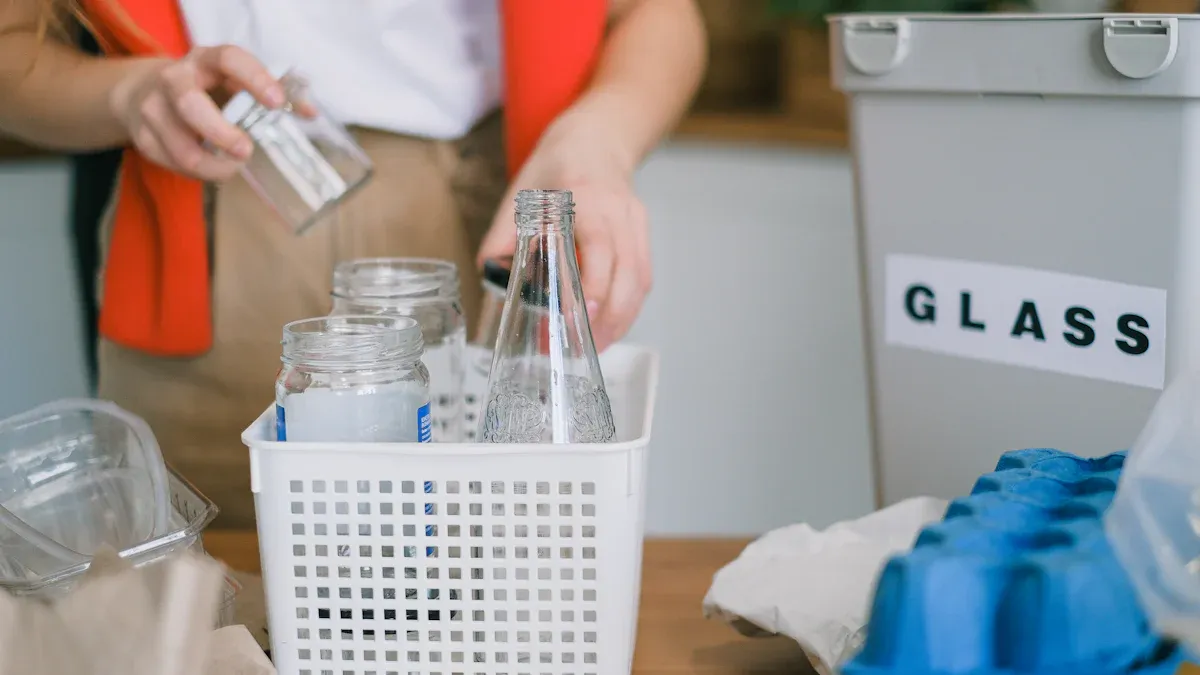
Glass: High Recycling Rate, Closed Loop
Glass is great for the environment. You can recycle glass many times. When you put glass in the recycling bin, it often becomes new bottles or jars. This keeps glass out of landfills and in use. Every time you recycle glass, you help the earth.
- Glass stays pure after each recycling step.
- Recycling glass uses up to 35% less energy than making new glass.
- Choosing glass helps the planet for a long time.
Glass is made from natural things. You can melt glass and make it new again and again. This cuts down on pollution and helps green living. Recycling glass lowers the harm from packaging. Picking glass is a smart choice for the earth.
Glass recycling keeps glass in use. You help the planet and cut down on waste. You support a healthy earth.
| Material | Recycling Rate | Recyclability | End-of-Life Path |
|---|---|---|---|
| Glass | High | Unlimited | Recycled, reused |
| Plastic | Low | Limited | Landfill, pollution |
Plastic: Low Recycling Rate, Microplastics
Plastic is hard to recycle. You see plastic containers everywhere, but most are not recycled. Only a small amount of plastic gets recycled. Most plastic ends up in landfills, rivers, or oceans.
Plastic recycling often makes lower-quality stuff. This means it cannot be recycled again. This system does not help the earth much. Plastic waste hurts the environment. Tiny pieces called microplastics break off and pollute water and soil.
- Most plastic goes to landfills or becomes microplastics.
- Plastic recycling is limited and makes lower-quality items.
- Plastic waste causes problems for the earth.
Plastic does not break down fast. It can last for hundreds of years. Plastic packaging makes pollution and hurts animals. You help by picking better packaging and recycling the right way.
Plastic recycling does not keep plastic in use. It leads to more waste and pollution. You help the earth by not using single-use plastic.
You are important in the packaging cycle. You help the earth when you recycle and pick green packaging. You make a difference and support a healthy planet.
Reusability & Durability
Glass: Reuse, Longevity, Breakage Risk
Many brands now sell refillable glass containers. These containers last a long time and protect your products. You can wash them and use them again. This helps the environment by making less trash. Stores that care about green living often have reusable glass bottles. Glass does not mix with creams or lotions, so your products stay fresh. The container is strong and does not get stained or smelly.
You can use refillable glass over and over again. Every time you refill, you help the planet instead of throwing things away.
Glass is very strong, but it can break if dropped. You need to be careful when using glass. Many people like glass because it looks nice and feels special. When you pick glass, you help the earth and your beauty routine.
Plastic: Single-Use, Limited Reuse
Plastic containers are usually made for one-time use. They are everywhere because they are cheap and light. Most plastic bottles do not last long. You throw them away after using them once. Some brands try to make refillable plastic, but it does not last as long as glass. Plastic gets scratched and stained quickly.
Plastic cannot be reused as much as glass. It is harder to clean plastic. If you use plastic again, it might not be safe. Picking refillable glass instead of plastic helps make less waste. You help the earth by choosing containers that last longer.
| Container Type | Reusability | Durability | Risk of Breakage |
|---|---|---|---|
| Refillable glass | High | Strong | Moderate |
| Plastic | Low | Weak | Low |
When you pick refillable glass, you help keep the planet clean. You make less waste and keep your products safe.
Sustainable Glass Packaging
Environmental Benefits of Glass
There are many reasons to pick glass packaging for cosmetics. Glass helps protect the earth and keeps your products safe. When you recycle glass, you help use the same material again. Glass stays strong even after being recycled many times. You can use glass over and over without making more trash.
- Glass can be recycled forever. It does not lose strength when recycled.
- Glass can be recycled for many years. The material stays good for a long time.
- Glass makes a loop. You help the planet by recycling and reusing it.
You should think about all the effects of glass. Glass is heavy, so shipping it makes more pollution. But recycling glass and picking it instead of single-use plastic is good. You help keep the planet clean and make less landfill waste.
Glass packaging is a great choice for green beauty. Every time you recycle or reuse glass, you help the earth.
Brand Preferences & Eco-Conscious Choices
Many brands use glass to show they care about the earth. You see skincare brands use glass for serums, toners, and oils. Perfume brands pick glass to show off their scents. Makeup brands use glass jars for foundation, balms, and tints. These choices help brands match eco-friendly values.
- Lumson works with L’Oréal Paris to make Color Riche lipsticks.
- Lumson makes refillable beauty packaging. There is a 50ml glass jar with 25% PCR glass.
You see brands picking glass to support green living. You can choose glass containers to show you care about the planet. Using glass packaging helps you make better choices for the earth and your beauty routine.
Practical Tradeoffs
Cost: Production & Retail
When you shop for cosmetics, you see price changes. Glass containers cost more to make. Factories use more energy for glass. Glass is heavy, so shipping costs go up. Plastic containers are cheaper to make and ship. You can see this in the table below:
| Container Type | Cost per Unit | Shipping Weight |
|---|---|---|
| Glass Containers | $0.80 – $3.00 | Heavier |
| Plastic Containers | $0.40 – $1.50 | Lightweight |
Glass usually costs more to produce. Making glass uses a lot of energy. Plastic is cheaper and can be used in many ways. Luxury brands often use glass because it looks fancy. If you want to save money, pick plastic. If you want something that feels special, glass is a good choice.
- Glass costs more because of materials and making it.
- Plastic is cheaper and easier to move.
- Luxury brands like to use glass packaging.
Safety: Preservation & User Experience
You want your cosmetics to stay safe and fresh. Glass containers keep products safe. Glass does not let air or water inside. It does not react with creams or serums. Sensitive things, like vitamin C, stay good in glass. Amber or blue glass blocks extra sunlight. This keeps your products pure.
Plastic containers can let air and water in. This can make your products go bad faster. Some plastics can let out harmful chemicals. These can change your cosmetics. Glass does not let out chemicals, so your products stay safe. This is important if you have sensitive skin.
- Glass keeps products pure and does not react.
- Plastic can break down and mix with your products.
- Glass is best for keeping sensitive things safe.
Glass gives you a better experience. Your products last longer and stay safe. You make a smart choice for your skin and the earth.
Sustainability & Consumer Impact
How Cosmetic Container Choice Affects the Environment
You help the earth when you pick a cosmetic container. More than 70% of beauty shoppers care about sustainability now. People are moving from old materials to new eco-friendly ones. Recycled plastics and refillable glass are changing the beauty world. Sustainable packaging lowers waste and keeps life cleaner.
Glass can be recycled many times and stays strong. This makes glass a good choice for skincare packaging. Plastic containers often end up in landfills or oceans. Many plastics are downcycled, which makes more waste and hurts the planet. Government rules tell brands to use recyclable materials. They also say to avoid plastics that are hard to recycle. Some countries, like South Korea, want brands to use glass or biodegradable materials for cosmetic containers.
Your choices matter. Picking sustainable packaging helps protect the planet and keeps the environment clean.
Tips for Sustainable Packaging Decisions
You can make smart choices to help the earth. Look for packaging made from recyclable, renewable, or biodegradable materials. Bio-PET and paperboard are good for skincare packaging. Check labels so you recycle the right way. Brands now make containers that are eco-friendly and easy to reuse.
Here are some things you can do:
| Consumer Action | Impact on Environmental Footprint |
|---|---|
| Stop using packaging altogether | Cuts plastic waste and saves water; shampoo bars need less packaging. |
| Embrace a refillable product model | Lowers packaging waste and builds customer loyalty; refill sales went up by 364% in 2022. |
| Eliminate excess packaging | Fixes frustration with too much packaging; 38% of people found half of deliveries filled with air. |
| Encourage participation in return programs | Builds a group of earth-friendly shoppers and lowers waste with rewards for returning packaging. |
- Pick glass or biodegradable containers when you can.
- Support brands that use sustainable and refillable packaging.
- Stay away from products with too much packaging.
- Join return programs to help cut waste.
You help make change. Every time you pick sustainable packaging, you support green solutions and help the planet.
Glass can be recycled again and again. It does not make microplastic pollution. Glass keeps your products safe for a long time. Plastic uses less energy to make. It is easy to ship. But plastic often becomes trash.
| Aspect | Glass | Plastic |
|---|---|---|
| Recycling | Endless | Limited |
| Environmental Impact | Cleaner, reusable | Waste, microplastics |
You help the earth by picking refillable products. You should recycle containers. Choose brands that care about the planet.
For formula, barrier, dispensing, breakage and supply decisions, use the glass vs plastic skincare compatibility guide.
FAQ
Can you recycle glass cosmetic containers at home?
You can recycle glass containers in most curbside bins. Clean the container before recycling. Remove any plastic lids or pumps. Check your local recycling rules for glass types.
Why do brands use plastic if glass is better for the environment?
Brands use plastic because it costs less and weighs less. Plastic is easy to shape and ship. Many brands choose plastic to save money and reduce shipping costs.
Does glass packaging keep your cosmetics fresher?
Glass keeps your products safe. It does not react with creams or serums. Glass blocks air and light, so your cosmetics stay fresh longer.
Glass protects your skincare and keeps it pure.
What happens to plastic containers after you throw them away?
Most plastic containers end up in landfills or oceans. Only a small amount gets recycled. Plastic breaks into microplastics, which pollute water and soil.
| Outcome | Percentage |
|---|---|
| Landfill | 79% |
| Recycled | 9% |
| Incinerated | 12% |