


Most cosmetic brands spend months perfecting a serum formula, then lose potency within weeks because of the wrong container. The vial itself is not just a vessel. Serum vial packaging is specialized cosmetic containment that protects bioactive ingredients from oxidation, UV degradation, and microbial contamination while enabling precise dosing. Whether you are launching a vitamin C concentrate or a retinol night serum, the packaging format you choose will determine shelf life, consumer experience, and regulatory compliance across every market you enter.
At our Shaoxing facility, we see the consequences of poor vial selection regularly. One North American indie brand shipped us samples of a niacinamide serum that had turned yellow within four months on shelves. The root cause was not the formula but the glass type and closure system. That failure is preventable when you match the container to the chemistry from the start.
Types of Serum Vial Packaging
Serum vial packaging falls into four primary categories, each designed around different formula protection needs and consumer dosing requirements. The right format depends on your formula’s viscosity, active ingredient sensitivity, and target retail price point.
Dropper vials are the most recognized serum packaging format. A glass or PETG body paired with a rubber-bulb pipette allows consumers to dispense controlled drops directly onto skin. This format works well for serums with low to medium viscosity and stable active ingredients that tolerate brief air exposure during dispensing. Oulete produces cosmetic dropper bottles in both glass and PETG options with in-house dropper assembly.
Airless pump vials use a piston-driven vacuum mechanism that eliminates air contact between the formula and the environment. This format is the strongest choice for oxidation-sensitive actives like L-ascorbic acid and retinol. Oulete specializes in airless pump bottle systems with PP and PE construction, enabling PCR material integration at 10% to 50% recycled content.
Single-dose ampoules are sealed containers holding one application of concentrated serum. The formula is never exposed to air until the moment of use, offering the highest freshness guarantee. This format is gaining traction as the pharmaceutical-to-cosmetic crossover accelerates in premium skincare.
Crimp-top vials borrow from pharmaceutical packaging. A rubber stopper sealed under an aluminum crimp cap provides an airtight barrier for high-potency clinical serums, typically in 13mm or 20mm crimp sizes.
| Serum Vial Packaging Type | Best Formula Match | Closure Mechanism | Typical Sizes | Air Exposure Risk |
|---|---|---|---|---|
| Dropper vial | Stable actives, low-medium viscosity | Rubber-bulb pipette | 5 ml, 10 ml, 15 ml, 30 ml | Moderate (air enters on each use) |
| Airless pump vial | Oxidation-sensitive actives (vitamin C, retinol) | Piston-driven vacuum pump | 15 ml, 30 ml, 50 ml | Minimal (no air contact) |
| Single-dose ampoule | High-potency concentrates | Break-open or twist-off seal | 1 ml, 2 ml, 5 ml | Zero (sealed until use) |
| Crimp-top vial | Clinical-grade serums | Aluminum crimp over rubber stopper | 5 ml, 10 ml, 15 ml | Very low (pharmaceutical seal) |
Material Selection for Serum Vials
The material you choose for serum vial packaging directly affects formula stability, consumer perception, and unit economics. Glass and plastic each present distinct advantages depending on your formulation chemistry and brand positioning.
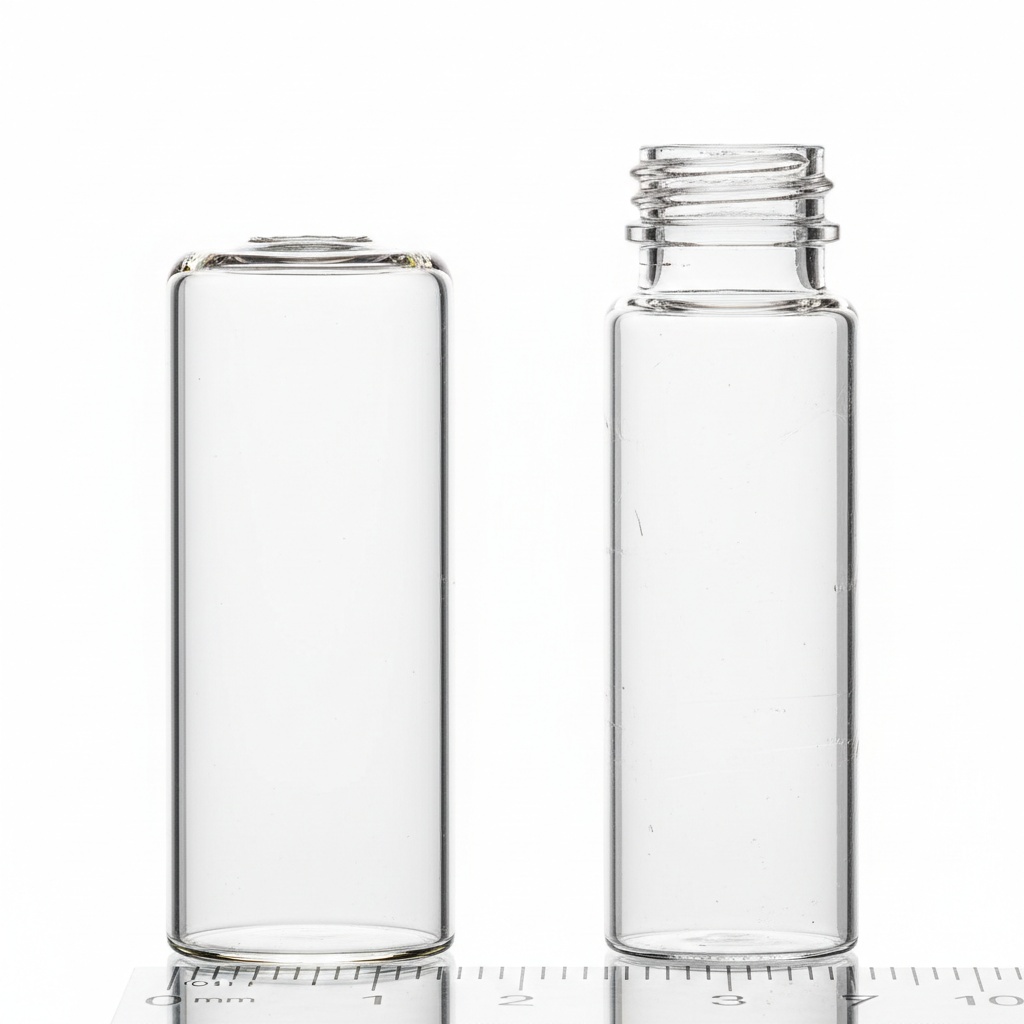
According to Grand View Research, Type I borosilicate glass is used in 78% of new cosmetic and pharmaceutical ampoules due to superior chemical resistance and low leachables. This glass type, composed of approximately 80% silica and 10% boric oxide, is the industry standard for serums containing high-concentration actives, acids, or alcohol-based carriers. Amber-tinted Type I borosilicate provides additional UV filtering for light-sensitive formulas like L-ascorbic acid serums.
Type III soda-lime glass offers a cost-effective alternative for topical serums with non-reactive formulas. This glass grade works for hyaluronic acid serums and peptide formulas that do not contain aggressive solvents. The trade-off is lower chemical resistance, which makes it unsuitable for retinol or AHA-based products.
According to Towards Packaging, glass holds 35.9% of the cosmetic packaging material share in 2025, valued for its premium positioning and chemical inertness. Brands targeting luxury retail channels often prefer glass for the perceived quality it communicates on shelf.
PETG plastic is a blow-molded alternative that delivers glass-like clarity without breakage risk. Oulete’s PETG blow-molding capability produces crystal-clear serum bottles with superior optical properties compared to standard PET. This material suits brands shipping through e-commerce channels where transit damage is a concern.
For airless configurations, PP and PE plastics dominate because they work with piston-driven dispensing systems. Oulete manufactures airless serum vials with PCR content from 10% to 50% in PP and PE components, giving brands a sustainability story without sacrificing performance. The company’s 20 injection molding machines and ISO 9001, CE, SGS, and GMP certifications ensure quality across production runs exceeding 20 million sets annually.
Closure and Dispensing Systems That Protect Active Ingredients
The closure system on a serum vial determines how much air reaches the formula between uses, how precisely the consumer can dose each application, and whether the packaging meets tamper-evidence requirements.
According to FDA, cosmetic packaging is regulated under the Federal Food, Drug, and Cosmetic Act. Under MoCRA, tamper-evident features such as secure seals, breakable caps, and protective closures are required for cosmetics sold in the United States.
Glass droppers with rubber bulbs remain the most popular closure for serum pump bottles and dropper vials. The bulb draws a controlled volume of serum into the pipette, delivering a controlled volume per squeeze. On our production floor, we test bulb compression force and pipette fill accuracy across temperature ranges to verify consistent dosing.
Airless pumps with internal pistons represent the most protective closure format for serum packaging. Each actuation draws the piston upward, dispensing a metered dose while maintaining a vacuum seal over the remaining formula. This prevents the oxidation cascade that degrades vitamin C, retinol, and other reactive actives. Our comparison of airless versus dropper bottles covers these engineering differences.
Crimp-top closures with rubber stoppers provide pharmaceutical-grade sealing. The aluminum crimp locks the stopper against the vial neck, creating an airtight and tamper-evident barrier. Standard neck finishes of 13mm, 20mm, 30mm, and 32mm accommodate most filling line configurations.
| Closure Type for Serum Vials | Dosing Precision | Compatible Viscosity | Oxidation Protection | Tamper Evidence |
|---|---|---|---|---|
| Glass dropper with rubber bulb | Medium (user-controlled) | Low to medium | Low (air enters each use) | Shrink band or collar ring |
| Airless vacuum pump | High (metered per actuation) | Low to high | Excellent (zero air contact) | Sealed piston system |
| Crimp-top with rubber stopper | Variable (syringe withdrawal) | Any | Excellent (pharmaceutical seal) | Aluminum crimp band |
| Snap-cap / flip-cap | Low (pour or squeeze) | Medium to high | Low (repeated opening) | Tear strip or breakable tab |
Protecting Formulas from UV, Oxidation, and Contamination
Active ingredient degradation is the biggest packaging failure mode in the serum category. A poorly chosen vial can reduce the efficacy of a vitamin C serum within the first month on shelf, turning a premium product into expensive tinted water.
Amber glass filters the UV spectral range that triggers photodegradation in L-ascorbic acid, retinol, and certain peptide bonds. For brands using clear glass or PETG for aesthetic reasons, UV-protective coatings applied during the decoration process offer a partial solution. Oulete’s in-house UV coating capability allows us to apply protective layers on 5ml dropper bottles and larger formats without outsourcing to a third-party decorator.
Oxidation prevention depends entirely on the closure mechanism. Dropper bottles introduce air into the headspace each time the consumer draws formula into the pipette. Over repeated daily use, this cumulative air exposure can be significant for reactive formulas. Airless pump technology eliminates this problem by maintaining vacuum pressure throughout the product lifecycle.
Cap-to-bottle compatibility is a failure point that many brands overlook until they encounter leaks on shelves. The stopper material must be chemically compatible with the serum formula. Silicone stoppers resist most cosmetic solvents, while natural rubber can swell when exposed to high-alcohol or essential-oil-based serums. Testing with the actual formula during sampling, not just with water, prevents costly recalls.
According to APG Packaging, sterilization options for plastic vials include hot air or steam sterilization in ISO 5 or cGMP cleanroom environments. Brands sourcing from China should verify that their supplier operates under GMP conditions. Oulete’s GMP-certified production and ISO 9001 quality management system provide documented compliance for brands entering regulated markets.
Serum Vial Sizes and Volume Selection
Choosing the right vial volume is not just a marketing decision. According to Uzone Packaging, the most commonly sourced serum bottle sizes are 5 ml, 10 ml, 15 ml, 30 ml, and 50 ml. Each size serves a distinct commercial purpose, and ordering the wrong volume can strand inventory or misalign with consumer expectations.
The 5 ml format works for sampling programs, travel-size SKUs, and ultra-concentrated serums where a small volume represents a full treatment course. This is also the standard size for single-month eye serums and high-value actives.
The 10-15 ml range suits subscription box products and trial sizes for new product launches. Brands validating product-market fit often start with this volume to minimize inventory risk while gathering consumer feedback.
The 30 ml vial is the standard retail size across global markets. A 30 ml bottle with a dropper or pump delivers this usage window comfortably. This size also fits standard retail shelf allocations and secondary packaging dimensions.
The 50 ml format targets value-conscious consumers and body serum applications where higher per-use volumes are typical. This size is growing as multi-step skincare routines expand application to the neck, chest, and hands.
According to Grand View Research, the global facial serum market was valued at USD 6.34 billion in 2025, growing at 6.7% CAGR to reach USD 8.58 billion by 2030. Anti-aging serums hold 31.92% revenue share.
Sourcing Serum Vials from China: What to Verify
According to Grand View Research, the global vials and ampoules market was estimated at USD 10.0 billion in 2024, projected to reach USD 15.4 billion by 2030 at 7.5% CAGR. A significant share of this production originates in China, where manufacturers range from small workshops to ISO-certified factories with full vertical integration.
The first verification step is certification. Look for ISO 9001 quality management, GMP manufacturing practices, and SGS or CE testing documentation. These are the minimum threshold for supply chain acceptance by distributors and regulatory bodies in North America and Europe. Oulete holds all four certifications and maintains audit-ready documentation for brands entering the U.S. market under FDA cosmetic packaging compliance requirements.
According to Made-in-China.com listings, China serum vial MOQ ranges span 1,000 to 100,000 units depending on supplier tier. Oulete’s MOQ starts at 1,000 units, making custom serum vial packaging accessible for emerging brands that cannot commit to large initial orders.
Sample approval should involve three rounds: visual approval, fit testing with your actual closure system, and a stability hold using your real formula. Skipping the formula compatibility test is the most common sourcing mistake we see. Water behaves differently than a serum with active ingredients and preservatives. Request compatibility testing before committing to production.
Decoration capabilities affect both timeline and cost. Hot stamping, silk screen printing, and UV coating on narrow-neck serum vials require specialized fixturing. Oulete’s in-house decoration process covers all three methods, eliminating the need to ship semi-finished vials to a separate decorator. Brands looking for premium finishes on specialty containers benefit from this vertical integration.
For brands exploring sustainable options, ask whether the supplier can incorporate PCR materials into plastic vial components. Oulete integrates 10% to 50% post-consumer recycled content in PP and PE serum vial parts, supporting brands that need to meet retailer sustainability mandates. Our approach to refillable skincare packaging extends this commitment across the product lifecycle.
Frequently Asked Questions
What is the best packaging material for serum?
The best material depends on your formula chemistry. Type I borosilicate glass provides the highest chemical resistance for serums with active acids, retinol, or high-alcohol carriers. PETG plastic offers glass-like clarity with shatter resistance, suited for e-commerce brands. Airless PP and PE systems provide the best oxidation protection for vitamin C and other reactive actives.
What is the difference between a serum vial and a serum bottle?
A serum vial is a small-format container, typically under 30 ml, designed for precise dispensing of concentrated formulas. A serum bottle is a broader term covering any serum container, including larger pump bottles up to 100 ml. The distinction matters when specifying closure systems and fill volumes with your supplier.
How do I choose between glass and plastic serum vials?
Glass is the better choice for formulas with aggressive solvents, high acid concentrations, or ingredients requiring chemical inertness. Plastic suits brands prioritizing shatter resistance, lower shipping weight, or airless dispensing. PETG bridges the gap with glass-like clarity and plastic durability. Test with your actual formula before committing.
Are airless pump bottles better than dropper bottles for serums?
Airless pumps provide superior oxidation protection by eliminating air contact entirely, making them the preferred choice for vitamin C, retinol, and peptide-based serums. Dropper bottles offer a premium tactile experience and work well for stable formulas like hyaluronic acid serums. The choice depends on your active ingredient sensitivity and brand positioning.
What glass type is used for cosmetic serum vials?
USP Type I borosilicate glass is the industry standard for cosmetic serum vials. Composed of approximately 80% silica and 10% boric oxide, this glass type offers the highest chemical resistance and lowest leachable levels. Type III soda-lime glass is an acceptable alternative for topical serums without high-alcohol or acid content.
Do serum vials need to be sterile?
Sterilization requirements depend on the formula type and target market. Serums making drug claims or containing preservative-free formulas require sterilized containers processed under ISO 5 or cGMP cleanroom conditions. Standard cosmetic serums with adequate preservative systems typically require clean but not sterile vials, with microbial testing at the batch level.
What is the minimum order quantity for custom serum vials from China?
MOQs from Chinese manufacturers range from 1,000 to 100,000 units depending on the supplier’s production scale and customization complexity. Oulete offers a 1,000-unit MOQ for custom serum vial orders, which allows emerging brands to test market response before scaling to larger production volumes.
Can I get serum vials with PCR recycled materials?
PCR integration is available for plastic serum vial components including bodies, caps, and pump housings. Oulete offers 10% to 50% post-consumer recycled content in PP and PE parts, maintaining the same mechanical performance and visual clarity as virgin resin. PCR options help brands meet retailer sustainability requirements and European packaging directives.