


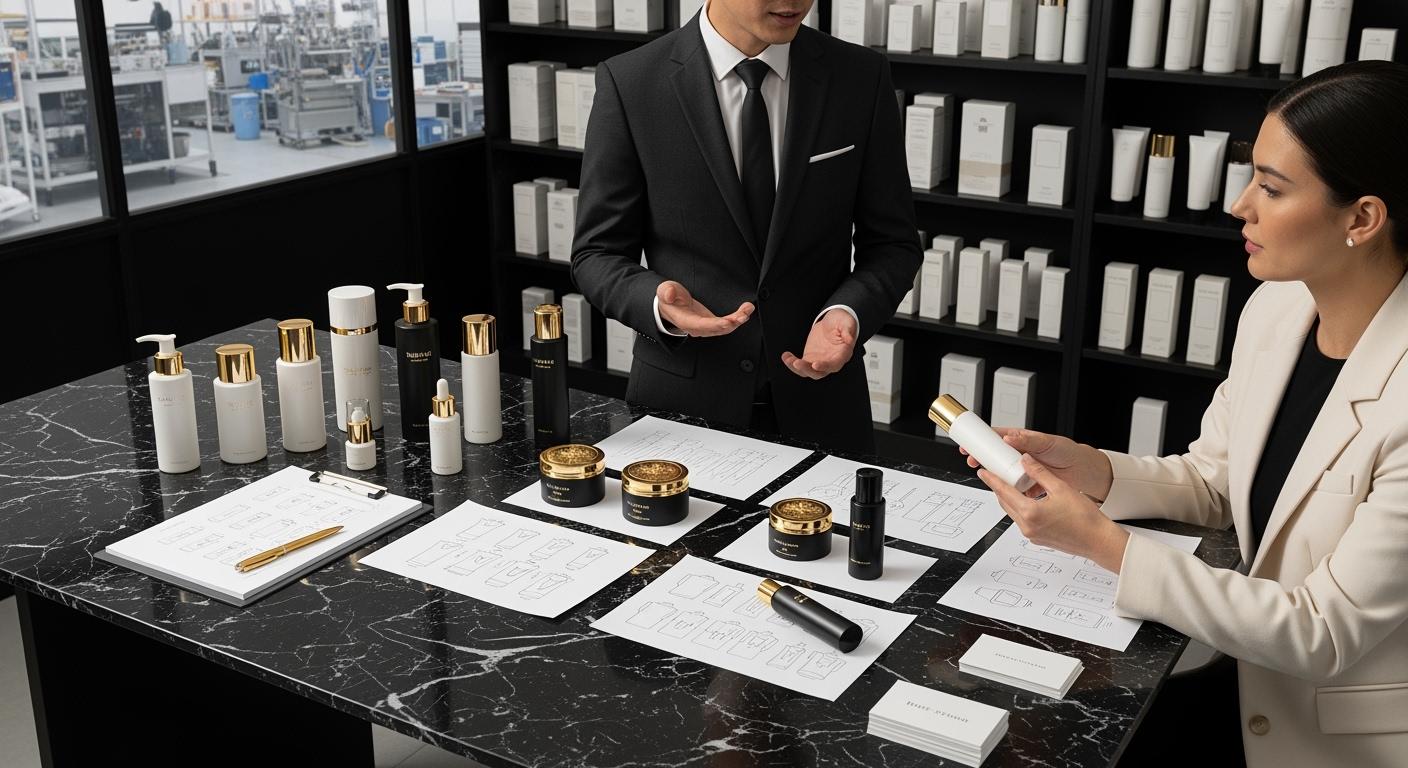
When you partner with an OEM Cosmetic Packaging manufacturer, you can expect services like consultation, design customization, material selection, prototyping, quality control, and logistics support. Packaging does more than protect your product—it shapes your brand and ensures compliance with regulations. The right bottle packaging can make your products stand out on the shelf. Take a look at what influences buying decisions:
66% of consumers say packaging affects their perception of a product.
72% admit packaging design impacts their purchase.
67% consider packaging materials important.
Choosing between OEM and ODM matters for your business. OEM gives you full creative control and flexibility, but may increase costs. ODM lets you customize efficiently and scale quickly. Before you decide, assess your needs and goals to find the best fit.
Key Takeaways
Partnering with an OEM manufacturer offers services like design customization, material selection, and quality control, which are essential for creating standout packaging.
Effective consultation is crucial; share your brand story and product details to ensure the manufacturer understands your vision and can meet your needs.
Choosing the right materials impacts both product safety and brand image; consider factors like recyclability and consumer appeal during selection.
Rapid prototyping allows you to test packaging designs quickly, helping you catch issues early and streamline your product launch.
Strong quality control and compliance support from your OEM partner protect your brand reputation and ensure your products meet market regulations.
Part1: OEM Cosmetic Packaging Consultation
1.1 Needs Assessment
When you start working with an OEM Cosmetic Packaging manufacturer, the first step is a thorough needs assessment. This is where you lay out your vision and goals. You get to share your brand’s story, target audience, and what makes your products unique. The manufacturer listens and asks questions to understand your direction—whether you’re aiming for a mass-market line or a luxury collection.
During this phase, you’ll discuss important details like your product concept, texture, and any must-have features such as vegan or fragrance-free formulas. You’ll also talk about your target price range, which helps the manufacturer suggest the right packaging tier and ingredient grade. If you have competitor benchmarks or sensory examples, bring them to the table. These references help the team create packaging that stands out.
Here’s what most beauty brands focus on during the initial consultation:
Quality of ingredients and sourcing standards
Compliance with certifications (organic, vegan, Fair Trade)
Service levels and customization options
Order requirements, including minimum order quantities
You should also clarify your business model—are you selling online, in retail stores, or through distributors? This affects your minimum order quantities and timelines. Don’t forget to ask about compliance needs, like Halal, GMP, or ISO certifications, and any claim restrictions in your target market. Remember, you’re hiring a partner, not just a vendor, so bring all your questions.
Tip: Share your creative direction early. Mood boards, color schemes, and product themes help the manufacturer develop packaging that connects with your customers.
1.2 Design & Customization
Once you’ve set your goals, you move into the design and customization stage. This is where your ideas come to life. OEM Cosmetic Packaging manufacturers offer a wide range of options to help you build a strong brand identity. You can choose everything from printing styles to color accuracy, making sure your packaging matches your vision.
Customization Aspect | Description |
|---|---|
Printing Tailoring | Stylized packaging printing helps build a brand image with advanced printing technology. |
Coloring Options | Advanced Pantone color calibration ensures color accuracy to match brand identity. |
Material Selection | A variety of materials (PP, ABS, aluminum, acrylic) are offered to suit different product needs. |
Surface Finishing | Options include glossy, matte, and metallic finishes to enhance product appeal on shelves. |
If you’re launching a serum, you might want to explore serum bottles. For skincare lines that need to protect sensitive formulas, airless bottles can be a smart choice. If your products require precise application, dropper bottles offer both style and function. The consultation process helps you match the right bottle type to your product’s needs, ensuring both performance and shelf appeal.
OEM Cosmetic Packaging partners also support innovation. They bring advanced formulation capabilities and keep up with trends like personalization and sustainable customization. You get access to a team of designers who work with you to create packaging that’s both eye-catching and practical for your market.
1.3 Material Selection
Material selection plays a huge role in both the look and safety of your packaging. You want materials that protect your product, fit your brand image, and meet your budget. During consultation, you’ll review the pros and cons of each option.
Material | Advantages | Challenges |
|---|---|---|
Glass | Non-reactive, premium look, 100% recyclable | Heavy, fragile, higher shipping costs |
Plastic | Lightweight, customizable, cost-effective | Not biodegradable, environmental concerns |
Metal | Durable, premium appeal, highly recyclable | Heavy, prone to visible marks |
You’ll also consider newer options like PET and HDPE plastics, recycled cardboard, bioplastics, and flexible pouches. Each material has its own benefits and challenges. For example, glass gives a luxury feel and is fully recyclable, but it’s heavier and can break during shipping. Plastics like PET and HDPE are affordable and light, making them popular for mass-market products, but they raise environmental concerns.
Here are some factors you’ll weigh during material selection:
Compatibility with your cosmetic formulas
Consumer appeal and alignment with your target audience
Environmental impact, focusing on recyclable or biodegradable materials
Cost efficiency, balancing quality and budget
Choosing the right material means balancing affordability, quality, and sustainability. The consultation process helps you make informed decisions that support your brand’s goals and keep your products safe.
Part2: Prototyping & Sampling
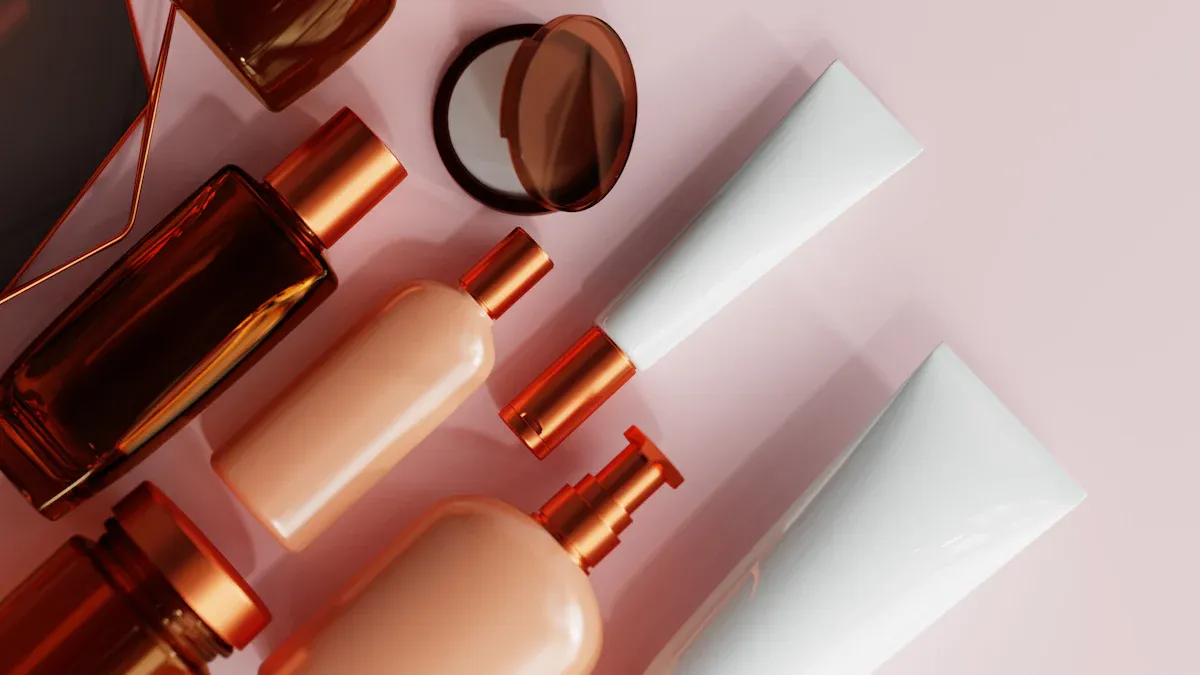
2.1 Rapid Prototyping
You want your new cosmetic bottle to hit the market fast. That’s where rapid prototyping comes in. This step lets you see and touch a physical sample of your packaging before you commit to a full production run.
Here’s how long you can expect to wait for a prototype:
Source | Turnaround Time |
|---|---|
Naitetech | 1–3 days |
Evokpoly | Days to 1-2 weeks |
Ezramade | 1–3 days (CNC/3D Printing), 7–15 days (Rapid Tooling) |
You can see that some manufacturers deliver prototypes in just a few days. This speed helps you make decisions quickly and keeps your project moving. When you use rapid prototyping, you can catch design issues early and avoid costly delays. Digital prototyping also helps you spot problems before you invest in tooling or bulk production. If you choose a simple and fast process, you can test more ideas and get your bottle packaging to market sooner.
Tip: Prototyping gives you a chance to test how your bottle feels in hand and how it looks on the shelf. You can also gather feedback from your team or even select customers.
2.2 Sample Approval
Sample approval is a key step before you move to mass production. You want to make sure your bottle packaging meets your standards and works with your product. Here’s how most beauty brands handle this process:
You receive a prototype sample after the initial design and formulation.
You review the sample for look, feel, and function. You can test the bottle with your actual product.
You check the packaging for stability, compatibility, and safety. This might include microbiological testing or drop tests.
You give feedback to your OEM Cosmetic Packaging partner. If changes are needed, you repeat the process until you’re satisfied.
You sign off on the final mock-up before bulk production begins.
This hands-on approach reduces risk and ensures your packaging fits your brand’s needs. You can also use this stage to test consumer reactions or make last-minute tweaks. When you approve the sample, you set the standard for every bottle that follows.
Note: Taking time to review and test your samples now can save you from bigger problems later. It’s your chance to make sure every detail is right before your product hits the shelves.
Part3: Quality & Compliance
3.1 Quality Control
You want your cosmetic bottles to look great and perform perfectly. Quality control is the backbone of any successful OEM Cosmetic Packaging partnership. If you skip this step, you risk leaks, contamination, or even product recalls. That’s why top manufacturers use a series of checks at every stage.
Here’s a quick look at the most common quality control measures:
Quality Control Measure | Description |
|---|---|
Finished Product Testing | Samples are tested for microbial safety, stability, and physical consistency. |
Packaging Validation | Tests confirm that packaging does not react with the formula or compromise shelf life. |
Storage and Distribution Checks | Products are monitored under different conditions to ensure they reach customers in perfect condition. |
Microbiological Testing | Checks for harmful microorganisms that could cause irritation or spoilage. |
Stability Testing | Products are stored under various conditions to determine shelf life and packaging compatibility. |
Compatibility Testing | Ensures that containers do not cause ingredient separation, leakage, or oxidation. |
Claim Validation (Efficacy Testing) | Provides proof for product claims such as hydration duration or skin improvement. |
Compliance with GMP | Manufacturers must follow Good Manufacturing Practices to ensure product safety and reliability. |
You’ll also see these steps in a strong quality program:
Quality inspection at every stage, from raw material to final product.
ISO 22716 certification, which shows the manufacturer meets strict quality standards.
Raw material inspection to catch problems before production starts.
Leakage testing to make sure bottles stay sealed during shipping.
Final quality checks before anything leaves the factory.
The biggest challenge in bottle packaging is making sure your formula and the bottle work together. If you choose the wrong material, your product can break down or leak. Many new brands focus on looks and forget about testing. You don’t want to make that mistake. Always ask your OEM partner about their inspection process and how they handle issues like inconsistent printing or minimum order quantity pressures.
Tip: Don’t just trust a pretty sample. Ask for test reports and certifications. This protects your brand and your customers.
3.2 Cosmetic Labeling & Regulatory Support
Proper labeling is more than a legal box to check. It builds trust with your buyers and keeps your products on the shelf. If you get it wrong, you could face fines, recalls, or even bans in certain markets.
You need to follow different rules depending on where you sell your bottles. Here’s a quick guide:
Region | Compliance Requirement |
|---|---|
US | Accurate ingredient listing in descending order, warnings for unsafe use on certain body parts |
EU | Adherence to Regulation (EC) No 1223/2009, including product function, precautions, ingredient list, and expiry date |
China | Mandatory registration on the National Medical Products Administration (NMPA) portal for imported cosmetics |
Your OEM Cosmetic Packaging partner should help you with:
Keeping ingredient lists accurate and transparent.
Filing the right paperwork for each market.
Monitoring products after launch to catch any safety issues.
In the U.S., you must show every ingredient, use the correct INCI names, and include net quantity and warnings. The EU wants you to follow Regulation (EC) No 1223/2009, which covers everything from product function to expiry dates. China requires you to register imported cosmetics with the NMPA. These rules change often, so you need a partner who stays up to date.
Working with an experienced OEM gives you access to regulatory experts. They know how to prepare your bottles for each market. They also help you avoid misbranding risks and delays. If you want to build trust, you need clear, honest labels. Most beauty buyers check the label before they buy. If you use recyclable bottles, you’ll also appeal to the 67% of consumers who prefer eco-friendly packaging.
Note: Accurate labeling is not just about following the law. It’s about protecting your reputation and making sure your customers feel safe.
Part4: Production & Value-Added Services
4.1 Batch Flexibility
You want flexibility when you launch new products or scale up your line. Many manufacturers offer batch flexibility, which lets you order small or large quantities without wasting resources. This approach helps you test new formulas or packaging styles, like airless pump jars or cosmetic tube packaging, before committing to a big run.
Small orders benefit from production lines already running, so you see fewer defects.
Changeovers happen quickly, which means less waiting for your batch.
Setup costs drop, making it affordable for both startups and established brands.
4.2 Lead Times & Scalability
Lead times depend on your formula and packaging choices. If you use an existing formula and standard packaging, you get faster turnaround. Custom bottles or new formulas take longer. Manufacturers usually require a minimum order quantity to keep production efficient and quality consistent. As your brand grows, you can increase order sizes and improve margins.
Small batch manufacturing lets you launch products with low MOQs.
You can use this flexibility for R&D and refine your bottle packaging before scaling up.
Lead times vary based on formula type and packaging, so plan ahead.
4.3 Decoration & Finishing
You want your bottles to stand out. OEM Cosmetic Packaging manufacturers offer advanced decoration and finishing techniques.
Decoration Technique | Description |
|---|---|
Tactile finishes | Embossing and soft-touch finishes enhance the feel of your bottle. |
Sustainable options | Water-based inks and recyclable coatings appeal to eco-conscious buyers. |
Mixed-technique layering | Frosted bases with metallic accents create visual depth and luxury. |
Sensory luxury | Sensory experiences matter more than material weight in modern packaging. |
Clean beauty communication | Textures and finishes show product quality without relying only on text. |
4.4 Sustainable Packaging Options
Sustainability is a top priority for many brands. You can choose packaging that follows circular design principles, focusing on recyclability and easy processing. Refillable bottles and simplified material combinations are gaining popularity. Buyers want clear information about materials and environmental impact. Performance matters, so your sustainable packaging must protect your product and deliver a great user experience.
Recyclable and refillable options are available for bottles and tubes.
Consumer demand for eco-friendly packaging keeps rising.
Brands move toward clearer sustainability claims and transparent material sourcing.
4.5 Logistics Support
You need reliable logistics to get your bottles to market. OEM Cosmetic Packaging manufacturers provide end-to-end solutions, including warehousing and global shipping. Flexible MOQs help you adapt as your business grows. Project management teams keep you updated and ensure deadlines are met. Compliance support helps you meet local packaging and labeling requirements.
Service Type | Description |
|---|---|
End-to-End Solutions | Complete logistics, warehousing, and global shipping for bottle packaging. |
Flexible MOQs | Adaptable order quantities for brands at different growth stages. |
Project Management | Dedicated teams manage production and logistics, keeping everything transparent. |
Compliance Support | Experts help you meet global packaging and labeling regulations. |
Tip: Ask your manufacturer about warehousing options and global shipping support. This can save you time and reduce costs as you expand.
Part5: After-Sales & OEM/ODM Support
5.1 Customer Service
When you work with an OEM Cosmetic Packaging partner, you want more than just a supplier—you want a team that supports you after your bottles ship. Great customer service means you get fast answers, clear updates, and expert help at every stage. Top manufacturers use best-in-class practices to keep your bottle packaging consistent and safe:
Practice | Description |
|---|---|
Stability Assessment | Staff check appearance, color, and scent to ensure your bottles look and perform as promised. |
Functionality Assessment | Teams test bottles with real users and advanced models to confirm they work as intended. |
Quality Inspection | Every batch gets checked for appearance, odor, and texture before leaving the facility. |
Pre-Shipment Inspection | Only bottles that pass final checks get shipped to you. |
Packaging Solution | You can choose from a wide database of bottle types and materials, saving you time and effort. |
Tip: Ask about ongoing support for your bottle packaging. If you need a new batch or want to request a custom packaging quote, a responsive team makes the process smooth.
5.2 Issue Resolution
Problems can happen, even with the best partners. You need a manufacturer who acts fast if you spot a defect or get a customer complaint. Good partners monitor bottle performance after shipping and respond quickly to any issues. They use stability testing, strict quality control, and keep up with regulations like the EU Cosmetics Regulation. This approach helps you avoid recalls and keeps your brand reputation strong.
Manufacturers track bottle quality after delivery.
They handle complaints to prevent bigger problems.
You get clear updates and solutions if something goes wrong.
5.3 Reordering Process
Consistency matters for your brand. When you reorder bottles, you want every batch to match the last. Reliable OEM partners use strict quality control, batch monitoring, and material checks to keep your bottle packaging uniform. They follow a structured workflow to reduce errors and speed up production. If you need to reorder a popular bottle, or want to explore custom cosmetic packaging services, you can count on a smooth process.
Quality checks keep every reorder consistent.
Batch monitoring ensures bottles look and perform the same.
Material control means no surprises in your packaging.
5.4 OEM vs ODM Differences
Choosing between OEM and ODM shapes your business strategy. Here’s a quick look at how they compare for bottle packaging:
Feature | OEM (Original Equipment Manufacturer) | ODM (Original Design Manufacturer) |
|---|---|---|
Customization Level | High—full creative control for unique bottles | Moderate—customize existing bottle designs |
Control Over Formulations | You own the formula and design | Limited—use pre-made options |
Investment | Higher—more R&D and expertise needed | Lower—faster, uses existing infrastructure |
Speed to Market | Slower—unique bottles take time | Faster—ready-made bottles launch quickly |
Brand Strategy Impact | Stand out with unique packaging | Enter market fast, follow trends |
OEM lets you create bottles that reflect your brand’s identity. ODM helps you launch quickly and respond to trends. Your choice affects your resources, speed, and how you stand out in the market.
Note: Ongoing support and clear communication make all the difference. Choose a partner who helps you grow, not just fill orders.
When you choose an OEM Cosmetic Packaging partner, you should expect more than just bottles. Look for these essentials:
Industry experience and a wide range of bottle designs
Reliable delivery and transparent workflows
Adaptability for your unique product needs
Strong regulatory knowledge for global markets
Aspect | Why It Matters for Your Brand |
|---|---|
Quality Control | Keeps your bottles consistent and safe |
Compliance Support | Protects your reputation and market access |
Advanced R&D | Helps you stay ahead with innovative bottles |
A great partner helps you avoid costly delays and compliance headaches. Use these criteria to evaluate your current or future suppliers. If you want expert support for your next bottle launch, reach out to oulete.
FAQ
What is the minimum order quantity (MOQ) for custom bottle packaging?
MOQs vary by manufacturer and bottle type. You might see MOQs as low as 1,000 units for standard bottles. Custom designs often require higher quantities. Always ask your OEM partner like Oulete for flexible options that fit your business needs.
How long does it take to produce and deliver custom cosmetic bottles?
Production times depend on your design and order size. Standard bottles may take 2–4 weeks. Custom bottles can take 6–12 weeks, including prototyping and approvals. Shipping adds extra time. Plan ahead to meet your launch schedule.
Can I request eco-friendly bottle packaging for my beauty brand?
Absolutely! Many OEM manufacturers offer recyclable, refillable, or biodegradable bottle options. You can ask about materials like glass, PET, or bioplastics. Eco-friendly packaging helps your brand appeal to sustainability-focused clients.
What support do I get if there’s a quality issue with my bottles?
You get dedicated after-sales support. If you find defects or inconsistencies, your OEM partner investigates and resolves the issue quickly. Most manufacturers offer replacements or refunds for confirmed quality problems. Always review their quality assurance policy before ordering.