


A European skincare brand approached us last year wanting their serum line in ocean-bound plastic bottles. They had retailer buy-in and consumer demand data, but no clear understanding of what ocean plastic packaging actually is, how it differs from standard PCR, or what it means for production timelines. That conversation happens more frequently now, and most brands work with incomplete information.
Ocean plastic packaging converts coastal waste collected within 50 km of shorelines into certified cosmetic containers before it reaches the sea. The market for this material is growing fast. According to GM Insights, the recycled ocean plastic packaging segment reached USD 723.1 million in 2025 and is projected to hit USD 2.2 billion by 2035, growing at an 11.8% CAGR. But growth alone does not mean the material is right for every brand, every product, or every budget.
What Ocean-Bound Plastic Actually Means
Ocean-bound plastic (OBP) is abandoned plastic waste collected within 50 kilometers of an ocean coastline or major waterway, in regions where waste management infrastructure is inadequate to prevent that waste from entering the sea. It is intercepted before reaching the ocean and recycled into certified packaging materials. This distinction matters: OBP is not plastic fished out of the ocean itself. Plastic that has already been in saltwater is degraded, contaminated, and largely unsuitable for cosmetic packaging applications.
The OBP Certification program, developed by Zero Plastic Oceans in collaboration with Control Union, defines three categories. Shoreline OBP is found on coastlines, beaches, and tidal zones. Waterway OBP is collected from rivers, lakes, and drainage channels flowing toward the ocean. Potential OBP sits in inadequately managed landfills or dump sites within the 50 km coastal zone.
According to UA Packaging, at least 8 million tons of plastic enters the ocean each year, with 80% originating from land-based sources. Coastal interception through OBP collection programs targets this 80% before it becomes marine debris, making it a prevention strategy rather than a cleanup effort.
The certification system has four tracks: Collection Organisation, Recycling Organisation, Neutralization Service Provider, and Plastic Producers & Users. Any supplier claiming OBP status should be verifiable through the public registry at obpcert.org or through OceanCycle, the world’s first independent third-party OBP certification body that audits collection and recycling supply chains against international quality, ethical, and environmental standards.
From Coastal Waste to Cosmetic Packaging
The conversion process follows four stages, and each one introduces quality variables that brands need to understand. Collection teams in coastal regions gather plastic waste from beaches, waterways, and landfill sites. This material arrives as a mix of PP, PE, HDPE, and PET in various states of degradation, contamination, and color.
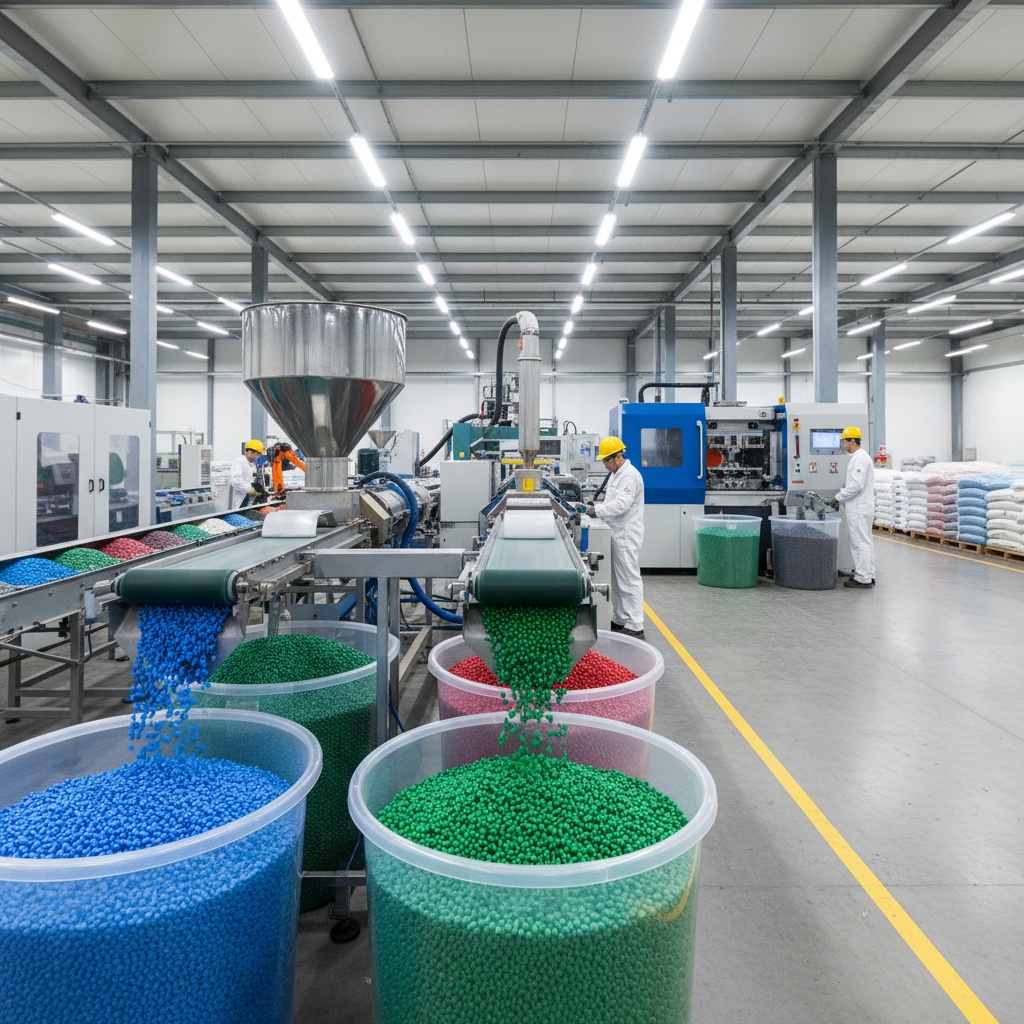
Sorting and cleaning is where most of the cost accumulates. Workers and automated systems separate plastics by resin type, remove non-plastic contaminants, and wash the material through multiple cycles. The cleaned flakes are then processed into pelletized resin suitable for injection molding or blow molding.
On our production floor, we process PP and PE resins using the same injection molding equipment as standard cosmetic packaging. Oulete operates 20 injection molding machines capable of handling recycled PP, PE, and HDPE grades, and the tooling compatibility with OBP resin is straightforward for these polymer families. The key processing difference is color consistency. Virgin resin produces uniform color batch to batch. OBP resin, even after thorough sorting, introduces slight color variation that affects the final part appearance.
Surface finish is the other factory-level concern. OBP resin in PP and PE grades can produce a slightly more granular surface texture compared to virgin material. This variation is minor for matte-finish containers but becomes relevant for brands planning hot stamping, screen printing, or UV coating decoration on the bottle surface. Testing reveals that adhesion performance on OBP surfaces requires validation with your specific decoration process before committing to production volumes.
Environmental Impact Beyond the Marketing Claim
Brands often cite environmental benefits when pitching ocean plastic packaging to retailers and consumers. The numbers behind those claims deserve scrutiny.
According to UA Packaging, OBP production generates up to 55% fewer greenhouse gas emissions compared to virgin plastic production across its lifecycle. Some certified upcycling processes achieve even stronger results. According to SeaCliff Beauty, production using #tide ocean material has demonstrated up to 80% lower CO2 emissions than virgin plastic, with the equivalent of more than 30 million plastic bottles upcycled in three years.
Consumer demand backs the environmental argument. According to Shorr Packaging, a 2025 survey of over 2,000 Americans found that 90% were more likely to buy from brands with sustainable packaging, and 64% consider sustainable practices important when choosing beauty and personal care products.
Ocean plastic packaging made from HDPE or PP is 100% recyclable through standard curbside recycling in many markets, provided impurities remain below 5%, according to Big Sky Packaging. This recyclability claim holds for mono-material constructions. Multi-material designs with pumps, springs, or mixed polymer components complicate end-of-life recyclability regardless of whether the base material is OBP.
The EU’s Packaging and Packaging Waste Regulation (PPWR), which entered into force in February 2025, mandates minimum recycled content thresholds for plastic packaging. OBP content may qualify toward these thresholds under certain conditions, according to GoEcoPure. Similarly, California’s EPR law requires a 25% reduction in plastic packaging by 2032, and ocean-bound plastic in recyclable PP mono-material packaging can contribute to compliance.
Ocean Plastic vs. PCR vs. Bio-Based: Choosing the Right Material
This is the comparison that most guides skip entirely. Brands evaluating sustainable packaging options typically consider three categories, and each has distinct trade-offs in cost, supply stability, regulatory positioning, and consumer perception.
| Feature | Ocean-Bound Plastic (OBP) | PCR (Post-Consumer Recycled) | Bio-Based Plastic |
|---|---|---|---|
| Source material | Coastal waste within 50 km of shoreline | Consumer recycling streams (curbside, deposit) | Plant-derived feedstock (sugarcane, corn) |
| Resin types available | PP, PE, HDPE, PET | PP, PE, PET (wider availability) | PLA, bio-PE, bio-PET |
| Cost vs. virgin | Significant premium | Moderate premium | Higher premium, feedstock-dependent |
| CO2 reduction | Up to 55-80% vs. virgin | Varies by source and process | Varies by feedstock and process |
| Certification | OBP Cert, OceanCycle | No universal standard | USDA BioPreferred, TUV |
| Supply stability | Limited, geography-dependent | More established, broader supply | Growing, crop-dependent |
| Consumer story | Strong emotional narrative (ocean protection) | Circular economy message | Renewable resource message |
| Recyclability | Recyclable (HDPE/PP mono-material) | Recyclable (same stream as virgin) | PLA requires industrial composting; bio-PE recyclable |
| Cosmetic compatibility | Standard PP/PE compatibility | Standard compatibility | PLA has limited chemical resistance |
| Best for | Brands with ocean/coastal positioning | Brands needing proven recycled content | Brands targeting bio-circular narrative |
Oulete manufactures PCR-content cosmetic packaging in PP, PE, and PET at 10% to 50% recycled content ratios. When brands ask about adding OBP to their packaging program, we walk through this comparison to match the material to their actual positioning and regulatory needs. A brand selling through EU retailers facing PPWR recycled content mandates may find standard PCR more straightforward. A brand with an ocean conservation partnership benefits from the OBP narrative.
For brands exploring all options within bio-based and sustainable packaging materials, the decision often comes down to which story resonates with their specific consumer base and which material their supply chain can reliably deliver at the volume they need.
How to Verify a Supplier’s OBP Certification
Greenwashing in ocean plastic claims is a real risk. Several steps can help brands verify that a supplier’s OBP certification is genuine and that the material actually enters the packaging they receive.
Check the public registry at obpcert.org. The OBP Certification program maintains a searchable database of certified Collection Organisations, Recycling Organisations, Neutralization Service Providers, and Plastic Producers & Users. If a supplier claims OBP certification but does not appear in this registry, that is a red flag.
Cross-reference with OceanCycle. As the first 100% independent, third-party OBP certification, OceanCycle provides an additional verification layer. Their certification ensures that international quality, ethical, environmental, and labor standards are met throughout the collection and recycling supply chain.
Request the chain of custody documentation. A legitimate OBP supplier can trace material from the specific collection point through sorting, recycling, and pelletization to the final molded part. According to SeaCliff Beauty, some advanced programs use blockchain-based supply chain tracking to provide a digital material passport for every batch.
When evaluating cosmetic packaging suppliers from China, additional verification is warranted. Ask for the specific collection geography, the recycler’s certification number, and whether the OBP content percentage has been independently tested. Oulete holds ISO 9001, CE, SGS, and GMP certifications, which provide a verifiable quality framework that interacts with OBP supplier qualification requirements.
Cost and MOQ Realities for Cosmetic Brands
The cost question is where many ocean plastic packaging conversations stall. Transparency about pricing helps brands budget accurately and avoid surprises during development.
According to Big Sky Packaging, ocean-bound plastic packaging costs significantly more than virgin resin due to the complex collection, sorting, cleaning, and conversion processes required to transform coastal waste into packaging-grade material. The premium decreases as OBP supply chains mature and collection volumes increase, but brands should plan for a significant cost difference today.
According to GlobeNewswire, the global recycled ocean plastics market was valued at USD 1.93 billion in 2025 and is projected to reach USD 3.50 billion by 2034 at a 6.81% CAGR. As this market scales, competition among recyclers and processors is expected to bring costs down gradually.
Oulete’s standard MOQ starts at 1,000 units with annual production capacity exceeding 20 million sets across our 20 injection molding machines. For OBP-content packaging specifically, MOQ depends on the resin supplier’s minimum batch size, which typically starts higher than standard virgin resin minimums. Brands should plan development timelines that account for OBP resin procurement lead times, which can run longer than standard PP or PE sourcing.
One practical approach we recommend: start with a blended ratio. Rather than committing to 100% OBP content, brands can begin with a percentage blend that balances the sustainability claim with cost management. The OBP Certification program certifies products at various OBP content levels, so a blend of OBP with virgin or PCR resin still qualifies for certified OBP packaging claims while keeping the cost premium manageable.
FAQ
What is ocean-bound plastic and how is it different from ocean plastic?
Ocean-bound plastic (OBP) is plastic waste collected from within 50 km of a coastline or major waterway before it enters the ocean. It has not been degraded by saltwater exposure and maintains properties suitable for recycling into packaging-grade material. Plastic actually recovered from the ocean is typically too degraded for cosmetic packaging applications.
Is ocean plastic packaging more expensive than regular recycled packaging?
OBP packaging carries a significant cost premium over virgin resin, compared to standard PCR packaging, which carries a lower cost premium due to more established collection infrastructure. The OBP premium reflects the more complex collection logistics, geographic constraints, and smaller supply volumes compared to established PCR supply chains.
How do I verify that my packaging supplier’s ocean plastic is genuinely certified?
Search the public registries at obpcert.org and oceancycle.co to confirm your supplier holds active certification. Request chain-of-custody documentation tracing the material from collection point through recycling to the final product, and verify the specific OBP content percentage through independent testing.
Which cosmetic packaging types are available in ocean-bound plastic?
OBP resin in PP, PE, and HDPE grades can be molded into bottles, jars, tubes, and closures using standard injection molding and blow molding equipment. The available formats match most standard cosmetic packaging shapes, though color consistency and surface finish may differ from virgin material versions.
Is ocean plastic packaging recyclable after use?
OBP packaging made from HDPE or PP mono-material constructions is 100% recyclable through standard curbside recycling programs, provided impurity levels remain below 5%. Multi-component assemblies with pumps and springs require disassembly before recycling, the same as any packaging with mixed materials.
Can ocean plastic packaging be decorated with hot stamping or UV coating?
OBP surfaces in PP and PE can accept hot stamping, screen printing, and UV coating, but the slightly granular surface texture of recycled resin may affect adhesion. Production teams should run decoration adhesion tests on OBP sample parts before finalizing the decoration specification for full production.
How does ocean plastic packaging compare to bio-based packaging for cosmetics?
OBP is made from existing petroleum-based plastic waste diverted from coastal areas, while bio-based packaging uses plant-derived feedstock like sugarcane or corn starch. OBP fits brands with an ocean conservation narrative; bio-based suits brands focused on renewable resource messaging. Both carry cost premiums over virgin plastic.
What certifications should I look for when sourcing ocean plastic packaging from China?
The resin should carry OBP Certification from Zero Plastic Oceans/Control Union or OceanCycle third-party certification. The manufacturer should hold ISO 9001 for quality management, and certifications like CE, SGS, or GMP provide additional quality assurance for the molding and assembly processes.