


When you choose the right cap for your cosmetic bottle, you protect your product and make it easier to use. Flip top caps with tight seals help stop leaks, keep formulas fresh, and prevent bacteria from getting in. A good fit also means you avoid messy spills and keep your customers happy.
Key Takeaways
- Choose the right neck size and thread type for your cap to prevent leaks and ensure a secure fit.
- Select an orifice size that matches your product’s viscosity for better control and ease of use.
- Focus on user experience by selecting flip top caps that are easy to open and dispense the right amount of product.
How to Choose the Right Cap: Bottle & Product Needs
Neck Size & Thread Match
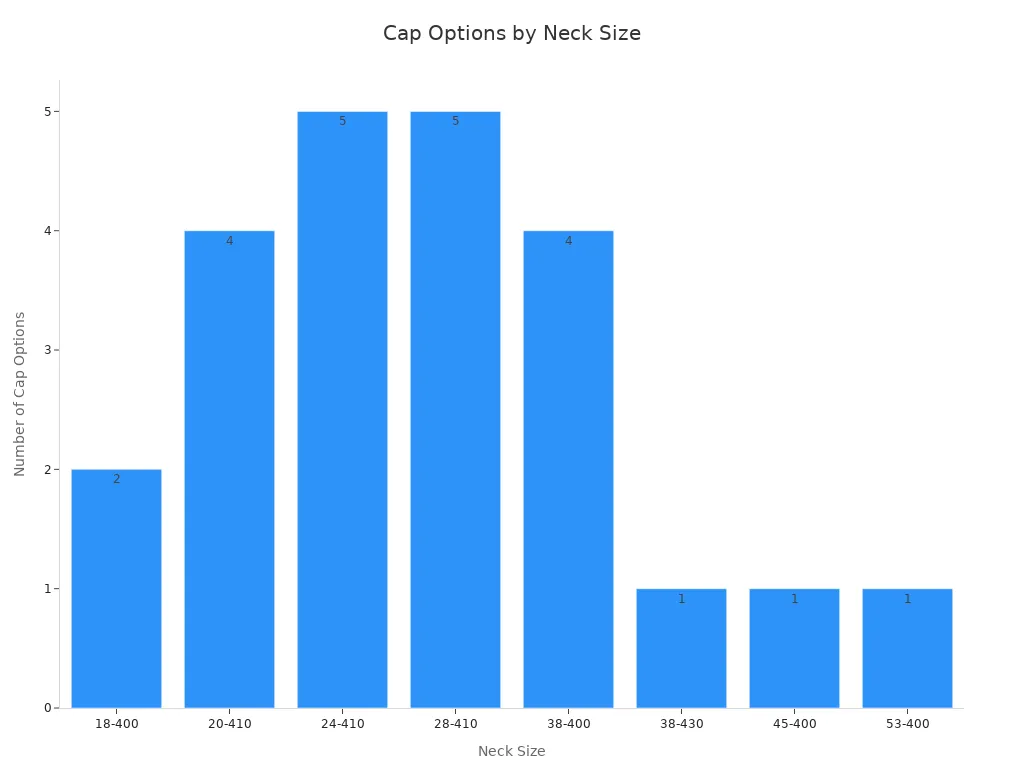
When you choose the right cap for your cosmetic bottle, you need to start with the neck size and thread type. If the cap does not fit the bottle perfectly, you might see leaks or loose closures. This can waste your product and frustrate your customers. Most cosmetic bottles use standard neck sizes and threads, which makes it easier to find a matching cap. Here is a table that shows some of the most common neck sizes and their uses:
| Neck Size | Description | Common Uses | Cap Options |
|---|---|---|---|
| 28-410 | Common neck finish for plastic and aluminum bottles | Medium bottles (8oz to 32oz) | Continuous thread caps, trigger sprayers, disc top caps, flip-tops, dispensing pumps |
| 38-400 | Versatile closure neck size for plastic, metal, and glass | Bottles from 4oz to 1 gallon | Standard continuous thread caps, child-resistant closures, yorker spouts, flip-top caps |
| 38-430 | Found mainly in food and flavorings | Buttress bottles | Only buttress caps |
| 45-400 | Common in pharmaceutical/nutraceutical industry | Packer bottles (175 cc to 400 cc) | Plastic continuous thread closures |
| 53-400 | Largest neck size for pharmaceutical/nutraceutical | Packer bottles (400 cc to 950 cc) | Continuous thread closures |
| 18-400 | Common for glass bottles like dropper bottles | Essential oils and oil-based products | Rubber bulb droppers, phenolic caps |
| 20-410 | Mainly for smaller plastic bottles | 1oz to 4oz bottles | Continuous thread caps, fine mist sprayers, disc caps, flip-tops |
| 24-410 | Increasingly available in aluminum | 2oz to 16oz bottles | Continuous thread caps, fine mist sprayers, disc top caps, flip-tops, dispensing pumps |
You will also see industry standards like 15/415, 18/410, 20/410, 24/410, and 28/410. These numbers tell you the outer diameter and thread style. For example, a 24/410 neck means the bottle has a 24mm outer diameter and a 410 thread style. Matching these numbers helps you avoid leaks and makes sure the cap stays secure.
Tip: Always check the neck size and thread type before you choose the right cap. Even a small mismatch can cause big problems.
Orifice Size for Viscosity
The orifice size, or the opening in the cap, matters a lot when you choose the right cap. If your product is thin, like a liquid cleanser, you want a small orifice. This helps control the flow and stops spills. If your product is thick, like a cream or lotion, you need a larger orifice so the product comes out easily.
Here is a quick guide to orifice sizes and what they work best for:
| Orifice Size | Ideal Use |
|---|---|
| 24-410 | Hand soaps, lotions, shampoos |
| 24-415 | Versatile for personal care products |
| 38-400 | Powders, granular products |
| 38-430 | Thick creams, food products |
If you use a 24mm neck finish, you can pair it with pumps or sprayers for soaps and lotions. For thick creams, a 38mm neck finish works better because it lets more product out with less effort. When you choose the right cap, always think about how thick your product is and how you want your customers to use it.
User Experience Focus
You want your customers to enjoy using your product every time. Flip top caps make this easy. They let people open and close the bottle with one hand, even if their hands are wet or slippery. This is great for products used in the shower or at the sink. The design of the cap should feel comfortable and work smoothly.
A good flip top cap also controls how much product comes out. This helps your customers use just the right amount and keeps things neat. Strong hinges and a secure snap keep the cap working well, even after many uses.
- Flip top caps with easy-open designs make your product more user-friendly.
- A cap that fits well and works smoothly can lead to happier customers and more repeat purchases.
- When you choose the right cap, you show your customers that you care about their experience.
Note: Customers notice when packaging is easy to use. A well-chosen cap can turn a first-time buyer into a loyal fan.
By focusing on neck size, orifice size, and user experience, you set your product up for success. When you choose the right cap, you protect your formula, make your product easy to use, and keep your customers coming back.
Flip Top Cap Features to Evaluate
Material & Chemical Resistance
When you look at flip top caps, you want to make sure the material matches your product. Some formulas can break down certain plastics. Here is a quick table to help you see which materials work best:
| Material | Properties |
|---|---|
| Polypropylene (PP) | Excellent chemical resistance, high durability, withstands many temperatures |
| Polyethylene (PE) | Flexible, impact resistant; HDPE is rigid, LDPE is more flexible |
| Other plastics | PET, HDPE, LDPE are used for bottles, ensuring compatibility with caps |
If you use strong ingredients, pick a cap that resists chemical damage. This helps your product stay safe and fresh.
Durability & Reuse
You want a cap that lasts. Flip top caps should open and close many times without breaking. Polypropylene and polyethylene both offer good durability. If your product is for daily use, a sturdy hinge and snap will keep the cap working well. This makes your product feel high quality and reliable.
Leak Prevention (Linerless/Gasket)
No one likes a leaky bottle. Flip top caps use different designs to stop leaks. Here is a table to show how linerless and gasket caps work:
| Design Type | Mechanism of Leak Prevention |
|---|---|
| Linerless | Uses a sealing ring around the cap to prevent leaks with a matching container |
| Gasket | Uses plastisol liners to create an airtight, vacuum-like seal |
A good cap gives a satisfying click when closed. Some caps use non-drip valves or screw-locks to keep your product safe during shipping.
Dispensing Control
You want your customers to get just the right amount every time. Flip top caps help control the flow, so you avoid spills and waste. You can adjust the orifice size to match thick lotions or thin toners. This flexibility means you do not need to redesign your packaging for each product. When you choose the right cap, you make your product easy and fun to use.
Aesthetics & Branding
Color & Finish
When you pick a flip top cap, color and finish matter a lot. Color grabs attention and helps people remember your brand. In fact, studies show that up to 90% of a shopper’s first impression comes from color alone. If you want your product to stand out, you can choose from popular colors like pink, maroon, red, yellow, green, and blue. Many brands also use classic shades like white, black, or natural plastic for a clean look.
| Color Options | Finish Options |
|---|---|
| Pink, Maroon, Red, Yellow, Green, Blue, White, Black, Natural | Matte, Satin, Semi-gloss, Glossy |
A glossy finish can make your bottle look shiny and bold. Matte or satin finishes give a softer, modern feel. You can match the finish to your brand’s personality.
Tip: Pick a color and finish that matches your brand and makes your product easy to spot on the shelf.
Customization Options
You have lots of ways to make your flip top cap unique. You can choose from many colors and sizes to fit your bottle. Some caps have special openings, like slotted or slit-style, for different types of products. This helps you control how much comes out and gives your customers a better experience.
| Customization Aspect | Description |
|---|---|
| Colors | Many vibrant colors to match your style |
| Sizes | Fits bottles of all shapes and sizes |
- Slotted openings work well for thicker products.
- Slit-style openings help with precise application.
Custom caps can show off your logo or a special design. This makes your product look more professional and helps people remember your brand.
Style Consistency
You want all your products to look like they belong together. Leading brands use a design system with set colors, fonts, and layouts. Teams from design, marketing, and product development work together to keep everything on track. They test new ideas and listen to feedback to make sure the look stays fresh but still matches the brand.
- Use the same color palette and style for every product.
- Work with your team to keep packaging consistent.
- Make small changes to help customers tell products apart, but keep the overall look unified.
When your packaging looks consistent, customers trust your brand more and find your products faster.
Practical & Regulatory Factors
Filling and Sealing Fit
When you choose the right cap for your cosmetic bottle, you need to think about how it works with filling and sealing machines. If the cap does not fit well, you might see leaks or slow production. Automated lines can be picky. They need caps that match the bottle and work with the equipment. Here are some important factors that affect how flip top caps fit during filling and sealing:
| Significant Factors | Description |
|---|---|
| Mold Temperature | Changes hinge quality and seal strength. |
| Fill Speed/Profile | Impacts how well the cap fits during filling. |
| Pack Pressure/Time | Affects seal quality and bottle weight. |
| Cooling Time | Can cause warping and affect sealing. |
If you work with your supplier, you can test different caps and avoid problems on the line.
Safety & Tamper Evidence
Customers want to know their product is safe. Flip top caps often come with tamper-evident features. These features show if someone has opened the bottle before. You can look for caps with seals that break the first time you open them. This gives your customers peace of mind. Here are some features you might see:
| Feature | Description |
|---|---|
| One-Time Protection | Seal breaks only once, so you know if it was opened. |
| Barrier Performance | Stops leaks, keeps air out, and protects from germs. |
| Cost-Effective | Light and easy to use, works with many formulas. |
| Consumer-Friendly | Easy to peel off, no tools needed, keeps things clean. |
Tip: Tamper-evident caps help build trust with your customers.
Packaging Compliance
You also need to follow rules for cosmetic packaging. Different countries have their own standards. If you sell in the US, your caps must meet FDA food-contact rules. In Europe, you need to follow REACH and other safety laws. Here are some common standards:
| Regulatory Standard | Region |
|---|---|
| REACH | EU |
| FDA food-contact standards | US |
| LFGB | Germany |
| RoHS and others | Various |
Brands also check that their packaging is safe and does not react with the product. They follow guidelines like ISO standards for good manufacturing. This helps you avoid recalls and keeps your customers safe. When you choose the right cap, you make sure your product meets all these rules and works well everywhere.
Test & Validate Cap Choice
Sample & Leak Testing
You want to make sure your flip top cap works before you launch your product. Start by ordering samples from your supplier. Fill the bottles with your formula and test them in real-life situations. Shake the bottles, tip them upside down, and leave them in different temperatures. Watch for leaks or weak spots. You can also use special tests to check the cap’s strength and seal. Here’s a quick look at common testing methods:
| Testing Method | Description |
|---|---|
| Torque Testing | Measures how much force you need to open or close the cap. |
| ASTM D2063 | Checks if the cap tightens and loosens the same way every time. |
| ASTM D3198 | Makes sure the cap is easy for customers to use and keeps the seal strong. |
If your cap passes these tests, you know it will protect your product and keep customers happy.
User Feedback
Don’t skip feedback from real users. Give samples to friends, family, or a small group of testers. Ask them how easy it is to open and close the cap. Find out if they like how the product comes out. Listen to their comments about leaks, spills, or anything that feels awkward. You can learn a lot from their honest opinions. This step helps you spot problems before your product hits the shelves.
Tip: Even small changes based on user feedback can make your product stand out.
Supplier Support
A good supplier makes your job easier. You want a partner who understands your needs and helps you solve problems. Here are some things to check when you pick a supplier:
| Criteria | Description |
|---|---|
| Product Application Match | The cap fits your product’s thickness and how it should dispense. |
| Production Capacity Validation | The supplier can handle your order size and deliver on time. |
| Certification Requirements | The supplier meets safety and quality standards. |
| Quality Assurance Protocols | They test materials and check for leaks or weak spots. |
| Financial Stability & Reliability | The supplier has a good track record and many repeat customers. |
| Customization Capabilities | They can make special caps or colors if you need them. |
Work closely with your supplier. Ask questions and request reports. This teamwork helps you get the best cap for your cosmetic bottle.
You can pick the perfect flip top cap by following these steps:
- Choose strong materials like PP or PE.
- Make sure the cap fits your bottle.
- Test for leaks and easy use.
- Work with your supplier for the best results.
Try these tips for your next project!
FAQ
What size flip top cap should I pick for my bottle?
You should match the cap size to your bottle’s neck. Check the neck diameter and thread type before you order.
Can I use flip top caps for thick creams?
Yes! Choose a cap with a larger orifice. This helps thick creams come out easily without squeezing too hard.
How do I know if my flip top cap is leak-proof?
Test your filled bottle by shaking and tipping it. If you see no leaks, your cap fits well. Ask your supplier for leak test results, too.