


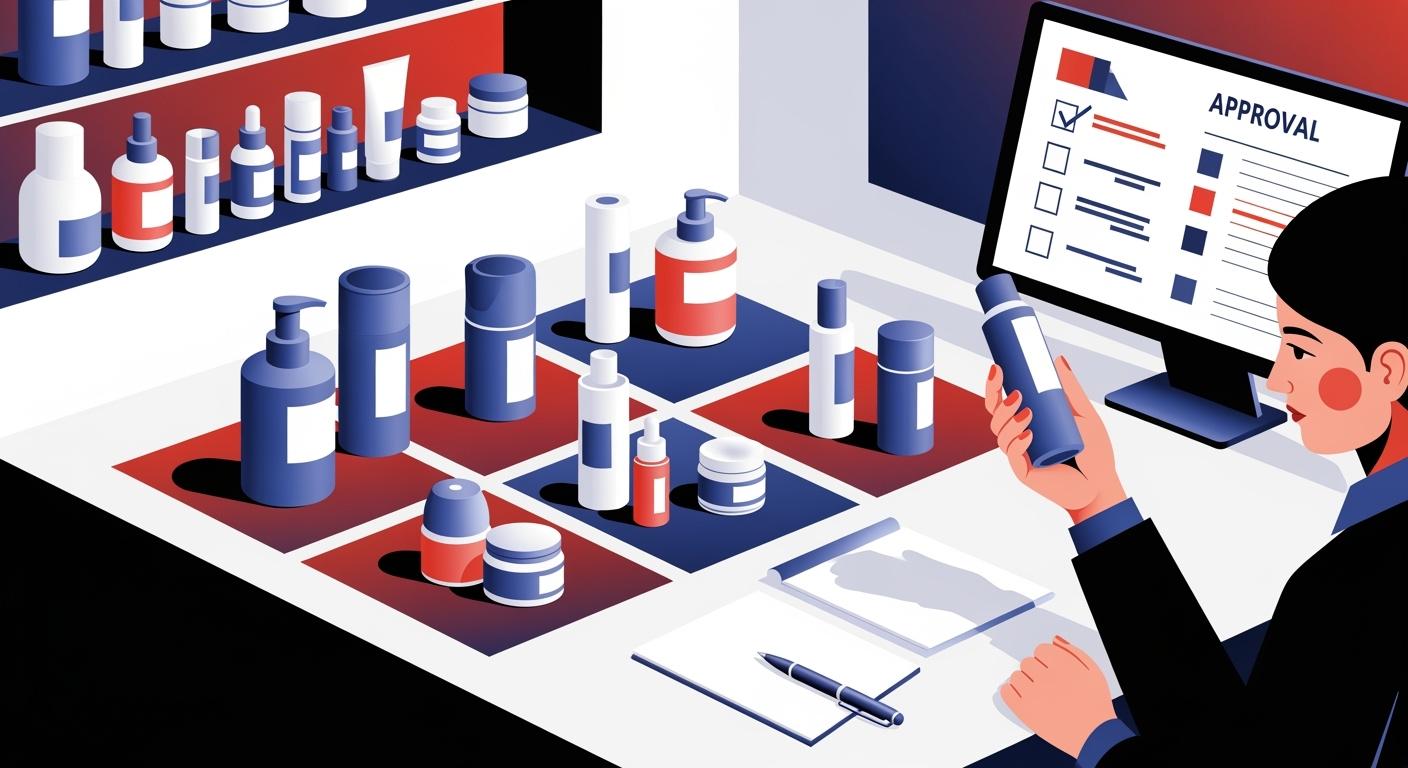
You might think looking at the package is enough, but real approval is more detailed. Brands and manufacturers check cosmetic packaging samples for quality, safety, and consistency. Over 40% of compatibility tests do not pass before mass production, so controlling risks is very important. Packages are often rejected because they miss product information, have wrong safety symbols, barcode mistakes, or do not follow rules. You must test carefully and keep records to protect your brand and make sure every package meets strict standards.
Key Takeaways
- Cosmetic packaging samples go through tough tests for quality and safety before making many. This helps stop expensive errors.
- Work with suppliers early when designing. This helps make good prototypes that look nice and work well.
- Get opinions from possible users using surveys and focus groups. This helps find problems and make the packaging better.
- Make sure all packaging follows the law. It must meet safety rules and have correct labels to keep your brand safe.
- Test the packaging well for strong seals and tough materials. This stops leaks and keeps products safe when shipping.
Sample creation and initial review of cosmetic packaging samples
Designing prototypes and specifications
You begin by making your idea into a real sample. This step is not just about looks. You must think about how the packaging keeps your product safe. You also need to think about how people will use it. The package should look good on the shelf too. You and your supplier work together to make a prototype. You use your design brief to help guide you. You pick materials, shapes, and finishes. Each choice changes the cost and how strong the package is. It also affects how easy it is to make many packages.
Here is a usual process for making cosmetic packaging samples before mass production:
- Talk with your supplier to learn about your product and who will buy it.
- Think of new ideas for packaging, including shape and materials.
- Make detailed design papers and send them to check for mistakes.
- Pick the best materials for the package and how it looks.
- Look at the prototype and change things if needed.
Design details are important for making the package. For example, the material you pick changes the price and how long it lasts. The shape can make it faster or slower to put together. The table below shows how different parts of your design change the final package:
| Aspect | Description |
|---|---|
| Material Selection | Changes price, strength, and how it looks. |
| Production Processes | Affects how fast and well the package is made. |
| Compliance with Regulations | Makes sure you can sell the package legally. |
| Ease of Assembly | Shows how quickly workers can put it together. |
| Compatibility of Components | Checks if all parts fit and work together. |
| Testing for Durability | Sees if the package can handle shipping and being moved. |
Submission for review and feedback
After you make early samples, you need to get feedback from others. Getting feedback early helps you find problems before making lots of packages. You can use different ways to get ideas and make your packaging better:
| Method of Feedback Collection | Description |
|---|---|
| Surveys | Ask people if the package is easy to use, looks nice, and is good for the planet. |
| Focus Groups | Talk with groups to learn what they like about the package. |
| Social Media Monitoring | Watch what people say online about your package sample. |
| QR Code Feedback | Put QR codes on samples to get feedback from real users. |
| Customer Service Analysis | Check customer questions and complaints for common problems. |
You should listen to feedback about leaks, how strong the package is, and how it feels to hold. These ideas help you stop big mistakes and make sure your samples are good for you and your customers. By checking quality and watching for risks now, you help make sure mass production goes well. This way, you do not get surprised later and your process makes strong, good-looking packaging.
Artwork, design, and visual inspection of cosmetic packaging samples
Artwork approval and revisions
You need to check artwork closely before you approve samples. This step keeps your brand safe and stops expensive errors. You look at every detail like colors, fonts, and pictures. You keep track of each version so you do not get mixed up. You use special tools to make sure your packaging follows the law. You help creative teams and suppliers talk easily. Automatic alerts remind you about important dates. You care about how people use the package and change things if needed. Data helps you make better packaging in the future.
Here are important things for artwork approval:
- Keep track of every artwork version to stop mistakes.
- Use tools and checks to follow legal rules.
- Help creative and packaging teams talk clearly.
- Set reminders to meet deadlines.
- Make sure your system can grow and work well.
- Make it easy for everyone to use.
- Use data to keep improving.
You need to fix artwork if you find problems or things that do not match. You check for missing details, wrong colors, or hard-to-read fonts. You change the artwork and check again until it looks right.
Visual quality and branding consistency
You check packaging samples to see if they look good and match your brand. You use smart machines with clear cameras. These machines check labels, printing, and seals. OCR and OCV help you find label mistakes. Pattern checks and edge checks show printing problems. You use light to see how much product is inside clear packages. X-ray sensors give extra checks.
You measure color with color systems. Spectrophotometers check if colors are wrong. You use color matching systems like Pantone to keep colors the same everywhere. Color rules help you make sure colors look right. Colorimeters keep colors nice on samples. For example, a Texas company uses colorimeters and software to match colors.
Branding matters for trust. If colors are not the same, people may not trust your product. You keep labels, fonts, and shapes the same as your brand. You test packaging with the real formula to make sure it works. You use airless pumps and dark containers to protect ingredients.
| Factor | Why It Matters | Tip |
|---|---|---|
| Material Compatibility | Stops bad reactions with product | Test packaging with real formula |
| Protection | Keeps ingredients safe | Use airless pumps, dark containers |
| Design & Branding | Keeps package looking good and like your brand | Keep label, font, shape the same |
You check quality at every step to lower risks and keep mass production steady. You protect your brand by checking how it looks, how it is made, and how it works. You only approve packaging if it meets all rules.
Testing and verification of cosmetic packaging samples
When you check cosmetic packaging samples, you need to do more than look at them. Some people think approval is just about looks. But you must test how the packaging works and how strong it is. You also need to see if it protects your product well. This step is important for safety. It helps you find problems before making many packages. You want to stop mistakes and keep your brand safe.
Oulete is a good partner for brands that care about quality. Oulete uses special machines and strict rules to test every sample. Their team checks for leaks, seal strength, and if materials work together. They do not just look at the outside. They make sure samples can handle real use and keep products safe. Oulete’s way of testing helps you avoid problems later. You get packaging that meets your needs every time.
Seal strength and leak testing
You must test if your packaging seals well. Weak seals can let products leak or spoil. This can even cause recalls. You need to use industry rules to check seal strength and leaks. These tests show if your packaging can handle shipping and storage.
Here is a table of common seal strength and leak test methods:
| Test Category | Common Test Method | Acceptance Standard (Reference) | Example Standard |
|---|---|---|---|
| Peel Strength | Peel Test | 1.5 – 3.5 N/15mm (dry goods), >4.0 N/15mm (liquids) | ASTM F88 / GB/T 15171 |
| Burst Strength | Burst Test | ≥ 150 – 200 kPa (varies by material) | ASTM F1140 |
| Leak Test | Bubble / Vacuum Decay | No bubbles, no pressure decay, no leaks | ASTM F2096 / GB/T 10440 |
| Visual Inspection | Visual & Tactile | Clean, uniform seal. No wrinkles or defects | Internal QCS |
You should use different ways to test for leaks. These include:
- Pressure Decay: Checks for leaks by seeing if pressure drops.
- High Voltage Leak Detection: Finds small holes with electricity.
- Oxygen Headspace: Looks for oxygen inside sealed packages.
- Helium Leak Detection: Uses helium to find tiny leaks.
- Dye Ingress Testing: Dips packaging in dye to see if it leaks.
- Bubble Leak Testing: Puts packaging in water to look for bubbles.
Bubble leak testing is often used for cosmetics. You can also use tests like microbial immersion and aerosol challenge. These help you check for germs or other problems. These tests make sure your packaging keeps products safe and clean.
Material durability and safety tests
You need to check if your packaging can last in real life. You want to know if it will break, leak, or change in sunlight, heat, or cold. You also need to see if the packaging reacts with your product. This is called compatibility testing.
You should do these tests on early samples:
- Stability tests in normal and fast-changing conditions
- Chemical compatibility tests to find bad reactions
- Biological compatibility checks for ingredient safety
- Physical compatibility checks for leaks or shape changes
- Barrier property tests for UV, oxygen, and moisture
You can use special machines like weatherometers and xenon arc chambers. These tools make aging happen faster. They show how packaging will last over time. You can see if it fades, cracks, or gets weak. Fast aging tests help you guess how long packaging will last. You can fix problems before making lots of packages.
Here is a simple checklist for environmental resistance testing:
- Use fast aging machines to copy sunlight and temperature changes.
- Look for cracks, fading, or leaks after testing.
- Test packaging with your real product for reactions.
- Make sure packaging blocks UV, oxygen, and moisture.
You must treat sample approval as a technical step, not just a look test. You need to see if the packaging will work in real life. You must compare test results to your own rules. You should work with suppliers who can prove their testing skills. Oulete’s team can help you set shared approval rules and keep packaging the same from start to finish.
By focusing on quality, compatibility, and checking suppliers, you lower risks. You make sure every sample meets your needs. You keep your brand and customers safe.
Regulatory compliance and legal verification
You must follow regulatory compliance when approving cosmetic packaging samples. This step keeps your brand safe. It also lets you sell your products. You need to check every sample for safety, labeling, and legal rules. If you skip these checks, you could get fined or lose your right to sell.
Safety standards and material compliance
Your packaging must meet strict safety standards. You need to check for harmful substances. You must test for chemical migration. This makes sure your packaging does not hurt users or change your product. You also need to check if your packaging protects your product from leaks and damage.
Here is a table showing common safety standards for cosmetic packaging:
| Requirement | Description |
|---|---|
| Material Safety | Packaging materials must be non-toxic and safe, with no harmful substances like heavy metals or phthalates. |
| Packaging Integrity | Must protect the product from damage and contamination, with effective sealing to prevent leaks and microbial contamination. |
| Labeling and Information | Requires clear labeling with product identity, ingredients, net quantity, expiry date, batch number, and warnings. |
| Compatibility | Packaging must not interact with the product, requiring compatibility testing to prevent chemical migration. |
| Sustainability | Encourages the use of recyclable or biodegradable materials while meeting safety and performance requirements. |
You need documents to prove your packaging meets these standards. Ask your suppliers for test reports and certificates. Keep these records for every sample. This helps you show regulators you follow the rules.
Here is a table of main documents needed for material compliance:
| Requirement | Description |
|---|---|
| Compatibility Testing | Ensure no chemical migration from packaging to product and that the product does not degrade the packaging material. |
| Safety Assessment | All packaging materials must be non-toxic and safe, requiring verification of harmful substances like heavy metals and phthalates. |
| Declaration of Conformity | Suppliers must provide documentation to verify compliance with safety standards. |
Always check if your suppliers can give these documents. If they cannot, find a new supplier. Test your own samples to confirm results. This step helps you avoid problems during mass production.
Tip: Keep your compliance documents organized. Regulators may ask for them anytime.
If you do not follow safety standards, you could get fined. Some states can charge thousands of dollars for each mistake. For example, Maryland can fine $5,000 for a first mistake and $20,000 for later ones. Minnesota can fine $100,000 per day for repeated problems. Take compliance seriously to protect your business.
Labeling and legal documentation
You must check that your packaging labels are correct and legal. Labels must show the product name, ingredients, net weight, expiry date, batch number, and warnings. Make sure every detail is clear and easy to read. Check that your labels use the right symbols and follow all rules for your market.
Regulatory agencies use steps to check labeling accuracy. You should use a similar process for your own packaging sample approval:
- Decide how you will check labels and what rules you will use.
- Approve all formulas and make sure they match the label.
- Check that all raw materials are safe and listed.
- Review how your product is made and filled.
- Make sure lines are clean between different products.
- Check that each batch is labeled correctly.
- Take product samples for testing.
- Inspect every label for accuracy before you approve samples.
Agencies like the FDA can inspect your factory. They can check your records and test your product samples. They can even take products if they find problems. Keep your process strong and your documents ready.
A multi-stage inspection helps you control risks. Check raw materials, review your formulas, and test your packaging. Check your labels at every step. This helps you catch mistakes early and avoid recalls.
Note: Train your team to check labels and documents carefully. Small mistakes can cause big problems.
Keep all legal documents for your approved samples. This includes test reports, certificates, and label proofs. Store these records for every type of packaging sample you use. This helps you show your samples meet all rules and are ready for mass production.
If you follow these steps, you can control risks and keep your products safe. You will build trust with your customers and regulators. Treat regulatory compliance as a key part of your packaging approval process.
Final approval and preparation for mass production
Final review and stakeholder sign-off
Before making lots of packages, you need a big team review. People from design, quality, buying, and rule-checking teams all join in. Each team checks if the packaging meets their own rules. You cannot just look at the package to approve it. You must make sure it matches your approved samples in every way.
This last check usually takes about 2-3 weeks. During this time, you pick the final ‘Gold Sample’. You must write down your approval before starting mass production. This step helps you stop expensive mistakes and keeps your brand safe.
Here are some common ways to check quality:
| Quality Control Method | Description |
|---|---|
| Design Consultation | Get expert advice on packaging design before production. |
| Prototype Sampling | Test preproduction samples to check if they meet your needs. |
| Compatibility Testing | Make sure materials work with your product samples. |
| Structural Strength Testing | Check if packaging can handle stress and shipping. |
| Printing Accuracy Checks | Make sure printed designs match the approved samples. |
| Sealing Effect Tests | Test seals to prevent leaks. |
You should also check quality during early production:
| On-line Quality Check | Description |
|---|---|
| Wall Thickness Measurement | Check that packaging thickness stays the same. |
| Printing Quality Assessment | Watch print quality to keep standards high. |
| Color Matching Techniques | Use PANTONE and colorimeters for color consistency. |
Approving samples for mass production
Only approve packaging after it passes every test. Do not say yes just because it looks good. Stay away from these risky mistakes:
- Only looking at the package without testing
- Not testing with real product samples
- Changing samples by hand so they do not match real production
- Missing important details or unclear instructions
- Skipping seal or strength tests
- Not checking supplier papers or certificates
If you skip these steps, you could have recalls, unhappy customers, and lose money. You need to set clear rules with your suppliers. Keep records of every test and approval. This helps you control risks and keep your packaging the same from start to finish.
Tip: Always check mass-produced packaging against your approved samples. Work with your suppliers to make sure every batch is right.
You can keep your brand safe by following a careful approval process. This makes sure your packaging is strong, safe, and ready to sell.
You keep your brand safe by checking every step in packaging approval. Each part, like design, testing, and following rules, helps your packaging stay safe and ready to sell. Try these ideas to make your work better:
- Help teams talk fast and keep clear records.
- Change packaging artwork quickly for different places.
- Put all packaging details in one place to stop mistakes.
Work with design and technical teams from the start. Use this checklist when you look at packaging:
- Product name and what it does
- How much is inside and what is in it
- Maker’s address and warning labels
Stay careful and keep your packaging process strong.
FAQ
What are the main steps to approve cosmetic packaging samples before mass production?
You need to do these steps:
- Check how the package looks and matches your brand.
- Make sure all parts fit together right.
- Test if it works well and fits your product.
- Look at many samples to see if they are the same.
- Agree with your supplier on what is good enough.
Tip: Use this list to lower risks and keep quality high.
Why is visual inspection not enough for packaging approval?
Looking only at the outside misses hidden problems. You must test how strong it is and if it seals well. You also need to check if it works with your product. These tests find issues you cannot see. This helps keep your brand safe.
How do you make sure packaging stays consistent in mass production?
You always compare new batches to your approved sample. You and your supplier set clear rules for what is right. You check color, printing, and how it is made. You write down results for every batch.
What should you ask your supplier before approving a packaging sample?
Ask for test results and safety papers. Make sure they follow the rules. Check if they can keep making good packages. Ask how they fix mistakes or changes.
How does compatibility testing reduce risk?
Compatibility testing checks if your product and package work together. It helps stop leaks, color changes, or spoilage. This keeps your product safe and customers happy.