


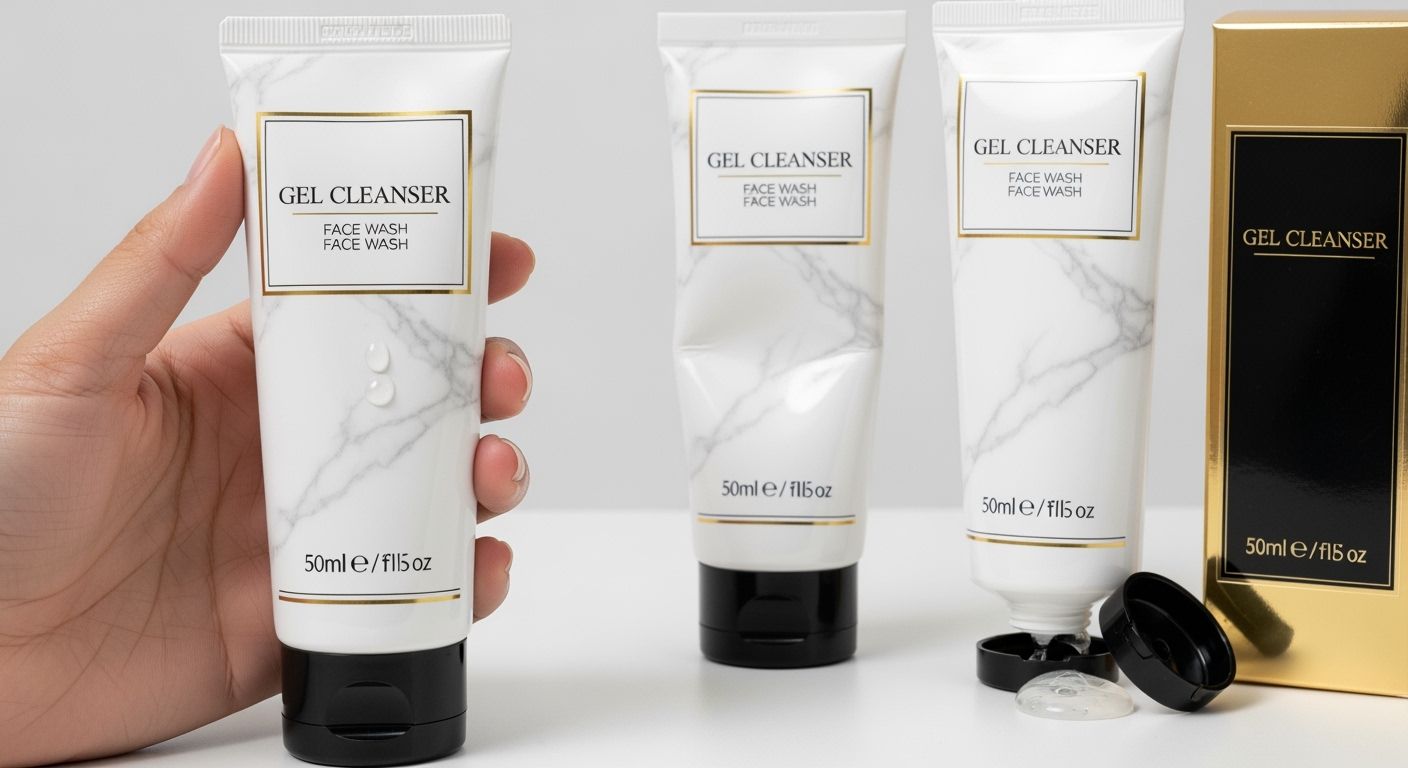
You want to keep your gel cleanser secure and looking sharp. Preventing leakage and deformation in face wash tube packaging starts with choosing the right materials and design. Packaging integrity goes beyond looks; it protects your product, builds trust, and supports your brand’s reputation.
Packaging Type | Impact on Perception | Notes |
|---|---|---|
Functional Components | Improves convenience and signals innovation | Builds confidence through thoughtful design. |
Transparent Elements | Inspires confidence with product visibility | Ingredient windows help buyers make safe choices. |
Gel cleansers need packaging that handles their unique texture and sensitivity. Many brands now look for airless bottle packaging and new materials to keep formulas stable and fresh.
Key Takeaways
Choose high-barrier materials for your gel cleanser tubes. This prevents leaks and keeps your product fresh.
Ensure proper sealing and filling processes. Strong seals reduce the risk of leaks during transport.
Test your packaging with real samples. This helps identify potential issues before full production.
Select a reliable supplier. Strong partnerships ensure quality and timely delivery of your packaging needs.
Pay attention to tube design features. A well-designed cap and orifice can enhance user experience and prevent mess.
Part1: Why Packaging Integrity Matters
1.1 Product Safety & Quality
You want your gel cleanser to stay safe and effective from the factory to the customer’s hands. Packaging integrity plays a huge role in this. If the tube fails, your product can lose its quality or even become unsafe. Take a look at how packaging affects your gel cleanser:
Aspect | Impact on Gel Cleanser Products |
|---|---|
Microbial Stability | Affects the product’s safety; instability can lead to off-smells and potential health risks. |
Packaging Compatibility | Ensures that the packaging does not react negatively with the formula, preventing discoloration or clogging. |
Product Performance | Proper packaging ensures that the product dispenses correctly, enhancing user experience and satisfaction. |
When you select Face Wash Tube Packaging with strong seals and the right materials, you help prevent leaks and contamination. This keeps your formula fresh and stable. You also avoid issues like discoloration or clogs, which can frustrate customers and damage your brand’s reputation.
1.2 Brand Reputation Impact
Your packaging is often the first thing buyers notice. If your tubes leak or deform, people may question your quality standards. In the B2B world, even a small packaging failure can lead to lost contracts or negative reviews. Reliable Face Wash Tube Packaging signals that you care about every detail, from formula to delivery. This builds trust with retailers and partners.
Tip: Consistent, high-quality packaging can set your brand apart in a crowded market.
1.3 Supply Chain & Operational Risks
Packaging problems do not just affect the end user. Leaky or deformed tubes can cause messes during shipping, increase returns, and slow down your operations. You might face extra costs for repackaging or waste disposal. These risks can disrupt your supply chain and hurt your bottom line. By choosing robust packaging solutions, you keep your process smooth and your costs under control.
Part2: Face Wash Tube Packaging: Key Factors
2.1 Tube Material & Barrier Properties
Choosing the right tube material is your first line of defense against leaks and deformation. You want materials that keep air, moisture, and light out, so your gel cleanser stays fresh and stable. Here’s a quick look at common options:
Material Type | Key Properties |
|---|---|
Polyethylene (PE) | Flexibility, durability, chemical resistance |
Polypropylene (PP) | Moisture barrier, high-temperature resistance |
Polystyrene (PS) | Clarity, impact resistance |
Aluminum | Barrier against light, air, moisture |
Aluminum Barrier Laminate | Superior oxygen and light barrier |
Plastic Barrier Laminate | Good barrier, fully recyclable |
You should match the barrier properties to your gel formula’s needs. For example, if your cleanser contains active ingredients, you may need a laminate or aluminum layer for extra protection.
2.2 Tube Structure & Wall Thickness
Tube structure and wall thickness play a big role in preventing deformation. Thicker walls add strength and help the tube keep its shape during shipping and storage. You also want a well-designed shoulder and orifice size to control product flow and reduce stress on the tube.
Thicker walls = less risk of dents or collapse
Proper shoulder design = smoother dispensing
2.3 Cap Fit & Closure Design
A secure cap fit keeps your product safe from leaks. You can choose between screw caps and flip caps, each with its own strengths:
Comparison Item | Screw Cap Tubes | Flip Cap Tubes |
|---|---|---|
Leakage Protection | Excellent for travel | Reliable for daily use |
Tip: Always check that the cap fits tightly and the closure matches your formula’s viscosity.
2.4 Sealing & Filling Process
The sealing and filling process can make or break your packaging. Weak seals or poor filling conditions often lead to leaks. Pay attention to sealing temperature, pressure, and consistency. Here’s what to watch for:
Sealing temperature and pressure
Sealing width and appearance
Filling method (hot or cold)
Factor | Impact on Leakage and Deformation |
|---|---|
Sealing Quality | Weak seals = leaks during transport |
Material Compatibility | Incompatibility increases risk |
Filling Conditions | Hot/cold filling affects tube integrity |
2.5 Formula Compatibility
Your gel cleanser formula must work well with the tube material. If not, you risk color changes, separation, or even corrosion. Here’s what can go wrong:
Compatibility Issue | Consequence |
|---|---|
Color changes | Loss of product appeal |
Layer separation | Reduced effectiveness |
Texture or odor changes | Poor user experience |
Material corrosion | Leaks and packaging failure |
Remember: Always test your formula with the packaging before full production. This helps you avoid costly surprises and ensures your Face Wash Tube Packaging performs as expected.
Part3: Solutions & Best Practices
When you want to avoid leakage and deformation in gel cleanser packaging, you need a plan that covers every detail. Let’s break down the best solutions and practices you can use to keep your Face Wash Tube Packaging secure and reliable.
3.1 High-Barrier Materials
Choosing the right material is your first step. High-barrier materials protect your gel cleanser from oxygen, moisture, and light. This keeps your formula stable and prevents leaks or tube collapse. Here’s a quick comparison of top-performing materials:
Material Type | Description |
|---|---|
Plastic Barrier Laminates with EVOH | Effective for sensitive formulas, reduces oxygen transmission and aroma loss. |
Aluminum Barrier Laminate (ABL) | Offers superior barrier protection, ideal for sensitive ingredients. |
Full Aluminum Tubes | Provides high barrier properties, reducing leakage and deformation in packaging. |
If your formula contains actives or natural extracts, you should consider barrier laminates or full aluminum tubes. These options help you maintain product quality during shipping and storage.
Tip: Always match your tube material to your formula’s sensitivity and shelf life needs.
3.2 Optimized Tube & Cap Design
A smart tube and cap design can make all the difference. You want features that lock in your product and prevent accidental leaks. Here’s what to look for:
Feature | Benefit |
|---|---|
360° Leak-Proof Assurance | Prevents mess and oxidation, ensuring product integrity during travel. |
Material Safety | 100% BPA-free and FDA-compliant, preventing reactions with formulas. |
Dual-Locking Safety Mechanisms | Prevents accidental discharge, ensuring a leak-proof seal. |
Formula-Compatible Gaskets | Chemically resistant to oils, preventing degradation and maintaining integrity. |
Airtight Seal | Prevents contamination and extends shelf life of the product. |
Protective Barrier | Maintains integrity from first use to last squeeze, unlike rigid containers. |
You should also pay attention to the orifice size and shoulder design. These details help control dispensing and reduce stress on the tube.
Note: Always request samples to test cap fit and closure performance before placing a large order.
3.3 Advanced Sealing Methods
Sealing is where many packaging failures start. You want a method that creates a strong, airtight seal. Induction sealing technology stands out here. It forms a hermetic seal that keeps out moisture and oxygen. This method works especially well for gel cleansers, as it extends shelf life and keeps your product fresh. You also reduce the risk of leaks during shipping.
For best results, work with suppliers who use advanced sealing equipment and can show you their quality control process.
3.4 Compatibility & Stress Testing
Testing is not just a box to check—it’s your insurance policy. You need to make sure your packaging and formula work together under real-world conditions. Here are the key tests you should run:
Test closures and dispensers with your gel cleanser to ensure long-term performance.
Evaluate chemical resistance, stress cracking, leakage, and actuator durability under accelerated aging.
Check for leaching or absorption between the formula and packaging.
Watch for chemical or physical reactions that could affect product quality.
Inspect label integrity and color stability.
Assess the container closure system’s performance over time.
Pro Tip: Always run these tests on production samples, not just prototypes.
When you choose a packaging partner, look for these supplier strengths:
Supplier Assessment Criteria | Description |
|---|---|
Production Capacity | Can handle your current and future needs |
Quality Certifications | Shows systematic process controls |
Design Assistance | Supports custom development |
Inventory Programs | Enables just-in-time delivery |
Financial Stability | Ensures long-term supply continuity |
Strong supplier collaboration helps you solve problems early and keep your supply chain running smoothly. You can ask your supplier for detailed test reports and quality certifications before you commit.
Remember: The right Face Wash Tube Packaging is the result of smart material choices, thoughtful design, advanced sealing, and thorough testing. When you follow these best practices, you protect your product, your brand, and your bottom line.
Part4: Packaging Selection Guide
4.1 Assessing Gel Formula Needs
You want your packaging to fit your gel cleanser formula perfectly. Start by looking at the ingredients and how they interact with packaging. Some gels need extra moisture protection, while others require gentle materials for sensitive skin. Use this table to guide your assessment:
Criteria | Description |
|---|---|
Formulation Signals | Check for humectants and surfactants. Match packaging to hydration and sensitivity needs. |
Routine Fit | Pick packaging that fits the user’s skincare steps, like tubes for easy layering. |
Practical Factors | Think about hygiene and travel. Tubes and pumps offer convenience and safety. |
Compatibility Check | Make sure your cleanser works with other actives. Avoid packaging that increases sensitivity. |
4.2 Evaluating Suppliers & Materials
Choosing the right supplier can make or break your project. Look for partners with proven expertise in Face Wash Tube Packaging. Reliable suppliers offer a range of materials, strong quality control, and technical support. You can check Oulete’s face wash tubes for reference. For deeper material insights, review resources like Packaging Digest or the Institute of Packaging Professionals.
Tip: Ask for documentation on material sourcing, barrier properties, and compliance with industry standards.
4.3 Tube & Cap Specification
You need to get the details right for tube and cap specs. The right choices help prevent leaks and keep your gel stable. Here’s a quick guide:
Specification Type | Details |
|---|---|
Material Selection | Pick materials that resist chemical reactions with your formula. |
Tube Geometry | Choose orifice size and cap shape for smooth dispensing and less residue. |
Closure Selection | Match cap type (flip-top, screw, disc-top) to your gel’s viscosity and use case. |
Barrier Properties | Use strong barriers to block oxygen and moisture. |
Detergence Behavior | Test how your formula interacts with the tube to avoid surprises. |
4.4 Sample Testing & Quality Control
Never skip sample testing. You want to confirm that your packaging works with your gel and meets market needs. Here’s what to check:
Test material compatibility with your formula.
Review sealing methods and cap fit. Run leak tests.
Set clear standards for appearance, color, and seal quality before production.
Note: Always request production samples and detailed test reports from your supplier. This step helps you catch issues early and keeps your supply chain running smoothly.
If you need help with sampling or want to discuss custom solutions, reach out to Oulete for a quote or technical consultation.
Part5: Procurement & Customization
5.1 MOQ & Lead Time
When you plan your gel cleanser launch, you need to know the minimum order quantity (MOQ) and lead time for tube packaging. Most suppliers set MOQs between 500 and 2,000 units for skincare tubes. If you want a custom formula or unique decoration, expect higher MOQs. Lead times can vary. For standard orders, you usually get your packaging in 7–10 business days after placing the order. Bulk production takes longer—plan for about 25–30 days after you approve your samples.
Tip: Always confirm MOQs and lead times early. This helps you avoid delays and keeps your project on track.
5.2 Branding & Decoration
Branding and decoration make your packaging stand out, but they also affect material choices and tube performance. Here’s a quick look at popular decoration techniques and their impact:
Decoration Technique | Impact on Aesthetics | Material Considerations |
|---|---|---|
Silk Screen Printing | Bold, high-quality graphics | Works on many materials |
Hot Foil Stamping | Premium metallic accents | Used on plastic and aluminum tubes |
Labeling | Flexible for small runs | Fits different tube materials |
Embossing/Debossing | Adds tactile experience | Compatible with most tube types |
Material Choices | Influences look and sustainability | Plastic, aluminum, laminate options |
You can choose a technique that matches your brand image and budget. Just remember, some decorations may require specific materials or extra production steps.
5.3 Cost & Supply Chain
You want to manage costs and keep your supply chain smooth. Key cost factors include material selection, decoration complexity, custom molds, order volume, and sustainability features. Supply chain planning matters too. You need to think about ingredient handling, packaging conversion, inventory strategies, and regulatory requirements.
Cost Factors | Supply Chain Considerations |
|---|---|
Material selection | Ingredient handling, packaging conversion |
Decoration complexity | Channel needs, inventory strategies |
Custom molds/tooling | Distributor-managed replenishment |
Order volume | Fill-rate for online channels |
Sustainability | Regulatory controls, documentation |
5.4 Choosing Reliable Partners
Selecting the right packaging partner sets your project up for success. Look for suppliers who deliver quality, customization, and reliability. Here’s what to check:
High-quality tubes keep your products safe and reliable.
Customization options help your brand stand out.
Eco-friendly materials show you care about the environment.
Competitive pricing and flexible MOQs fit your business needs.
Always request samples before large orders to ensure quality.
Criteria | Importance for Selecting Partners |
|---|---|
Quality | Keeps products safe and reliable |
Customization | Supports unique branding |
Pricing | Impacts your bottom line |
Reliability | Reduces delays and disruptions |
Sustainability | Meets customer and regulatory expectations |
Note: Strong supplier relationships help you manage risks and adapt to changing market needs.
You want your gel cleanser tubes to stay leak-free and strong. Focus on these key steps:
Reserve enough headspace and avoid overfilling.
Use reliable cap seals and control filling accuracy.
Reduce trapped air and strengthen tail sealing.
Test real samples under pressure.
Formula Factor | Packaging Adjustment |
|---|---|
Low viscosity | Tighter orifice, stronger cap, slow filling |
High viscosity | Softer tube, larger outlet, deaeration |
Foaming formula | More headspace, less trapped air |
Work closely with your supplier, run thorough tests, and always request samples. Ready to upgrade your packaging? Reach out to Oulete for expert advice or sample testing today!
FAQ
What tube material works best for gel cleansers?
You want high-barrier laminates or aluminum tubes. These options protect your formula from oxygen and moisture. They also resist deformation during shipping. Always match the material to your gel’s sensitivity and shelf life needs.
How can I prevent leakage during transport?
You should use tubes with secure closures and strong tail seals. Test samples under pressure and temperature changes. Reliable suppliers will offer leak-proof designs and quality control reports.
What is the typical MOQ and lead time for custom face wash tubes?
Most suppliers set MOQs between 500 and 2,000 units. Standard lead times range from 7–10 days for stock tubes and 25–30 days for custom orders. Confirm these details early to keep your project on schedule.
Can I request samples before placing a bulk order?
Yes, you can and should request samples. This step lets you test material compatibility, closure fit, and decoration quality. If you need samples or technical advice for face wash tubes, you can contact Oulete for a quote.
What decoration methods are available for tube packaging?
You can choose silk screen printing, hot foil stamping, labeling, or embossing. Each method offers a different look and feel. Oulete’s custom cosmetic packaging services can help you align decoration choices with material selection and production time.