


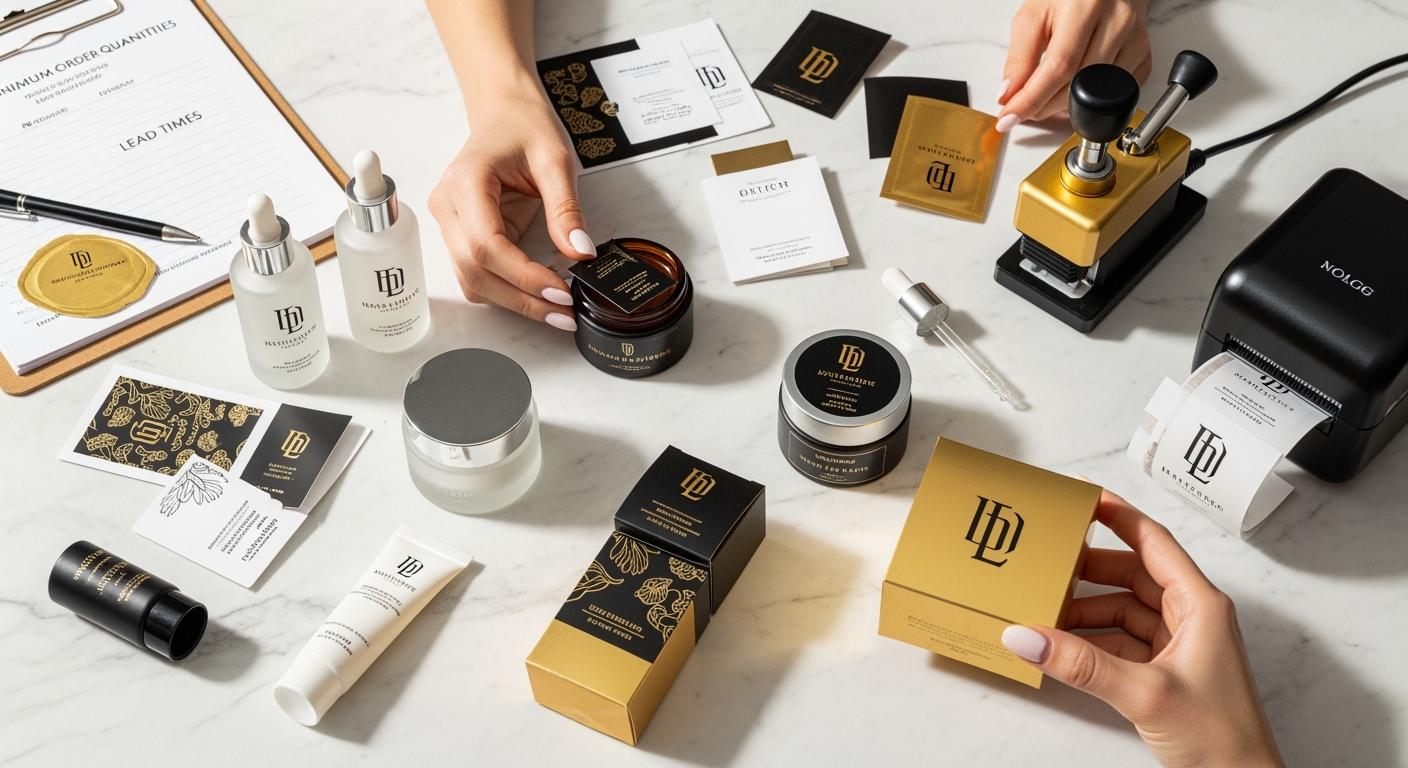
You face big decisions when choosing custom logo cosmetic packaging for bottles. Printing, hot stamping, and labeling all shape your brand’s look and feel. Quality checks matter. You want to make sure the surface, logo position, and hot stamping effect meet your standards before production. High minimum order quantities can lower per-unit costs and help you get consistent quality, but they also mean a bigger upfront investment. If you run a smaller brand or want to test the market, high MOQs might push you to rethink your decoration methods or inventory plans. Your choices impact branding, cost, and flexibility every step of the way.
Higher MOQs often bring economies of scale.
Custom designs for bottles usually require higher MOQs because of setup costs.
Startups may struggle with high MOQs if they want smaller runs.
Key Takeaways
Choose the right decoration method for your bottles to enhance branding and attract customers. Options include printing, hot stamping, and labeling.
Higher minimum order quantities (MOQs) can reduce costs but may not suit smaller brands. Consider your budget and production needs when selecting packaging.
Always test the quality of your packaging before full production. Check for print clarity, durability, and compliance with regulations.
Negotiate with suppliers to lower MOQs and costs. Use strategies like mixed orders or stock packaging to gain flexibility.
Regularly review your packaging strategy to ensure it aligns with your brand goals and market demands. Stay proactive in quality control and supplier communication.
Part1: Custom Logo Cosmetic Packaging Methods
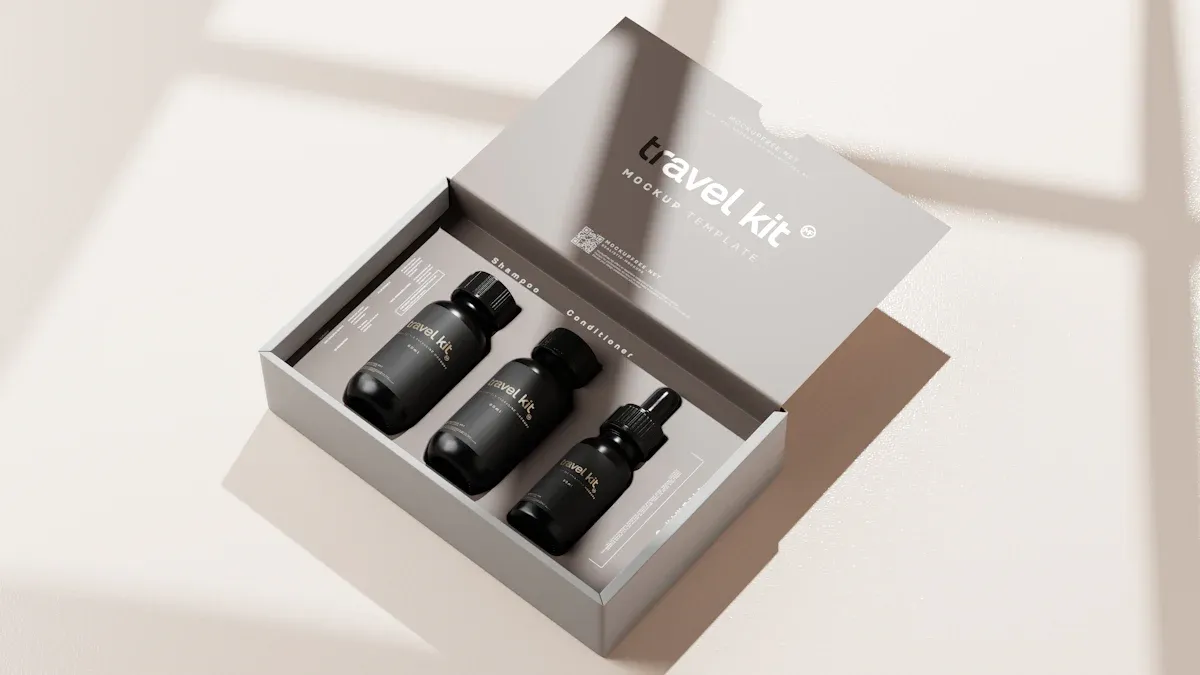
When you want your bottles to stand out on the shelf, you have several decoration methods to choose from. Each one brings its own strengths to Custom Logo Cosmetic Packaging. Let’s break down the main options you’ll see in the industry.
1.1 Printing Options
Printing gives you flexibility and sharp detail for your bottle designs. You can pick from several techniques:
Digital printing
Offset printing
Screen printing
Flexographic printing
Rotogravure printing
Offset printing works best for large runs. It delivers high-quality, consistent prints, which is great if you need thousands of bottles with the same look. Flexographic printing adapts to different materials, so you can use it for both plastic and glass bottles. Screen printing shines for promotional packaging and smaller batches. Digital printing lets you test new designs without big setup costs.
Tip: Always check print quality before full production. Look for clear logos, accurate colors, and smooth surfaces.
1.2 Hot Stamping Benefits
Hot stamping adds a premium touch to your bottles. This method uses heat and pressure to bond metallic or colored foils to the surface. You get shiny, eye-catching logos that last.
Factor | Explanation | Benefit to Brand |
|---|---|---|
Consistent Process | Die-based method yields uniform prints | Maintains brand identity |
High Durability | Heat plus pressure bond the foil strongly | Reduces chipping or flaking |
Vibrant Visuals | Metallic or pigmented foils stand out | Attracts customer attention |
Versatile Surfaces | Works on plastic, glass, metal, etc. | One solution for multiple lines |
Repeat Accuracy | Machine alignment keeps logo placements exact | Professional finish across batch |
Hot stamping works well on glass bottles, tubes, and jars. It resists fading and scratching, so your branding stays sharp even with daily handling.
1.3 Labeling Solutions
Labels offer a fast and flexible way to brand your bottles. You can choose from several types, each with its own strengths:
Aluminum foil labels: Resist moisture and oil, perfect for high-end bottles.
Vinyl labels: Stick well to curved surfaces and keep a smooth finish.
BOPP labels: Durable, waterproof, and oil-resistant—great for products exposed to water or oils.
Vinyl labels work well for squeezable or curved bottles. They don’t bubble or peel easily. BOPP labels give you tear-proof and smudge-proof performance, so your Custom Logo Cosmetic Packaging looks fresh even in tough conditions.
Note: Always test your labels for oil and water resistance before placing a large order. This step helps you avoid costly surprises.
Part2: Branding and Cost Considerations
2.1 Visual Impact and Brand Value
You want your bottles to grab attention and tell your brand story. The way you decorate your packaging shapes how buyers see your products. Visual elements like color, graphics, and design play a huge role in attracting attention and sparking emotional responses. Packaging acts as a salesman right on the shelf. It helps your bottles stand out and can even trigger impulse buys. Sometimes, the look of your packaging is the only reason someone chooses your product.
Color, typography, and graphics influence purchasing decisions.
Packaging design can drive both planned and impulse purchases.
The physical appearance of your bottles can make or break a sale.
Effective package design serves as a branding tool that attracts consumers and communicates brand quality. Various design elements such as color, shape, images, material, and convenience play a crucial role in shaping consumer perceptions and purchasing decisions.
If you use hot stamping or premium finishes, you send a message of luxury and quality. Printing lets you show off sharp details and vibrant colors. Labels give you flexibility and let you change designs quickly. Each method affects how buyers view your brand and the value they place on your bottles.
2.2 Cost Factors by Decoration Method
You need to balance branding with cost. Each decoration method comes with its own price tag. Printing, hot stamping, and labeling all have different setup fees, material costs, and production expenses. Tooling and color matching can push costs higher, especially for custom bottle designs.
Cost Factor | Description | Cost Range |
|---|---|---|
Printing Process | Each additional color or printing process increases production complexity. | Simple one-color: cheapest |
Full-color (4C CMYK) is standard; adding spot colors raises costs. | Additional colors: varies | |
Special Finishes | Each finish adds distinct costs; foil stamping and embossing are examples. | Foil stamping: $0.15-$0.50 |
Complex embossing can add $0.20-$0.60 depending on design complexity. | Embossing: $0.20-$0.60 | |
Tooling Costs | Initial setup fees for prototypes and tools are significant upfront costs. | Prototypes: $100-$500 |
Custom die-cutting plates can range from $300 to over $1,000. | Tooling: $300-$1,000+ |
If you want to keep costs low, you can choose simple one-color printing or basic labels. Adding spot colors, foil stamping, or embossing increases the price. Tooling costs are a big factor for custom bottles. You pay upfront for prototypes and die-cutting plates. These costs can add up, especially if you change designs often.
2.3 Quality, Durability, and Inventory
You want your bottles to look good and last. Durability matters, especially if your products face moisture, oils, or rough handling. The right decoration method keeps your branding sharp and your bottles protected.
BOPP labels are durable and moisture-resistant. They perform well in tough conditions like refrigeration and abrasion.
BOPP labels resist smudging and peeling, even when exposed to cosmetic ingredients like olive oil and lotions.
Hot stamp prints are fade-resistant and smear-proof. They stay legible on flexible surfaces and work well in chilled, frozen, or humid environments.
Premium finishes like double-wall packaging boost product longevity. Double-wall jars protect temperature-sensitive, light-sensitive, and air-sensitive ingredients. They also create a luxurious look that attracts buyers. The unique structure of double-wall packaging refracts light, giving your bottles a ‘luxurious aura’ on crowded shelves.
When you plan inventory, think about how decoration choices affect storage and shelf life. Durable labels and finishes mean fewer returns and less waste. If you use high-end finishes, you might need to order larger quantities to get the best price. Simple labels or printing let you run smaller batches and change designs quickly.
Custom Logo Cosmetic Packaging gives you options to match your brand goals, budget, and inventory needs. You can mix and match methods to get the right balance of visual impact, durability, and cost.
Part3: MOQ Strategies and Flexibility
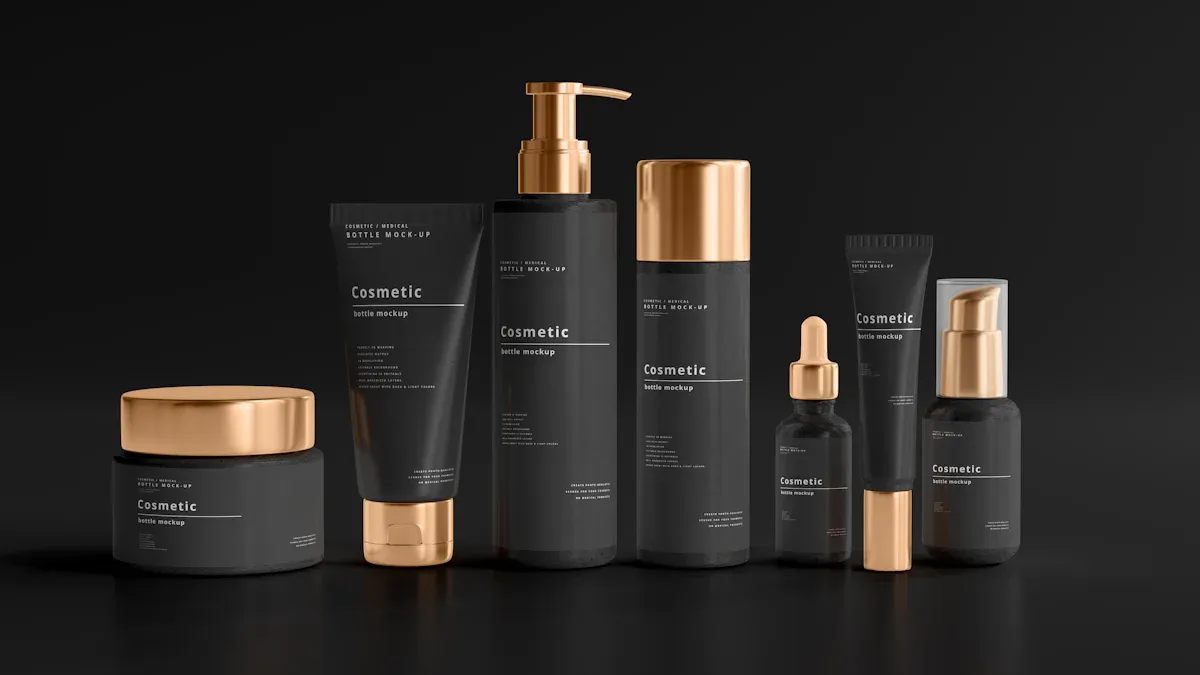
3.1 MOQ Impact on Packaging Choices
MOQ, or minimum order quantity, can shape your entire packaging strategy. When you work with bottles, you see that MOQ depends on many factors. Stock availability, material type, custom colors, finishes, and decoration methods all play a part. If you want a special refillable structure or a unique finish, you may face higher MOQs.
Here’s how MOQ can influence your decisions:
Stock molds help you lower MOQ and reduce production risks. You can still customize color, finish, and print without committing to huge quantities.
Custom colors or complex finishes often require higher MOQs because suppliers need to set up special production lines.
Labels and simple printing usually allow for lower MOQs. Hot stamping can also work for smaller runs, especially if you use standard bottle shapes.
You need to weigh the cost and feasibility of each decoration method. If you want to test the market or launch a limited edition, choosing a method with a lower MOQ gives you more flexibility.
Let’s look at common MOQ requirements for different bottle types and decoration methods:
Type of Packaging | Minimum Order Quantity (MOQ) |
|---|---|
Plastic bottles/jars | 3,000–10,000 pcs |
Glass containers | 1,000–5,000 pcs |
Tubes | 5,000–20,000 pcs |
Paperboard boxes | 500–3,000 pcs |
Droppers and pumps | 3,000–5,000 pcs |
You see that glass bottles often have lower MOQs than plastic. If you want to keep your investment small, start with paperboard boxes or labels.
3.2 Negotiating Lower MOQ
You don’t have to accept the first MOQ a supplier offers. You can use several strategies to negotiate better terms and get the flexibility you need for your bottle packaging.
Strategy | Description |
|---|---|
Use Stock Packaging | Choose ready-made bottles to avoid high MOQ tied to custom molds. |
Order in Mixed Batches | Ask to mix colors or sizes within one MOQ to test more options. |
Commit to Long-Term Relationship | Show your supplier you plan to order again. They may lower MOQ for your first run. |
Offer a Higher Deposit | Pay a larger deposit to reduce supplier risk on small orders. |
Leverage Supplier Competition | Get quotes from several suppliers and use them to negotiate better terms. |
Request a Trial Production Run | Ask for a small batch to test the market before scaling up. |
Simplify Customization | Stick to basic branding methods to keep MOQ low and avoid complex setup costs. |
You can also simplify your decoration. For example, switching from custom coloring or embossed logos to printed labels can cut your MOQ in half. One brand dropped their MOQ to 1,500 bottles and saved 40% on upfront costs by making this change. If you promise future orders, suppliers may also agree to smaller runs. These choices can shift your unit costs by 25-40% at lower MOQs.
Tip: Always talk openly with your supplier. Let them know your long-term plans and ask for trial runs or mixed batches. You may be surprised by how flexible they can be.
3.3 Cost Management for Small Runs
Managing costs for small production runs takes creativity. You want your bottles to look great without breaking the bank. Here are some ways to keep costs down:
Find a supplier who balances quality and price. Negotiate for better deals, even on small orders.
Limit print colors. Moving from a four-color to a two-color design can cut labor costs.
Use your logo in a subtle way. You can build brand identity without expensive decoration.
Choose simple shapes and clean lines for your bottles. These designs look modern and cost less to produce.
Engage with your customers. Ask for feedback on your packaging to improve your design without paying for expensive research.
If you stick with labels or simple printing, you can keep your MOQ low and change designs quickly. This approach works well for market testing or seasonal promotions. Custom Logo Cosmetic Packaging gives you the tools to balance branding, cost, and flexibility—even when you start small.
Part4: B2B Best Practices
4.1 Supplier Collaboration (e.g., oulete)
Building a strong partnership with your bottle packaging supplier can make or break your project. You want to work with suppliers who value ongoing communication and share your commitment to quality. Start by setting clear expectations for timelines and quality standards. Use a supplier performance management system to track on-time delivery and defect rates. This helps you spot issues early and keep your projects on schedule.
Monitor supplier performance regularly.
Share your innovation and sustainability goals. Suppliers often have ideas to help you reach them.
Stay in touch throughout the process, not just at the start.
Treat your supplier as a partner, not just a vendor.
When you collaborate closely, you get better results and fewer surprises.
4.2 Quality Control Checklist
You need a solid quality control process before you approve any bottle packaging run. A checklist keeps everyone on the same page and helps you catch problems early.
Essential Item | Description |
|---|---|
Visual Inspection | Check for color consistency and print quality. |
Label Verification | Make sure labels are straight, clear, and meet regulations. |
Material Integrity | Test the strength and durability of bottles and closures. |
Compliance with Regulations | Confirm all packaging meets industry standards. |
Functional Testing | Run drop tests, leak tests, and check pumps or sprayers. |
Documentation and Corrective Actions | Record inspection results and note any defects. |
Signed Samples and Specifications | Keep signed samples and detailed specs for reference. |
Color Matching and Print Accuracy | Use Pantone standards and calibrate equipment regularly. |
Record Maintenance for Traceability | Link inspection results to each production batch. |
Tip: Pre-production checks help you spot issues with durability, branding, and safety before they become costly problems.
4.3 Optimizing for Brand and Cost
You want your bottles to look great and stay within budget. Try these strategies to balance creativity, cost, and MOQ:
Limit the number of print colors to lower costs.
Simplify your design to avoid expensive printing steps.
Combine orders for different bottle lines to get better pricing.
Negotiate payment terms that help your cash flow.
Optimizing your packaging does more than save money. It also boosts your brand image by showing customers you care about quality and consistency. When you review your packaging supply chain, you often find ways to cut costs and improve efficiency without sacrificing style.
Choosing the right custom logo bottle packaging means you need a clear plan. Here are the key steps:
Check how much protection your bottles need.
Pick materials that fit your product and brand.
Make sure your packaging matches your brand message.
Test if the packaging works well for your bottles.
Watch your budget and look for cost savings.
Challenge | Solution |
|---|---|
Supplier Variability | Ongoing audits, material tests |
Production Complexity | In-process checks, training |
Documentation Issues | Centralized recordkeeping |
Handling Non-Conformity | Root cause analysis, CAPA plans |
Stay in touch with your supplier and run quality checks often. Keep reviewing your packaging strategy. You will stay competitive by using less material, trying new designs, and meeting sustainability goals.
FAQ
What’s the best decoration method for small bottle orders?
You can use printed labels or digital printing. These options let you run small batches and test designs. Hot stamping works for low MOQ if you use standard bottles.
How do I check bottle packaging quality before production?
You should request pre-production samples. Inspect logo placement, print clarity, and surface finish. Ask your supplier for a quality checklist and review it together. Contact Oulete to request pre-production samples and a packaging QC checklist.
Can I mix bottle sizes or colors in one order to meet MOQ?
Yes, many suppliers let you combine sizes or colors. This helps you test more options without raising your MOQ. Always confirm with your supplier first.
What’s the typical MOQ for custom logo bottles?
Most suppliers set MOQ between 1,000 and 10,000 bottles. The exact number depends on material, decoration method, and bottle shape.
How can I lower costs for branded bottle packaging?
You can limit print colors, use simple designs, and choose standard bottle shapes. Ask for quotes from several suppliers and negotiate for better terms.