


Last quarter, a European skincare brand came to us with a problem. They had sourced 50,000 airless pump bottles from a trading company that claimed to be a manufacturer. The bottles looked fine on arrival. Three months into shelf life, the pumps started failing. The trading company had no factory floor to inspect, no engineers to diagnose the issue, and no injection molds to modify. That brand lost an entire product launch. A cosmetic packaging manufacturer in China combines advanced injection molding technology, ISO 22716 GMP certification, and competitive pricing to produce airless bottles, tubes, and jars at scale for global beauty brands. But finding the right one requires knowing what to look for behind the Alibaba storefronts.
According to Market Research Future, China’s cosmetic packaging market is projected to grow from USD 38.2 billion in 2025 to USD 56.9 billion by 2031 at a CAGR of 6.8%. That growth has created thousands of suppliers claiming to be manufacturers. Many are trading companies reselling products from small workshops with no quality infrastructure. This guide is written from the factory floor, not from a sourcing agent’s desk.
Inside a Chinese Cosmetic Packaging Factory
Injection molding is the core process that turns raw polymer resin into cosmetic bottles, jars, and caps. Every cosmetic packaging factory in China runs on this technology, but the quality of execution varies enormously. Understanding what happens between raw material input and finished goods output separates informed buyers from those who get burned.
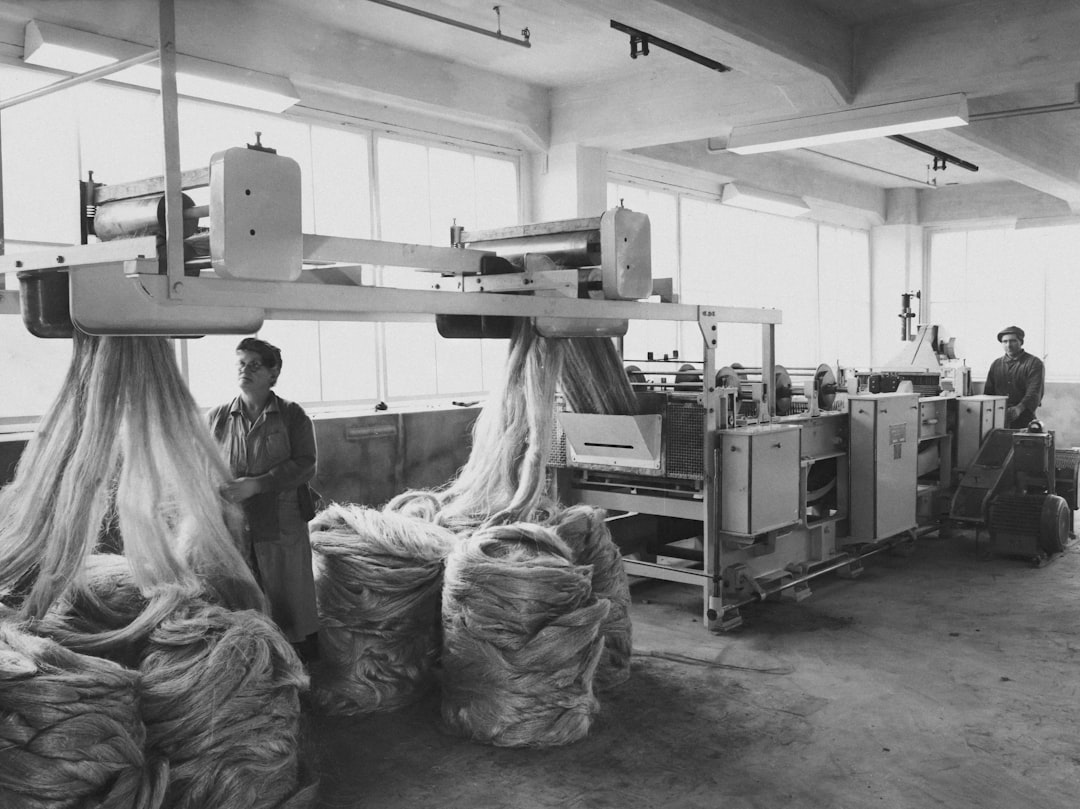
The process starts with material preparation. Polypropylene (PP), polyethylene terephthalate (PET), and acrylonitrile butadiene styrene (ABS) pellets arrive from resin suppliers and enter drying hoppers. Moisture content must drop below the threshold specified for the resin type before the material enters the barrel. We found on our production line that skipping the drying step creates micro-bubbles inside the bottle wall, which leads to cosmetic product oxidation within weeks.
Oulete’s injection molding fleet includes 20 machines dedicated to cosmetic packaging production. Cycle times vary by component complexity, with smaller caps running faster and thick-walled bottle bodies requiring longer cooling. A standard airless pump bottle has multiple separate injection-molded parts: the outer bottle, inner liner, piston, pump mechanism, overcap, and sometimes a decorative collar. Each pump type has distinct engineering requirements — our technical comparison of cosmetic spray pump types covers the six main categories and their specifications. Each part requires its own mold with tolerances measured in hundredths of a millimeter.
After molding, parts move to decoration. Silk screening applies logos and text to curved surfaces. Hot stamping transfers metallic foils for premium finishes. UV coating creates gloss or matte surface treatments. Anodizing adds metallic color to aluminum components. Each decoration method has specific curing requirements, and applying the wrong sequence ruins an entire batch. On our line, UV coating always goes before hot stamping because the heat from stamping can crack an uncured UV layer.
Assembly is where most quality problems originate. A pump mechanism has a spring, ball valve, dip tube, and actuator. If the spring tension is off by even a small margin, the pump either fails to dispense or leaks. Oulete produces over 20 million packaging sets annually from its Shaoxing facility, and our defect tracking data shows that the majority of quality issues caught in final inspection trace back to assembly, not molding.
Final quality control runs every unit through visual inspection, dimensional checks, and functional testing. For airless pump systems, this means verifying that the piston rises smoothly inside the cylinder, the pump actuates within specified force limits, and the dispensing volume stays consistent. Batches that fail AQL sampling go back for sorting, not rework. Reworking cosmetic packaging components risks introducing contamination that the original molding process would never produce.
China’s Regional Manufacturing Hubs
China’s cosmetic packaging production concentrates in three provincial clusters, each with distinct capabilities and cost structures. Choosing the right region depends on your product type, volume requirements, and supply chain priorities.
Guangdong Province, centered around Guangzhou and Shantou, is the largest cosmetic packaging cluster in China. Guangdong hosts the highest concentration of blow molding and glass bottle operations. Brands sourcing glass jars, PETG bottles, or large-volume standard packaging typically find the most competitive pricing here. The proximity to Guangzhou port also reduces inland logistics costs for export orders.
Zhejiang Province, particularly the Shaoxing-Yuyao corridor, specializes in precision injection molding and pump mechanism production. This region produces the majority of China’s airless packaging components. Oulete manufactures airless pump bottles with in-house PCR compounding capability from its Shaoxing base. The injection molding expertise in Zhejiang makes it the preferred region for complex multi-component packaging like airless systems and refillable mechanisms.
Shanghai and Jiangsu Province serve as the hub for premium and luxury cosmetic packaging. Operations here tend to be smaller scale with higher per-unit costs, but they offer superior surface finishing and faster prototyping turnaround. International brands with design studios in Shanghai often work with nearby factories to accelerate development cycles.
Cosmetic Packaging Manufacturer China: Regional Comparison
| Feature | Guangdong | Zhejiang | Shanghai/Jiangsu |
|---|---|---|---|
| Primary strength | Glass, blow molding, standard packaging | Injection molding, pumps, airless systems | Premium finishes, luxury packaging |
| Typical MOQ | Higher MOQ | Lower MOQ (from 1,000 units) | Medium to high MOQ |
| Cost level | Low to medium | Medium | Medium to high |
| Best for | High-volume standard bottles and jars | Complex multi-component packaging | Premium brand packaging |
| Export port access | Guangzhou, Shenzhen | Ningbo, Shanghai | Shanghai |
Certifications That Separate Real Manufacturers from Trading Companies
Certifications in the cosmetic packaging industry serve two purposes: regulatory compliance for market access, and quality system verification for buyer confidence. Not all certifications carry equal weight, and some that manufacturers prominently display add little real assurance. The certifications below are the ones that actually determine whether a factory can legally and competently serve your target markets.
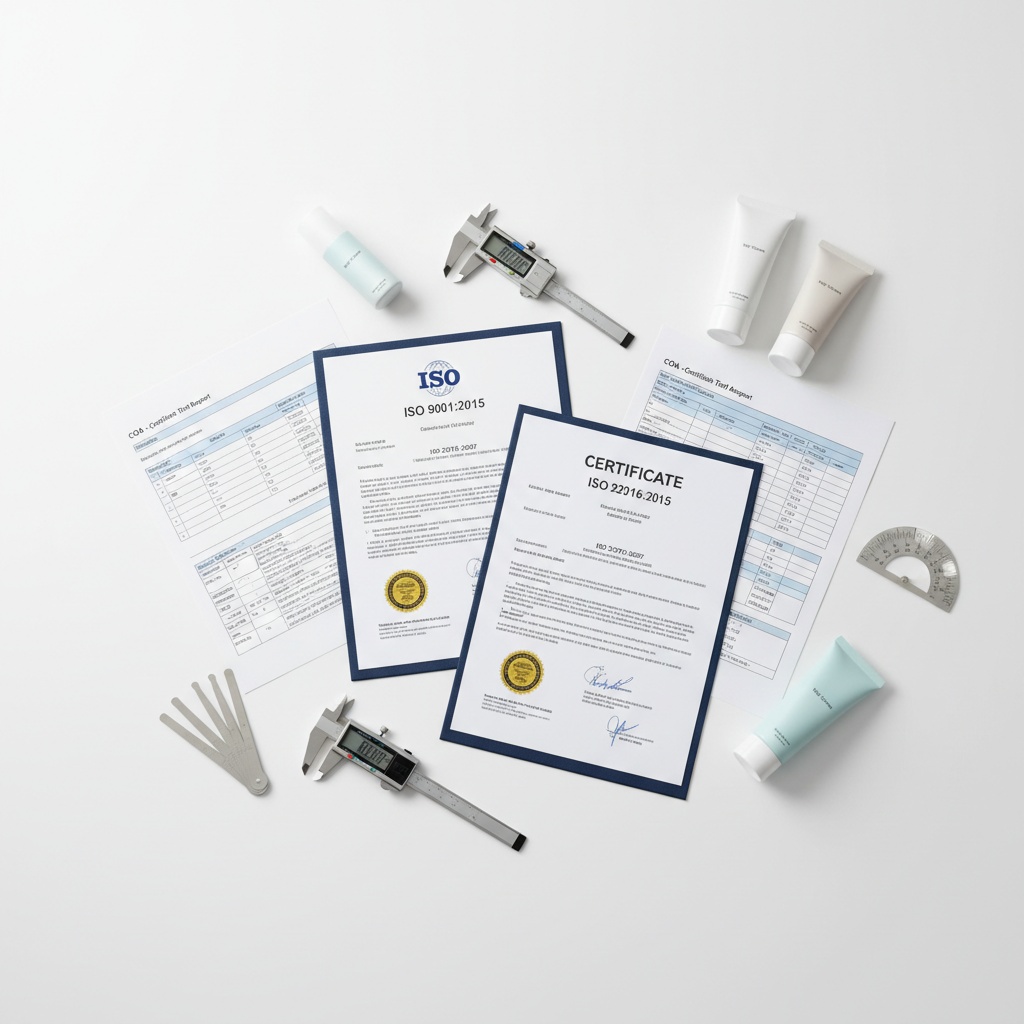
ISO 22716 is the international standard that defines Good Manufacturing Practices specifically for cosmetic production. According to Registrar Corp, this standard covers production, control, storage, and shipment of cosmetic products. Any factory claiming to serve the European or regulated Asian markets without ISO 22716 certification is either operating illegally or selling through intermediaries who absorb the compliance risk.
ISO 9001 is a general quality management system certification that establishes baseline process control. It is not cosmetic-specific, but its absence signals a fundamental lack of documented quality procedures. Oulete holds ISO 9001, CE, SGS, and GMP certifications. When we went through the ISO 9001 audit process, it forced us to document every process step from incoming material inspection through final packaging, which eliminated the tribal knowledge problem that plagues many smaller factories.
MoCRA is the Modernization of Cosmetics Regulation Act passed by the US Congress in 2024. According to the FDA, US-bound cosmetics must now follow FDA GMP requirements covering raw material sourcing through finished product testing. Contamination from packaging materials falls under the same compliance umbrella, so factories without documented material traceability cannot support brands selling in the United States.
CE marking and SGS testing serve different roles. CE marking is a self-declaration of conformity with European safety directives. SGS testing provides third-party laboratory verification of material safety, including heavy metals content, phthalate levels, and migration testing.
Certification Checklist for Evaluating a Cosmetic Packaging Manufacturer in China
| Certification | What It Proves | Who Needs It | Red Flag If Missing |
|---|---|---|---|
| ISO 22716 (GMP) | Cosmetic-specific manufacturing controls | EU, ASEAN, China (NMPA) markets | Cannot legally supply regulated markets |
| ISO 9001 | Documented quality management system | All markets | No formal quality processes exist |
| FDA MoCRA Compliance | US GMP conformity | US market | Cannot support US-bound brands |
| CE Marking | European safety directive conformity | EU market | Self-declaration, lower barrier |
| SGS/TUV Testing | Third-party material safety verification | All markets | No independent quality validation |
| BSCI/Sedex | Social compliance and ethical labor | European retail brands | May block entry to major retailers |
How Cosmetic Packaging Pricing Actually Works
Pricing is the most misunderstood aspect of working with a cosmetic packaging manufacturer in China. Buyers who focus only on per-unit price consistently make poor decisions because per-unit cost represents only one component of total project cost. A complete cost picture includes four categories: tooling, per-unit production, decoration, and logistics. Missing any one of these during the quoting stage leads to budget overruns that derail product launches.
Tooling cost is the first major expense. A single injection mold for a cosmetic bottle body typically ranges from several thousand to over ten thousand dollars depending on cavity count, steel grade, and geometric complexity. A complete airless bottle system with multiple components may require significantly more in total tooling investment. This is a one-time investment that the manufacturer retains, and it is the primary reason switching suppliers mid-production is expensive.
Per-unit cost covers raw material, machine time, labor, and factory overhead. The final per-unit price for a standard airless pump bottle depends on material choice, order volume, and component complexity. At higher volumes, manufacturers offer significant volume discounts. PCR (Post-Consumer Recycled) plastic is reclaimed resin that has completed at least one consumer use cycle, and it carries a modest cost premium over virgin resin due to the additional processing and testing required. For a deeper analysis of how PCR material properties affect cosmetic packaging performance, see our guide on PCR sustainable packaging.
Decoration cost is quoted separately and often surprises first-time buyers. Silk screening, hot stamping, and UV coating each add measurably to per-unit cost, and multi-process finishing compounds quickly. Custom color matching using Pantone references carries a one-time setup fee. Brands that specify multiple colors with hot stamping and UV coating on a smaller order often find that decoration costs more than the bottle itself.
Shipping and logistics cost depends on volume and destination. A full 20-foot container holds a large number of cosmetic bottles depending on bottle size and packing configuration. Ocean freight is significantly more economical than air freight, and FOB terms from Ningbo or Shanghai are standard for Zhejiang-based manufacturers. For smaller orders, air freight dramatically increases per-unit cost. Oulete offers minimum order quantities starting at 1,000 units, which makes small batch testing feasible even with air freight.
Sustainable Packaging: PCR Materials and What They Actually Require
Sustainability claims in cosmetic packaging range from genuine material innovation to pure greenwashing. According to APG Packaging, 62% to 74% of consumers prefer sustainable packaging, directly impacting brand loyalty and purchasing decisions. That demand has pushed every manufacturer to claim sustainability capabilities, but few can deliver verified PCR content at cosmetic-grade quality.
PCR plastic presents specific manufacturing challenges that virgin resin does not. Recycled PP and PE contain trace contaminants from their previous use cycle, including residual pigments and varying melt flow indices. These inconsistencies cause color variation between batches, reduced wall strength, and surface imperfections that undermine the premium appearance cosmetic brands require.
We addressed this at Oulete by bringing PCR compounding in-house rather than buying pre-compounded recycled resin from third parties. In-house compounding means we control the blending ratio of virgin to recycled content, test each batch for melt flow consistency, and adjust processing parameters in real time. We produce cosmetic tubes and airless bottles with PCR content ranging from 10% to 50%, verified through third-party testing.
The difference between 10% PCR and 50% PCR is not just a label change. At higher PCR percentages, the resin behaves differently under injection pressure, and mold filling patterns shift enough to require modified gate design. Our PCR plastic testing data shows how recycled content affects mechanical properties at different blend ratios. Most factories that claim high PCR capability have not actually run production at those percentages and cannot show you testing documentation to prove it.
According to Grand View Research, plastic leads cosmetic packaging materials due to versatility, lightweight nature, and cost-effectiveness. This dominance makes PCR adoption critical because glass-to-plastic switching is not a viable sustainability strategy for most product categories. The real path forward is making plastic packaging from recycled sources while maintaining performance.
Refillable packaging represents a parallel sustainability strategy. Designing a bottle with a removable inner cartridge lets consumers keep the outer shell and replace only the product-containing component, achieving substantial material reduction on refills. Our refillable skincare packaging line uses a twist-lock mechanism that maintains seal integrity through multiple refill cycles based on our internal testing.
How to Evaluate a Cosmetic Packaging Manufacturer Before Placing an Order
The gap between a manufacturer’s website and its actual capabilities can be enormous. I have seen buyers lose six-figure orders because they skipped basic verification steps. Here is the evaluation process that works.
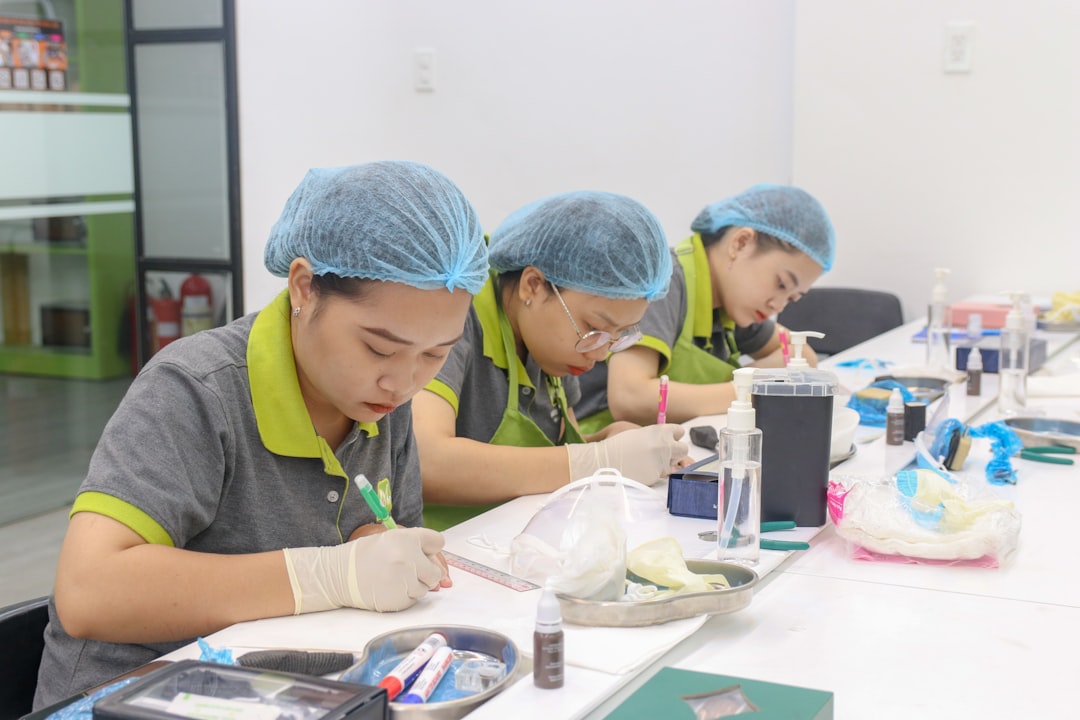
Start with factory verification. Request a current business license and cross-reference the registered address on Tianyancha or Qichacha, China’s corporate registry databases. A legitimate manufacturer will be registered as a production enterprise, not a trading company. Ask for a video tour of the production floor showing active machines. Trading companies will show you a partner factory’s floor but cannot demonstrate operational control.
Request samples from existing molds, not custom samples made for your evaluation. Production samples from existing molds show what daily output actually looks like. Examine wall thickness uniformity, gate mark placement, parting line quality, and surface finish consistency. For airless pump bottles, test the pump mechanism for dispensing consistency over several hundred actuations.
Ask for quality control documentation, not marketing brochures. A real manufacturer maintains incoming material inspection reports, in-process quality checks with statistical process control data, and final inspection reports following AQL (Acceptable Quality Limit) standards. AQL is the statistical sampling methodology that determines how many units to inspect from a production batch and the maximum acceptable defect rate.
Evaluate communication structure. A factory with engineering depth will respond to technical questions within 24 hours with specific data. Ask about wall thickness tolerances, material certifications, and compatibility testing protocols for your specific formulation. Vague answers like “we can do everything” indicate either a trading company or a factory without proper engineering support.
Run a pilot order before committing to full production. Order 1,000 to 3,000 units and put them through your complete filling, capping, labeling, and shelf-life testing process. This pilot reveals problems that samples cannot: batch-to-batch consistency and packaging-formula compatibility over time. Oulete’s customization services include pilot production runs specifically designed for this validation stage.
Frequently Asked Questions
How do I find a reliable cosmetic packaging manufacturer in China?
A reliable cosmetic packaging manufacturer in China can be identified through factory verification on Tianyancha corporate registry, video tours of active production lines, and pilot orders of 1,000 to 3,000 units. Confirm the company is registered as a production enterprise rather than a trading company. Request samples from existing production molds and ask for statistical process control documentation from recent runs.
What certifications should a Chinese cosmetic packaging manufacturer have?
ISO 22716 GMP certification is the most critical credential for any cosmetic packaging manufacturer serving regulated markets. ISO 9001 provides baseline quality management documentation. For US-bound products, FDA MoCRA compliance is now mandatory. CE marking and SGS testing verify European safety conformity and material safety respectively. Verify certificate numbers directly with the issuing body rather than accepting photocopies.
What is the minimum order quantity (MOQ) for cosmetic packaging from China?
MOQ for cosmetic packaging from Chinese manufacturers varies widely depending on the factory, product type, and whether existing molds are available. Oulete offers minimum order quantities starting at 1,000 units for existing mold designs. Custom mold projects may require higher commitments to justify tooling investment. Start with an existing design at low MOQ for market testing, then invest in custom tooling once demand is validated.
Which cities in China are the major cosmetic packaging manufacturing hubs?
Guangzhou and Shantou in Guangdong Province form the largest cosmetic packaging cluster, specializing in glass bottles, blow-molded containers, and high-volume standard packaging. Shaoxing and Yuyao in Zhejiang Province concentrate on injection molding, pump mechanisms, and airless packaging systems. Shanghai and surrounding Jiangsu Province serve the premium and luxury segment with superior surface finishing and faster prototyping. Each region has distinct cost structures and specialty capabilities, so matching your product requirements to the right regional cluster reduces both cost and lead time.
How much does custom cosmetic packaging cost from China?
Custom cosmetic packaging from China involves three cost components: tooling (a one-time investment that varies significantly based on mold complexity), per-unit production (driven by material, volume, and component count), and decoration (which adds measurably per process per unit). Total project cost depends heavily on order volume, material choice, and the number of decoration steps involved. Always request a fully itemized quote that separates tooling, production, decoration, and shipping costs.
What is the lead time for cosmetic packaging production in China?
Lead time for cosmetic packaging production in China is typically several weeks for orders using existing molds, and two to three months for custom mold projects. The timeline breaks down into mold fabrication (the longest single phase for custom projects), followed by production runs, and then decoration. Ocean freight to North America or Europe adds roughly another month. Plan your timeline backward from your launch date and add a buffer for unexpected delays.
How do I verify a Chinese cosmetic packaging manufacturer’s quality?
Verifying quality requires examining three levels: system, process, and output. Confirm ISO 9001 and ISO 22716 certifications by contacting the issuing body directly. Request statistical process control charts from recent production runs. Order pilot quantities and conduct your own testing: wall thickness measurement, drop testing, pump actuation over several hundred cycles, and compatibility testing with your formulation. Third-party inspection services like SGS and Bureau Veritas can conduct on-site audits during production.
What is the difference between a cosmetic manufacturer and a packaging supplier?
A cosmetic manufacturer formulates and produces the actual cosmetic product such as creams, serums, and lotions. A cosmetic packaging supplier provides the containers, closures, pumps, and decorative components that hold those products. A cosmetic packaging manufacturer specifically produces packaging through injection molding, blow molding, or tube extrusion. Trading companies act as intermediaries without owning production equipment. The distinction matters because manufacturers control quality at the source.
Leo Zhang is Packaging Engineering Director at Oulete (Shaoxing Oulete Packaging Technology Co., Ltd.), where he oversees injection molding operations, PCR material development, and quality systems for cosmetic packaging production. He has 15 years of experience in cosmetic packaging engineering and manufacturing process optimization.
The single most important lesson from fifteen years of manufacturing cosmetic packaging: a factory that cannot explain exactly how your product is made, step by step, from resin pellet to finished good, does not actually make your product. Someone else does. And when something goes wrong, that someone else has no obligation to fix it for you.