


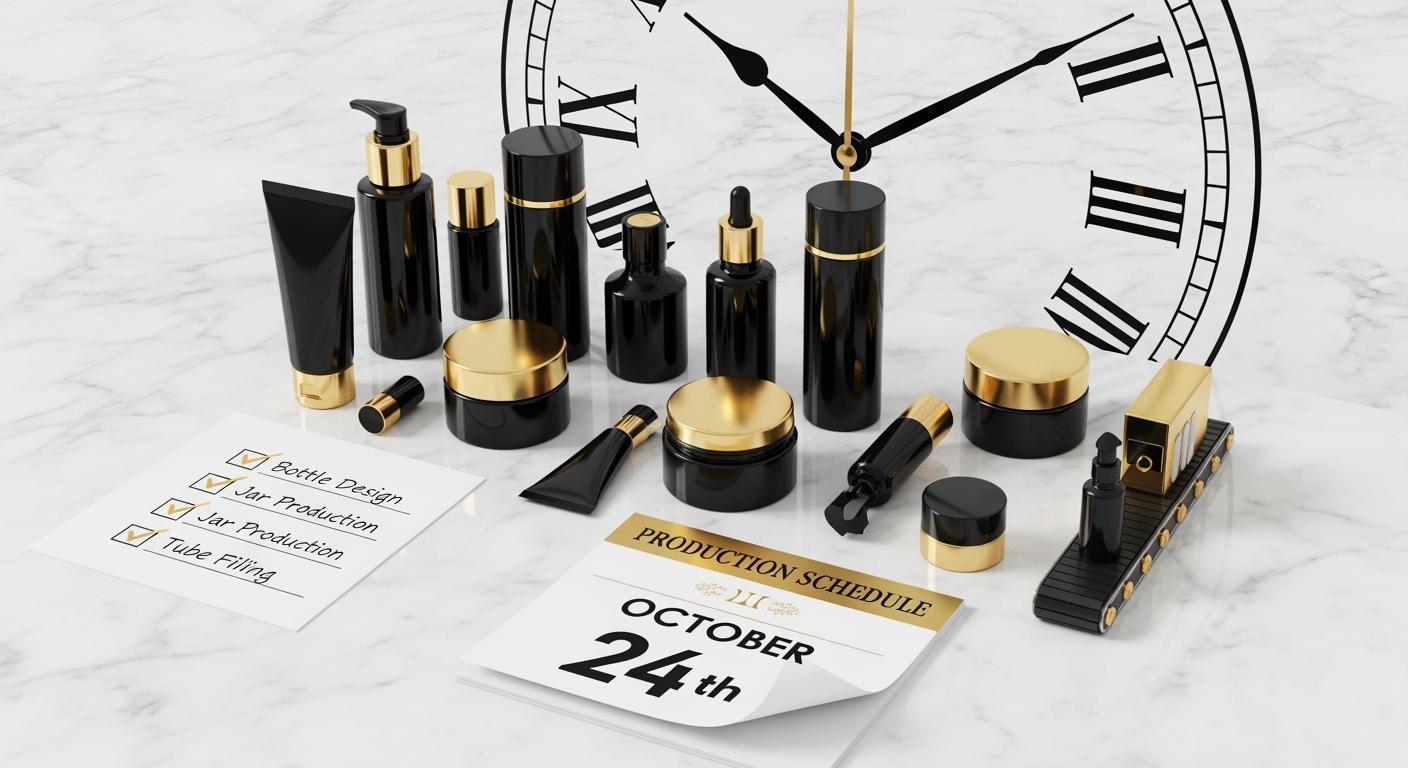
You face many variables when planning your bottle orders. The most common factors that impact Cosmetic Packaging Lead Time include material sourcing, customization, order size, and shipping methods. The table below highlights how each factor can influence your production schedule:
Factor | Impact on Lead Time |
|---|---|
Customization Level | Complex designs add extra production steps. |
Order Size | Large orders may take longer but offer efficiency. |
Material Availability | Specialty bottles require special orders, often adding weeks to your timeline. |
Printing Complexity | Detailed prints increase production time. |
Supplier’s Workload | Busy seasons or high demand can stretch schedules. |
Shipping Method | Air freight delivers faster than sea freight. |
You should know that stock bottles usually ship in 2–4 weeks, while custom bottles may require 35–50 days after you approve samples. Mold creation for new designs can add another 4–6 weeks. Understanding these variables helps you prevent costly delays and keep your projects on track.
Key Takeaways
Understand that material sourcing impacts your production schedule. Delays in raw materials can halt manufacturing.
Customization level affects lead time. Standard bottles ship faster than complex designs, so plan accordingly.
Order size influences production time. Larger orders may take longer but can be more efficient overall.
Choose reliable suppliers to ensure consistent quality and timely deliveries. Strong partnerships help avoid delays.
Effective communication with your team and suppliers is key. Clear instructions and regular updates keep projects on track.
Part1: Cosmetic Packaging Lead Time Factors
1.1 Material Sourcing
You need to pay close attention to material sourcing when planning your bottle orders. The lead time for raw materials determines when your production can begin. If your supplier faces delays in delivering glass, plastic, or aluminum, your manufacturing process may stop until those materials arrive. This can create bottlenecks and push back your entire schedule, which can lead to missed delivery deadlines and dissatisfied clients.
Material | Characteristics |
|---|---|
Glass | Luxurious, recyclable, ideal for serums and perfumes, heavier and more fragile. |
Plastic | Lightweight, cost-effective, versatile, can be made from post-consumer recycled plastic. |
Aluminum | Durable, eco-friendly, commonly used for aerosols, provides excellent protection. |
Bamboo & Biodegradable | Sustainable options, often combined with glass for a premium feel. |
Paper-Based Packaging | Compostable, growing in popularity for solid beauty products. |
Production schedules for bottles depend on the availability of these materials. For example, tube manufacturing lead times can range from 4 to 8 weeks. If you choose specialty bottles, such as PCR airless bottles, you may face longer sourcing times due to limited suppliers.
Global supply chain disruptions can also impact your timeline:
Geopolitical tensions disrupt ocean freight, making it harder to move goods.
Events like Houthi rebel activity in Yemen have caused shipping delays.
Companies are shifting toward domestic sourcing to improve reliability and reduce costs.
Recent global events, such as pandemics and tariffs, have increased costs and made sourcing more unpredictable. You should consider working with suppliers who have strong networks and backup options. This approach helps you avoid unexpected delays in your cosmetic packaging lead time.
Tip: Build redundancy into your supply chain by partnering with multiple suppliers for critical bottle materials. This strategy can help you maintain a steady flow of packaging components even during global disruptions.
1.2 Customization Level
The level of customization you choose for your bottles has a direct impact on production timelines. Standard, low-customization packaging, such as stock bottles, can be ready in as little as 2–4 weeks. If you require fully customized bottles or complex designs, the process can take much longer.
Customization Level | Average Lead Time |
|---|---|
Standard, Low-Customization Packaging | 2–4 weeks |
Fully Customized Bottles | 4–8 weeks |
Seasonal or Highly Complex Designs | 8–12 weeks or more |
Advanced techniques, such as foil stamping, embossing, or special coatings, add extra days to your schedule. For example, foil stamping and embossing can add 2–5 working days, while multi-layer UV finishes may require 1–3 additional days. If you want to create a unique look for your brand, such as with custom dropper bottles, you should plan for these extra steps.
The production process for custom bottles includes several stages:
Design and dieline finalization (1–5 days)
Pre-production and proofing (3–10 days)
Mass production (10–30 days)
Quality control (1–3 days)
Shipping and logistics (5–40 days)
Custom packaging usually adds 1 to 4 weeks to your cosmetic packaging lead time compared to standard options. Luxury bottles with special finishes may require even more time. You can reduce delays by finalizing your artwork early and approving samples quickly.
1.3 Order Size
Order size plays a major role in your production schedule. Large orders require more time for setup, production, and quality inspection. If you order a high volume of bottles, your supplier may need to adjust labor schedules and warehouse space to accommodate your request.
Order quantity influences both the production schedule and the quality inspection process.
Larger orders may require more time for setup and production compared to smaller orders.
Factors such as tube material, printing method, and artwork approval also affect the timeline.
Most manufacturers set a minimum order quantity (MOQ) to cover setup and fixed costs. MOQs help suppliers run their operations efficiently, but they also impact how quickly your order can move through the production line. For example, if you work with an airless bottle manufacturer, you may need to meet a specific MOQ to secure a production slot.
Note: Plan your order size carefully. Placing orders that match your sales forecasts can help you avoid excess inventory and reduce the risk of delays in your cosmetic packaging lead time.
Part2: Production and Capacity
2.1 Manufacturing Capacity
You need to consider your supplier’s manufacturing capacity when planning your bottle orders. Production lines can only handle a certain number of units at a time. If you place a large order for custom bottles, your supplier may need to adjust their schedule or even run extra shifts. Smaller facilities may face longer wait times during peak seasons. You can reduce delays by working with suppliers who offer scalable production, such as those specializing in custom cosmetic packaging services.
Tip: Ask your supplier about their maximum daily output for your bottle type. This helps you set realistic expectations for your Cosmetic Packaging Lead Time.
2.2 Batch Scheduling
Batch scheduling determines when your bottles move through each stage of production. You may encounter bottlenecks that extend your timeline. Common issues include:
Raw material lead times, especially for specialized bottles.
Delays in sourcing unique packaging components.
Compatibility checks to ensure bottles do not react with your product.
Ingredient shortages due to global logistics problems.
High demand causing packaging scarcity and backorders.
Regulatory changes that require formula adjustments.
Vague product briefs leading to repeated clarifications.
Waiting for compliance and certifications.
You can avoid many of these problems by providing clear specifications and working closely with your supplier. For example, if you order serum bottle packaging, confirm all details early to prevent confusion.
2.3 Minimum Order Quantities
Minimum order quantities (MOQs) set the smallest number of bottles you can order from a manufacturer. High MOQs require a larger upfront investment and can tie up your capital. This makes it harder to adjust your production schedule if market demand changes. You may also face higher storage costs and less flexibility to test new products. Lower MOQs give you more freedom to experiment and respond quickly to trends.
High MOQs can increase inventory costs and risk of obsolescence.
You may find it difficult to diversify suppliers if you commit too much capital.
Testing new bottle designs at low volumes becomes challenging.
If you want to stay agile, look for suppliers who offer flexible MOQs on products like glass dropper bottles. This approach helps you manage your Cosmetic Packaging Lead Time and adapt to market shifts.
Part3: Quality and Compliance
3.1 Inspection Processes
You must ensure that every bottle meets strict quality standards before it reaches your production line. Inspection processes play a key role in maintaining consistency and safety. These steps can add time to your schedule, but they help you avoid bigger problems later. Here is a summary of standard inspection processes for cosmetic packaging:
Inspection Process | Description |
|---|---|
Materials | Ensure materials meet acceptance specifications and are properly controlled for cosmetics use. |
Production | Verify manufacturing instructions, cleanliness, and proper identification of materials. |
Laboratory Controls | Test raw materials and finished bottles for compliance, including microbial contamination. |
Records | Maintain control records for materials, processes, and finished bottles. |
Labeling | Check labels for required information, such as product identity and safety warnings. |
Complaints | Track consumer complaints to identify possible issues with bottles. |
You should work closely with your supplier to confirm these steps are in place. This approach helps you reduce the risk of recalls and keeps your Cosmetic Packaging Lead Time on track.
3.2 Regulatory Checks
You face different rules for bottles in every market. The United States, European Union, and China each have unique requirements for ingredient disclosure, packaging materials, and labeling formats. You must create region-specific packaging to meet these standards. This process can increase costs and add extra steps to your production schedule.
As you expand into new markets, you will encounter more complex regulations. Each country may have its own banned substance lists, language requirements, and filing procedures. You need to set up clear workflows to manage these checks early. This strategy helps you avoid last-minute changes that could delay your shipments.
Tip: Stay updated on regulatory changes in your target markets. Early planning helps you keep your production moving and avoid costly delays.
3.3 Rework Delays
Rework can disrupt your delivery timeline. If bottles do not pass inspection or fail to meet regulatory standards, you may need to correct or remake them. This process can delay shipping and force you to balance quality with tight deadlines.
Rework often causes missed deadlines.
You must weigh the need for quality against the risk of late shipments.
Importers often face tough choices when rework is required.
You can minimize rework by providing clear specifications and reviewing samples early. This proactive approach helps you keep your Cosmetic Packaging Lead Time predictable and your clients satisfied.
Part4: Logistics and Communication
4.1 Shipping Methods
You must choose the right shipping method for your bottle orders. Each option affects your delivery timeline. Air freight delivers bottles quickly, making it ideal for urgent shipments. Sea freight takes longer but often costs less for large volumes. Recent improvements in ocean shipping, such as faster vessels and express services, have narrowed the gap between air and sea freight. Smaller shipments, known as less-than-container load (LCL), can now compete with air freight in speed, especially with expedited options.
Shipping Type | Average Delivery Time |
|---|---|
Domestic Shipping | 2 to 8 business days |
International Shipping | 5 to 14 business days (or longer) |
You should consider the destination and urgency of your refillable skincare packaging or lotion bottles with pump when selecting a shipping method. Domestic routes usually offer faster and more predictable delivery. International routes may face longer transit times and more variables.
Tip: Plan your shipping early and choose the method that matches your project timeline and budget.
4.2 Customs Clearance
Customs clearance can create bottlenecks in your bottle supply chain. Ports with complex regulations often slow down shipments. Incomplete or inaccurate documentation can cause delays, and non-compliance may result in quarantine or return of your bottles, adding extra costs. Packaging that does not meet international standards can also lead to significant setbacks.
To avoid customs issues, you should:
Ensure all paperwork is complete and accurate.
Classify and value your bottles correctly.
Stay updated on customs regulations.
Work with a knowledgeable customs partner.
Build visibility into your shipping process.
You can minimize customs delays for products like sunscreen packaging by planning shipments in advance and aligning with your supply chain partners.
4.3 Project Coordination
Strong project coordination keeps your bottle orders on track. Effective management and clear communication help you avoid delays that can disrupt marketing campaigns or retail launches. Reliable suppliers provide clear timelines and regular updates, reducing uncertainty.
Common communication breakdowns include:
Misaligned expectations about goals or timelines.
Vague instructions that cause confusion.
Inefficient approval processes that slow decisions.
You can use centralized communication platforms to keep all teams informed. These tools automate tasks, provide real-time updates, and reduce manual errors. When you and your supplier stay aligned, you lower the risk of missed deadlines and costly rework.
Note: Set clear roles and responsibilities at the start of your bottle project. This approach helps everyone stay focused and ensures timely delivery.
You can optimize Cosmetic Packaging Lead Time by focusing on material sourcing, customization, order size, and supplier reliability. Early planning helps you align forecasts with production schedules and reduces emergency costs. Clear communication through structured channels improves coordination. Reliable suppliers ensure consistent bottle quality and timely deliveries. You should leverage technology for supply chain visibility and maintain strict quality standards. Proactive management at each stage keeps your bottle orders on track and supports successful product launches.
Establish clear communication with your partners.
Engage with manufacturers early to align schedules.
Choose reliable suppliers for consistent quality and timely delivery.
FAQ
What is the typical lead time for custom cosmetic bottles?
You usually wait 6–20 weeks for custom bottles. The timeline depends on material sourcing, mold creation, and design complexity. Stock bottles ship faster, often within 2–4 weeks.
How can you reduce delays in bottle production?
You can minimize delays by approving artwork early, providing clear specifications, and choosing reliable suppliers. Early planning helps you secure production slots and avoid bottlenecks.
Do minimum order quantities affect lead time?
Yes. High minimum order quantities may extend production schedules. You should discuss MOQs with your supplier to match your forecast and avoid excess inventory.
What happens if bottles fail quality inspection?
If bottles fail inspection, you must rework or remake them. This process adds time to your schedule. Clear specifications and early sample approval help you avoid rework.
How does international shipping impact bottle delivery?
International shipping introduces customs clearance and longer transit times. You should plan shipments early and ensure all documentation is accurate to prevent delays.