


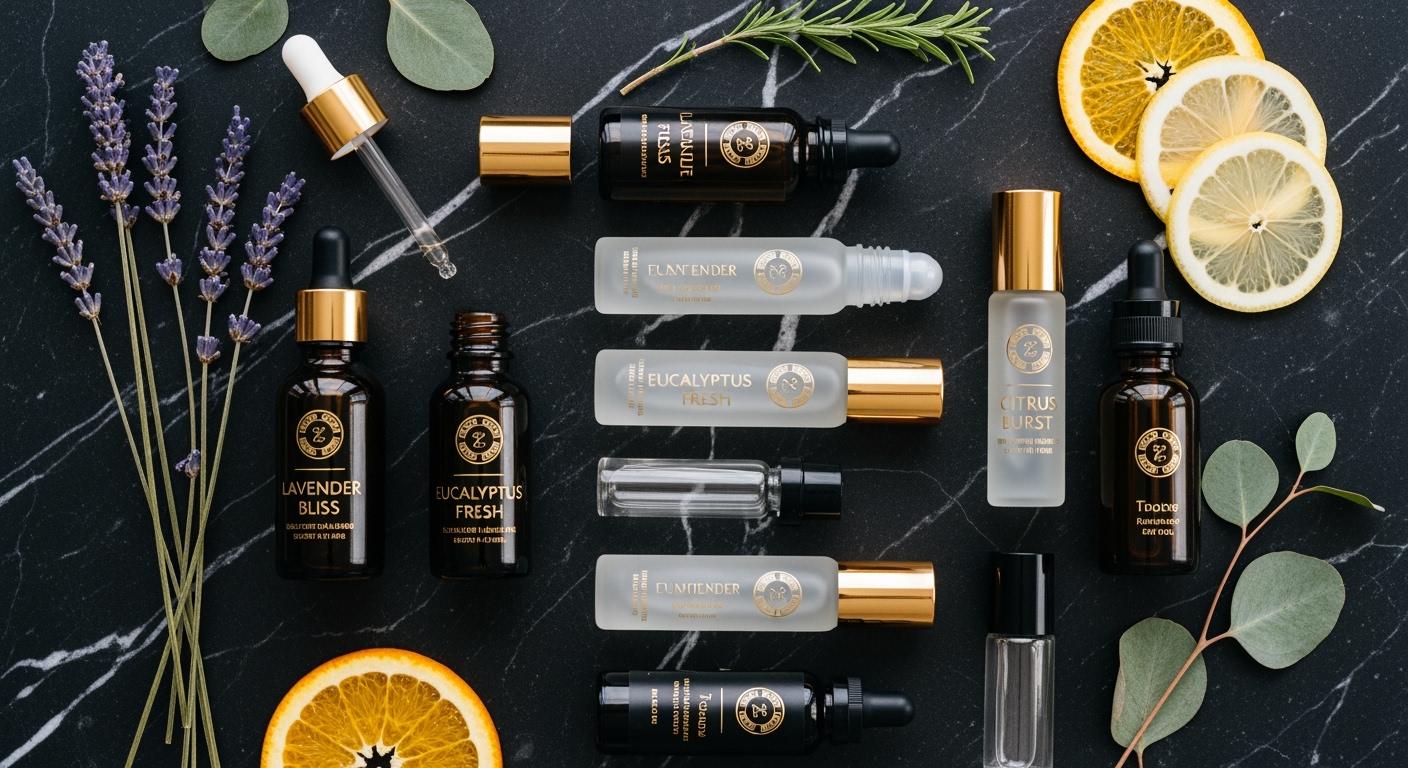
When you choose the best packaging bottles for essential oil blends, glass stands out as the top pick. Amber and blue glass block up to 98% of UVB rays, which helps keep oils like lemon, lime, and grapefruit from oxidizing. Delicate floral oils, such as rose or jasmine, also keep their scent longer in colored glass. You want to focus on the right material, bottle color, and closure to protect both the quality and safety of your blends.
Citrus oils oxidize quickly.
Floral oils lose scent with light exposure.
Photosensitive oils, like bergamot, need colored glass.
Think about how the right bottle can enhance your brand while keeping your product safe.
Key Takeaways
Choose glass bottles, especially amber or blue, to protect essential oils from UV light and maintain their potency.
Select the right bottle size based on usage frequency; smaller bottles reduce air exposure and keep oils fresh longer.
Use secure closures like droppers or rollerballs for easy application and to prevent leaks during storage and shipping.
Label each bottle clearly with blend details and expiration dates to ensure safety and track freshness.
Store essential oils in a cool, dark place to prevent oxidation and preserve their therapeutic value.
Part1: Choosing Bottles
1.1 Material Options
When you select packaging bottles for essential oil blends, glass is the top choice. You get several benefits with glass:
Glass does not react chemically with essential oils.
Glass does not release harmful chemicals into your blends.
Glass protects oils from sunlight and air.
You keep your oils potent and safe by using glass. Plastic bottles work for diluted blends or temporary storage. However, plastic allows oxygen to seep in, which speeds up oil degradation. Every day your oils sit in plastic, they lose quality faster. Glass bottles prevent air and moisture from entering, so your oils stay fresh longer.
1.2 Color and UV Protection
The color of your bottle matters. Sunlight, especially UV rays, can cause essential oils to oxidize and lose potency. Amber and blue glass block most UV light, helping maintain product quality. Take a look at this table for a quick comparison:
Bottle Color | UV Protection Level |
|---|---|
Amber | Blocks most UV light, adequate for most oils |
Cobalt Blue | Excellent UV protection with distinctive appearance |
Violet | Superior protection across the light spectrum |
Green | Moderate protection, less common in the industry |
Clear | No protection, suitable only for oils that will be stored properly elsewhere |
Thick-walled bottles block even more UV rays. Essential oils contain light-sensitive compounds that break down when exposed to UV light. You protect key ingredients like limonene and citral by choosing colored glass.
1.3 Size Selection
You want to pick the right size for your needs. Smaller bottles reduce air exposure and help preserve potency. Here’s a chart showing the most common sizes in the industry:
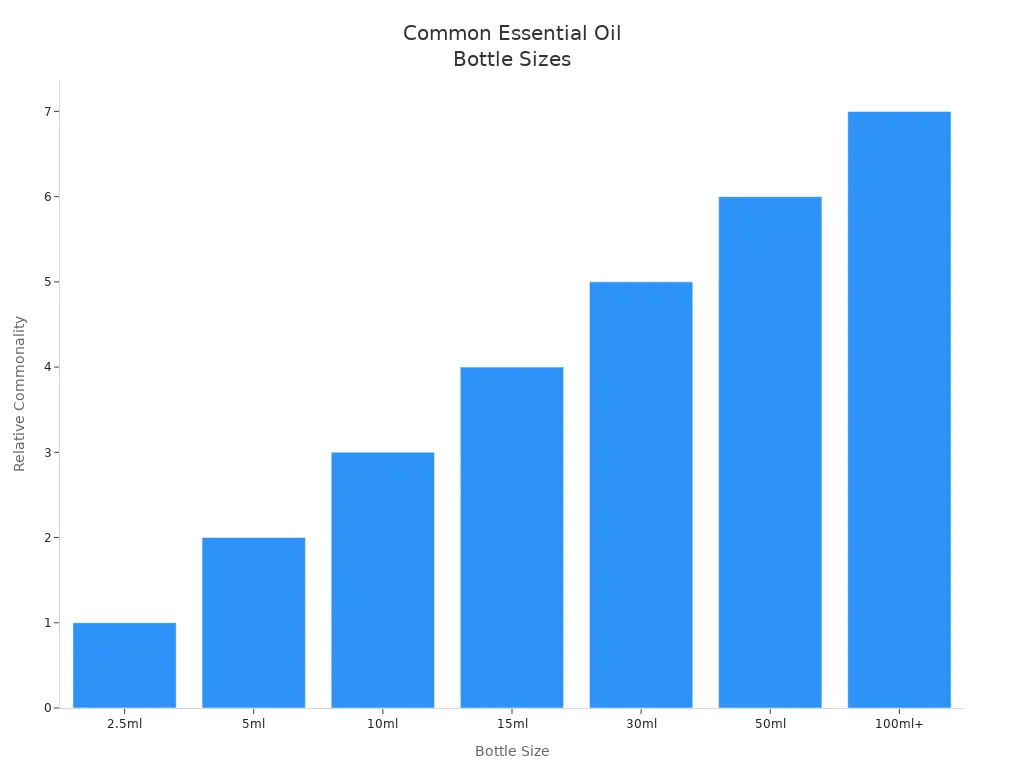
If you use half-empty bottles, more air gets inside, which can speed up oxidation. Choose a size that matches your usage to keep your blends fresh.
1.4 Closure Types
The closure you pick affects both safety and ease of use. Secure threading and polycone-lined caps prevent leaks and evaporation. Child-resistant caps keep products safe in homes and workplaces. Droppers let you dispense exact amounts, while roller balls offer direct application. Each closure type suits different business needs, so you can match your bottle to your blend.
Tip: Always test closures for leak prevention before large-scale packaging. This step saves you from costly spills and product loss.
You make the right choice by focusing on material, color, size, and closure. These factors help you select the Best Packaging Bottles for essential oil blends that protect quality and support your brand.
Part2: Best Packaging Bottles Types
2.1 Amber Glass Bottles
If you want the Best Packaging Bottles for essential oil blends, amber glass bottles should be your first choice. You get unmatched UV protection. Amber glass acts like sunglasses for your oils, blocking up to 99% of UV rays below 450 nm. This feature keeps your blends potent and extends shelf life. You also see amber glass used in pharmaceuticals and personal care because it preserves sensitive ingredients so well.
Amber glass filters out harmful UV light, which helps prevent your oils from degrading.
You can store even the most delicate oils long-term without worrying about loss of efficacy.
The amber color signals quality and professionalism to your clients.
You protect your investment and your brand reputation by choosing amber glass. If you want to keep your oils safe from light and air, amber glass bottles are the industry standard.
Note: Amber glass bottles work best for all essential oil blends, especially those with photosensitive or citrus oils.
2.2 Blue Glass Bottles
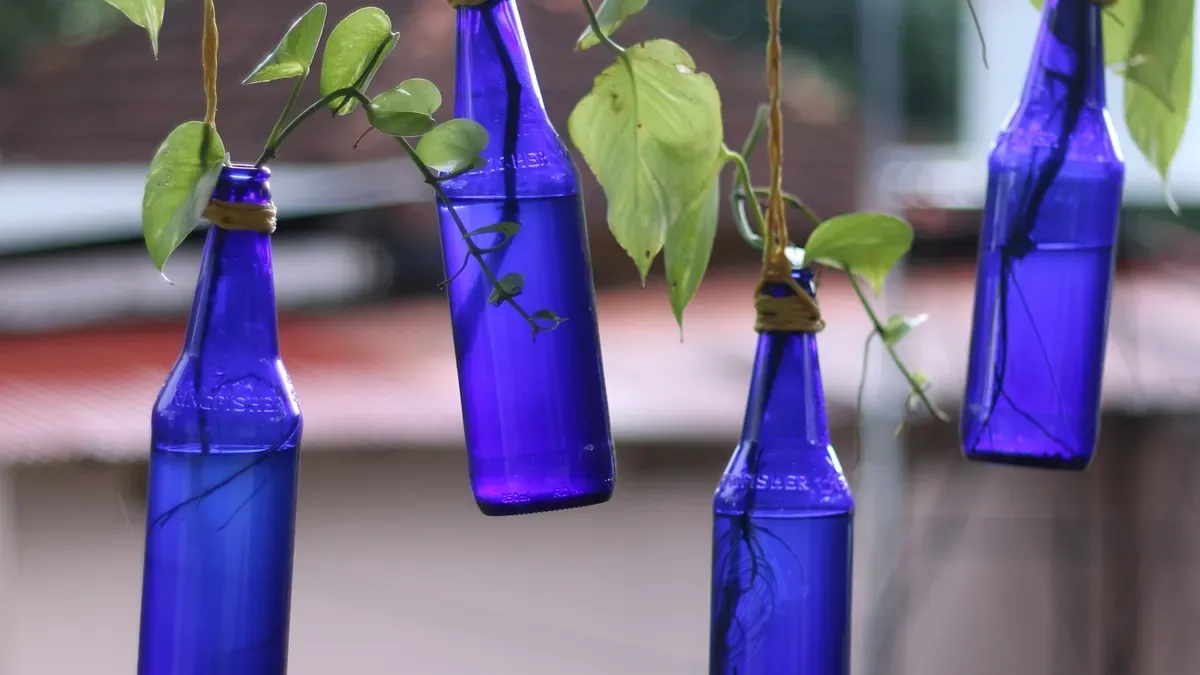
Blue glass bottles offer a unique blend of function and style. You get moderate UV protection, which works well for oils that are somewhat sensitive to light. Cobalt blue glass also stands out on the shelf, giving your brand a premium, sophisticated look. This visual appeal can help you attract attention in a crowded market.
Glass Type | UV Protection Level |
|---|---|
Amber Glass | Blocks up to 99% of UV rays below 450 nm |
Cobalt Blue Glass | Provides moderate UV protection, allows more light in |
You might choose blue glass when you want to balance protection with branding. These bottles are perfect for signature blends or limited editions where appearance matters as much as performance.
Tip: Use blue glass bottles for blends that need some UV protection but also benefit from a striking, upscale presentation.
2.3 Clear Glass Bottles
Clear glass bottles let you showcase the natural color of your essential oil blends. This feature works well for products like room sprays or cosmetic oils where visual appeal is important. However, clear glass offers no UV protection. Light exposure can quickly degrade your oils, leading to loss of potency and even increased risk of skin irritation.
Clear glass is only suitable for short-term storage or for oils that are not sensitive to light.
You should avoid clear glass for long-term storage of pure essential oils.
If you want to highlight the look of your blend, clear glass can help. Just make sure you store these bottles away from light and use them for products with a fast turnover.
2.4 Plastic Bottles
Plastic bottles offer convenience and lower shipping costs, but they come with significant risks for essential oil blends. Essential oils are naturally corrosive and can break down plastic over time. This process can compromise the purity of your oils and even cause the container to weaken or leak.
Glass containers are always recommended for safe, long-term storage.
Essential oils can dissolve some plastics, even when diluted.
Plastic bottles may leach chemicals into your blend, affecting quality.
If you need plastic for temporary or diluted blends, choose High-Density Polyethylene (HDPE) or Polyethylene Terephthalate (PET). These plastics are safer for short-term use. For the Best Packaging Bottles, glass remains the superior option.
2.5 Roller Bottles
Roller bottles are a favorite for on-the-go and direct application. You get precise dosage control, which helps prevent waste and ensures consistent results. The rollerball design allows you to apply oils directly to the skin, making these bottles ideal for aromatherapy, skincare, and custom blends.
Precise application means less mess and no spills.
Roller bottles are portable and travel-friendly.
Airtight seals preserve the quality of your blend.
Evidence Description | Key Benefit |
|---|---|
Rollerball design enables precise application | Prevents wastage and ensures consistent dosage |
Targeted dose delivery to the skin | Minimizes spills and waste |
Convenient for direct application | Promotes accurate dilution and dosage control |
You can reuse and refill roller bottles, making them cost-effective and eco-friendly. If you want to offer your clients a user-friendly, professional package, roller bottles are a smart choice.
2.6 Dropper Bottles
Dropper bottles give you unmatched precision and safety. You can dispense your essential oil blends drop by drop, which is perfect for applications that require exact measurements. Dropper bottles also protect your product from leaks and contamination, keeping your oils pure and potent.
Precise dispensing helps you control dosage and reduce waste.
Leak-proof caps prevent spills during shipping and storage.
Dropper bottles minimize contamination risks, which is crucial for sensitive blends.
Advantage | Description |
|---|---|
Precise Dispensing | Dropper bottles allow for controlled drop-by-drop dispensing, ideal for accurate measurements. |
Leak-Proof Protection | They prevent spills and maintain product purity, reducing waste. |
Improved Safety | Dropper bottles minimize contamination risks by keeping liquids contained until dispensed. |
Cost-Efficiency | Their compact size and ability to measure small amounts make them economical compared to larger containers. |
Protection from Elements | Tightly sealed caps prevent air and moisture from entering, preserving the quality of sensitive liquids. |
If you want to deliver a premium experience and maintain the integrity of your blends, dropper bottles are one of the Best Packaging Bottles you can choose.
Pro Tip: Use dropper bottles for high-value blends or when you need to guarantee precise dosing for your clients.
Part3: Bottle Comparison
3.1 Features Overview
When you compare packaging bottles for essential oil blends, you want to look at several features. Each bottle type offers unique benefits for your business. Glass bottles, especially amber and blue, give you strong UV protection and chemical stability. Clear glass lets you show off your product, but it does not block light. Plastic bottles are lightweight and cost-effective for short-term or diluted blends. Roller bottles and dropper bottles add convenience for direct application and precise dosing.
You also need to consider cost. The price of packaging bottles changes based on size and material. Smaller bottles, like 1ml to 5ml, work well for samples or travel kits. Medium bottles, such as 10ml to 30ml, are popular for retail sales. Larger bottles, from 50ml to 100ml and above, suit professional or bulk needs. This tiered pricing helps you match your packaging to your market and budget.
Here’s a quick look at the main features:
Bottle Type | UV Protection | Chemical Resistance | Application Method | Cost Range | Best Use Case |
|---|---|---|---|---|---|
Amber Glass | High | Excellent | Versatile | Medium | Long-term storage |
Blue Glass | Moderate | Excellent | Versatile | Medium | Branding, retail |
Clear Glass | None | Excellent | Versatile | Medium | Display, short-term |
Plastic (HDPE/PET) | Low | Good | Versatile | Low | Samples, diluted oils |
Roller Bottles | High/Mod. | Excellent | Direct | Medium | On-the-go, retail |
Dropper Bottles | High/Mod. | Excellent | Precise | Medium | High-value blends |
Tip: Choose your bottle features based on how you plan to use and market your essential oil blends.
3.2 Pros and Cons
You want to weigh the pros and cons before you select the Best Packaging Bottles for your business. Here’s a simple breakdown to help you decide:
Amber Glass Bottles
👍 Pros: Blocks most UV light, preserves oil quality, professional look.
👎 Cons: Heavier than plastic, higher shipping costs.
Blue Glass Bottles
👍 Pros: Good UV protection, eye-catching color, supports branding.
👎 Cons: Slightly less UV protection than amber, similar weight and cost.
Clear Glass Bottles
👍 Pros: Shows off oil color, great for display, same chemical resistance as colored glass.
👎 Cons: No UV protection, not for long-term storage.
Plastic Bottles (HDPE/PET)
👍 Pros: Lightweight, lower cost, good for samples or diluted blends.
👎 Cons: Not suitable for pure oils, can leach chemicals, less durable.
Roller Bottles
👍 Pros: Easy application, portable, reduces waste.
👎 Cons: Limited to certain uses, may require extra sealing.
Dropper Bottles
👍 Pros: Precise dosing, reduces contamination, professional appearance.
👎 Cons: Dropper tips can clog, higher cost for quality droppers.
Note: Your choice depends on your blend, your market, and your brand image. Always test bottles with your actual product before making a large purchase.
Part4: Size Guide
4.1 Volume Considerations
Choosing the right bottle size for your essential oil blends can make a big difference in product quality and business efficiency. You want to match bottle volume to how often your clients use the oil and the type of blend you offer. Smaller bottles, like 2ml or 5ml vials, work well for rare or precious oils. These sizes help reduce oxidation because less air gets inside. Larger bottles, such as 15ml or 30ml, suit blends used daily or in high volume.
Take a look at this table to see what factors matter most when selecting bottle size:
Consideration | Details | Implications |
|---|---|---|
Usage Frequency & Volume | Daily use needs bigger bottles; rare oils need small vials | Smaller bottles limit air exposure, keeping oils fresh |
Essential Oil Characteristics | Photosensitive oils require UV-protective bottles | Protects sensitive ingredients, easier dispensing |
Storage Environment | Light or temperature changes demand better protection | Dark glass and proper sizing prevent overheating |
Purpose of Use | Travel kits need small bottles; sprays need larger ones | Choose size for portability and batch size |
Budget Considerations | Bigger bottles cost less per ml but risk waste | Smaller bottles keep rare oils fresher |
Sealing & Leak Prevention | Quality caps are essential for air-tight sealing | Prevents leaks and loss of therapeutic value |
Tip: Always test your bottle size with your actual blend to ensure freshness and minimize waste.
4.2 Usage Scenarios
You need to consider how your clients will use your essential oil blends. For daily diffusing, you might choose 15ml or 30ml bottles. These sizes offer enough volume for frequent use and reduce the need for constant refilling. If you supply rare oils like Melissa or Rose, 2.5ml or 5ml vials are ideal. Smaller bottles help preserve potency and limit oxidation.
Different usage scenarios call for different bottle sizes:
Travel kits: Small bottles (2ml–5ml) fit easily in bags and keep blends safe.
DIY sprays or commercial blends: Medium to large bottles (30ml–50ml) suit bigger batches.
Retail samples: Tiny vials (1ml–2ml) let clients try before they buy.
Scenario | Recommended Size | Reason |
|---|---|---|
Daily diffusing | 15ml–30ml | Enough for frequent use, less refilling |
Rare oils | 2.5ml–5ml | Limits oxidation, preserves freshness |
Travel kits | 2ml–5ml | Portable, easy to seal |
DIY sprays | 30ml–50ml | Suitable for larger batches |
Retail samples | 1ml–2ml | Cost-effective, encourages trial |
Note: Quality caps and threading matter for all sizes. You want to prevent leaks and keep your blends potent. If you need custom bottle sizes or sealing solutions, consider reaching out to Oulete for custom cosmetic packaging services.
Part5: Closures & Accessories
When you select packaging bottles for essential oil blends, closures and accessories matter just as much as the bottle itself. The right closure keeps your oils fresh, prevents leaks, and makes your product easy to use. Let’s break down your main options.
5.1 Droppers
Droppers give you precise control over dispensing. You can add oils drop by drop, which helps with accurate blending and reduces waste. Many businesses use droppers for high-value blends or when clients need exact measurements. Glass droppers work best with essential oils because they resist corrosion and do not react with the oils.
Tip: Always test droppers with your blends to ensure they deliver the right amount and do not clog.
5.2 Orifice Reducers
Orifice reducers snap into the neck of your bottle. They let you dispense oils one drop at a time without a separate dropper. This accessory works well for retail products and sample vials. You get a clean, controlled pour, which helps prevent spills and overuse.
Orifice reducers fit most standard glass bottles.
They keep air out, which helps preserve oil quality.
You can pair them with tamper-evident caps for extra security.
5.3 Rollerballs
Rollerballs turn your essential oil bottles into easy-to-use applicators. You can offer blends for direct skin application, which adds value for your clients. Stainless steel rollerballs resist corrosion and glide smoothly. Plastic rollerballs cost less but may not last as long.
Rollerball Material | Durability | Best Use Case |
|---|---|---|
Stainless Steel | High | Premium blends, skincare |
Plastic | Moderate | Samples, short-term use |
5.4 Caps
Caps seal your bottles and protect your oils from air and moisture. You can choose from standard screw caps, child-resistant caps, or tamper-evident options. Polycone-lined caps provide a tight seal and prevent leaks during shipping. If you want to enhance your brand, consider custom cap colors or embossed logos.
Note: Quality closures reduce product loss and boost customer trust. For unique branding, explore cosmetic packaging customization.
Part6: Storage & Labeling Tips
6.1 Preserving Oil Quality
You want your essential oil blends to stay fresh and effective for as long as possible. The right storage habits make a big difference. Always choose amber or cobalt glass bottles for your blends. These bottles block harmful UV light and help prevent oils from breaking down. Avoid clear glass and plastic containers, since they let in light or may react with the oils.
Keep your bottles in a cool, dry, and dark place. Sunlight and heat speed up oxidation, which can ruin the scent and therapeutic value of your oils. A storage cabinet or drawer away from windows works well. Make sure you always tighten the lids after each use. This simple step keeps air and moisture out, so your blends stay potent.
If you notice a bottle is half full or less, transfer the oil to a smaller container. Less air in the bottle means less oxidation. You also want to label each bottle with the purchase date and expiration date. This helps you track freshness and rotate stock before oils lose quality.
Tip: Never store essential oils near heat sources or in humid areas. Consistent temperature and low humidity protect your investment.
6.2 Organizing Blends
Good organization saves you time and helps you avoid costly mistakes. Start by labeling every bottle clearly. Include the blend name, ingredients, batch number, and important safety notes. Proper labeling tells your clients exactly what’s inside, highlights any allergens, and gives clear usage instructions. This reduces the risk of adverse reactions and builds trust with your customers.
You can use color-coded labels or storage trays to group blends by type or purpose. For example, keep all citrus blends together and separate them from floral or herbal blends. A simple table can help you track inventory:
Blend Name | Batch Number | Date Bottled | Expiry Date | Special Notes |
|---|---|---|---|---|
Citrus Boost | CB-2024-01 | 03/01/2024 | 03/01/2026 | Photosensitive |
Calm Nights | CN-2024-02 | 04/10/2024 | 04/10/2026 | Contains lavender |
Note: Clear, compliant labels also help you meet regulations like the Poison Prevention Packaging Act. This protects your business and your clients, especially when selling to families or workplaces.
You want the Best Packaging Bottles for your essential oil blends to keep your products safe and your brand strong. Glass bottles, especially amber and blue, give you the best protection for long-term storage. Plastic works for temporary or diluted blends. For business needs, choose different sizes for samples and retail, use dark-tinted glass for UV protection, and pick droppers or pumps for easy dispensing. If you need a custom solution, request a custom packaging quote from Oulete.
FAQ
What is the best bottle material for storing essential oil blends?
You should always choose glass, especially amber or blue glass. Glass keeps your oils pure and stable. It does not react with essential oils or leach chemicals. Plastic works only for short-term or diluted blends. Need suitable glass bottles for essential oil blends? Contact Oulete to explore amber, blue, and custom glass packaging options for your formula.
How do I prevent leaks during shipping?
Use bottles with secure threading and polycone-lined caps. Always test your closures before shipping large orders. You can add tamper-evident seals for extra protection. This step helps you avoid costly spills and keeps your clients happy.
Can I use clear glass bottles for essential oils?
Clear glass bottles look great, but they offer no UV protection. Only use them for short-term storage or products that will stay away from light. For long-term storage, stick with amber or blue glass.
What size bottles should I choose for samples?
For samples, pick 1ml or 2ml vials. These sizes limit air exposure and keep your blends fresh. Small bottles also make it easy for clients to try your products without waste.
Are roller bottles suitable for all essential oil blends?
Roller bottles work best for diluted blends and direct skin application. They give you precise control and reduce mess. For pure or undiluted oils, use dropper bottles or orifice reducers instead.