


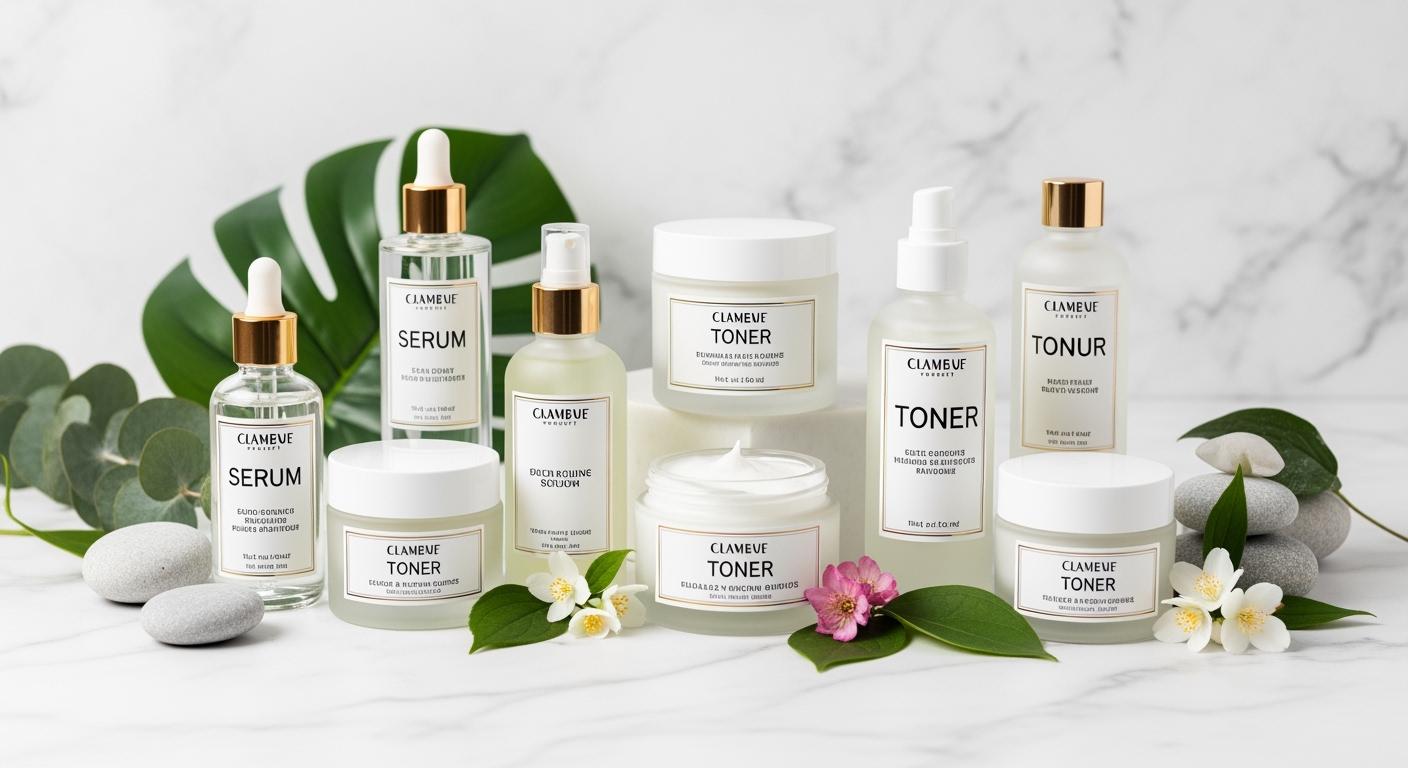
You want the best bottle packaging for your clean beauty brand. Glass, recycled plastics, aluminum, and biodegradable bottles offer strong choices. These materials show your commitment to sustainability and safety with options like BPA-free and non-toxic designs. Packaging acts as a silent salesperson, shaping how customers see your brand and the quality of your products. Attractive and functional bottles boost consumer trust and influence buying decisions. Refillable and mono-material bottles help your brand stand out and appeal to eco-conscious shoppers.
Key Takeaways
Choose sustainable materials like glass, recycled plastics, and biodegradable options to align with eco-friendly values.
Prioritize safety by selecting non-toxic, BPA-free packaging that protects consumer health and enhances brand integrity.
Use transparent packaging to build trust with customers, showcasing product quality and ingredient integrity.
Focus on aesthetics and unique designs to differentiate your brand and create memorable consumer experiences.
Implement refillable and mono-material designs to reduce waste and promote sustainability in your packaging strategy.
Part1: Criteria for Best Bottle Packaging
1.1 Sustainability & Low-Waste
You need to prioritize sustainability when selecting bottle packaging for your clean beauty brand. Industry standards recommend several key criteria:
Refillable containers help reduce single-use packaging.
Biodegradable materials offer alternatives to traditional plastics.
Recyclable and recycled plastics support circular economy principles.
Compostable packaging, such as bamboo, minimizes environmental impact.
Minimalist packaging design reduces unnecessary waste.
Mono-material bottle designs simplify recycling. You can use a single material for the entire bottle, which eliminates the need for consumers to separate components. This approach reduces contamination and increases recycling efficiency. Mono-material bottles also conserve resources and support your brand’s commitment to low-waste practices.
Refill systems are becoming mainstream in the clean beauty sector. You can offer refillable cosmetic bottles that integrate post-consumer resin. These systems cut single-use waste and encourage reusable routines. Many brands now use bamboo capsule cartridges or glass bottle pod refills, which minimize material use and promote recycling.
Tip: Choose bottle packaging that aligns with your sustainability goals. Look for options that combine eco-friendly materials, recyclability, and refillable designs.
1.2 Safety & Non-Toxicity
Safety remains a top concern for clean beauty brands. You must avoid toxic substances commonly found in conventional bottle packaging. These include parabens, phthalates, synthetic fragrances, formaldehyde, and petroleum distillates. Clean beauty brands use safer alternatives, such as plant-based essential oils and natural extracts.
Ingredient to Avoid | Potential Concern | Safer Non-Toxic Alternative |
|---|---|---|
Parabens | Endocrine disruption, skin irritation | Grapefruit seed extract, Vitamin E, Rosemary extract |
Phthalates | Endocrine disruption, reproductive health concerns | Plant-based essential oils for fragrance |
Synthetic Fragrance | Allergies, skin sensitivity, undisclosed chemicals | Natural essential oils, fruit extracts, vanilla absolute |
You should select bottle packaging that is BPA-free and non-toxic. Scientific studies confirm the safety of new materials like TMBPF, which show no estrogenic activity and negligible human exposure. These findings support the use of BPA-free bottles in clean beauty products.
1.3 Transparency & Brand Image
Transparent bottle packaging helps you build trust with your customers. Die-cut windows and clear bottles allow consumers to see the product’s color and formulation. This visual access enhances aesthetic appeal and fosters confidence in your brand.
Displaying ingredient lists on bottle packaging emphasizes honesty and transparency. You can highlight your commitment to safety and ingredient integrity. Transparent packaging also supports your brand image as a leader in clean beauty.
Note: Transparency in bottle packaging is not just about the material. It is about clear communication and visible quality.
1.4 Aesthetics & Differentiation
Aesthetics play a crucial role in the Best Bottle Packaging for clean beauty brands. Design elements such as color, texture, and minimalist layouts attract attention and create emotional appeal. You can use sustainable materials and experiential features to engage consumers and generate interest.
Design Element | Description |
|---|---|
Transparent Packaging | Allows consumers to see the product inside, enhancing trust and aesthetic appeal. |
Sustainable Packaging | Uses eco-friendly materials, aligning with consumer values for environmental consciousness. |
Minimalist Packaging | Simplifies the design to reflect the product’s clean ingredients, making information clear and appealing. |
Experiential Packaging | Incorporates visual and tactile features to engage consumers and generate interest, especially on social media. |
Modern consumers expect convenience, sustainability, and memorable unboxing experiences. You can differentiate your brand by choosing bottle packaging that combines these elements. The Best Bottle Packaging not only protects your product but also elevates your brand in a competitive market.
Part2: Top Materials & Designs
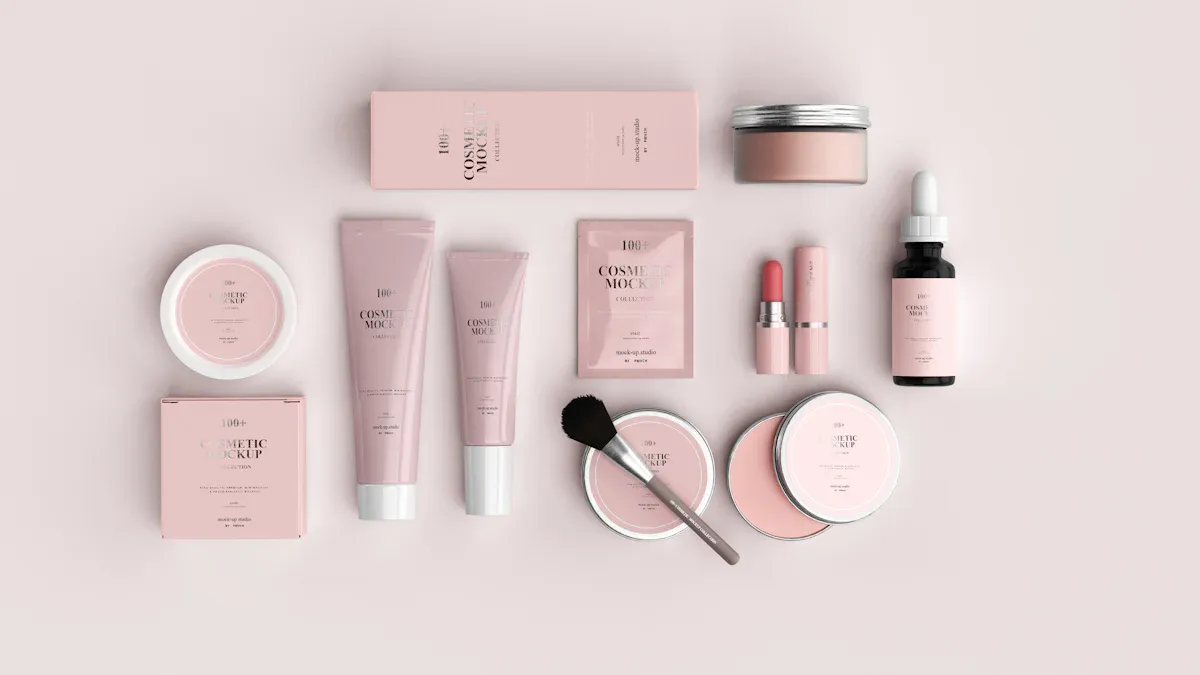
2.1 Glass & Recycled Glass
You can choose glass bottles to give your clean beauty products a premium look. Glass offers chemical inertness, which means it does not react with your formulas. This helps preserve the quality of your products. Glass is also fully recyclable and supports eco-friendly practices. However, you should consider its fragility and weight. Glass bottles can break easily and cost more to ship due to their heaviness. Production costs for glass are higher than for plastic. If you use recycled glass, you help reduce the carbon footprint, but transporting glass still uses more energy.
Advantage/Disadvantage | Description |
|---|---|
Premium Appeal | Glass offers a classic, upscale look that enhances brand reputation. |
Chemical Inertness | Glass does not react with cosmetics, preserving product quality. |
Recyclability | Glass is fully recyclable, supporting eco-friendly practices. |
Fragility | Glass is delicate and can shatter easily, posing a hazard. |
Weight | Glass is heavier than plastic, increasing shipping costs. |
Higher Production Costs | Producing glass is typically more expensive than plastic. |
Glass is infinitely recyclable if sorted correctly, but its production has a higher carbon footprint compared to plastic.
2.2 Recycled Plastics & rPET
Plastic bottles hold the largest market share in clean beauty packaging, expected to reach over 50% by 2026. You can use recycled plastics, such as rPET, to lower your environmental impact. rPET bottles use post-consumer waste, which closes the recycling loop. These bottles require less energy to produce than new plastic or glass. Using rPET can reduce carbon consumption by up to 87% compared to virgin materials. This choice also saves water and supports the circular economy. Recycled plastics help you meet sustainability goals and appeal to eco-conscious buyers.
Reduces the need for new materials
Lowers carbon emissions
Saves water and energy
Supports recycling efforts and diverts waste from oceans
2.3 Aluminum & Biodegradable Options
Aluminum bottles offer high recyclability and are lightweight, which reduces shipping emissions. You can recycle aluminum many times without losing quality. Biodegradable bottles use renewable plant-based materials and are compostable. These options provide a strong barrier against air, light, and bacteria, which protects your clean beauty formulas. Brands test biodegradable packaging to ensure it keeps products stable and uncontaminated throughout their shelf life.
Material | Key Sustainability Features |
|---|---|
Aluminum | High recyclability, lightweight, reduces shipping emissions |
Biodegradable | Made from renewable plant-based materials, compostable |
2.4 Mono-Material & Refillable Designs
Mono-material bottles use a single type of material, which makes recycling easier for your customers. These designs reduce mixed materials and lower packaging waste. Refillable bottles let your customers replace cartridges instead of buying new bottles. This approach supports sustainability and encourages consumer engagement. Mono-material and refillable designs are becoming a standard for the Best Bottle Packaging in the clean beauty industry.
Simplifies recycling processes
Reduces repeat packaging waste
Enhances consumer convenience with replaceable cartridges
Choosing the right material and design helps you align with clean beauty values and meet market demands for sustainable bottle packaging.
Part3: Certifications & Standards
3.1 Eco-Labels & Sustainability Marks
Eco-labels play a major role in shaping how you select bottle packaging for your clean beauty brand. These marks signal your commitment to sustainability and ethical practices. You can use eco-labels to show that your bottles meet strict environmental standards. Many shoppers look for these marks when making purchasing decisions. In fact, 81% of shoppers believe brands should minimize plastic packaging. Consumers value personal health and ethical choices, so eco-labels help you attract modern buyers.
Eco-labels build trust and credibility. They show your brand’s dedication to transparency, cruelty-free practices, and eco-friendly packaging. The clean beauty market in the U.S. is driven by informed consumers who actively seek out eco-labeled products.
3.2 Cruelty-Free & Vegan Claims
You need to understand the difference between cruelty-free and vegan claims for bottle packaging. Cruelty-free focuses on the process, while vegan centers on the ingredients. Both claims require clear labeling and third-party verification. Self-declared labels can lead to greenwashing, so independent audits are essential.
Attribute | Cruelty-Free Skincare | Vegan Skincare |
|---|---|---|
Primary Focus | The process of product development | The ingredients in the final product |
Animal Testing | Prohibited for the final product and ingredients | Prohibited as part of true vegan standards |
Animal Ingredients | Can contain animal-derived ingredients | Contains absolutely no animal-derived ingredients |
Key Promise | “We did not test this on animals.” | “There are no animal products in this.” |
Vegan and cruelty-free are separate certifications. You can have a vegan product that is not cruelty-free, and vice versa.
Third-party verification is essential. It ensures your bottle packaging claims are credible and avoids greenwashing.
Vegan certification confirms no animal-derived ingredients at any stage. Cruelty-free certification confirms no animal testing.
3.3 Non-Toxic & BPA-Free Standards
You must ensure your bottle packaging meets non-toxic and BPA-free standards. These certifications protect consumer health and reinforce your brand’s clean beauty values. Several third-party certifications verify compliance:
Certification | Description |
|---|---|
EWG Verified | Evaluates products for ingredient safety and transparency, ensuring no harmful chemicals. |
Leaping Bunny | Certifies that products and ingredients have not been tested on animals. |
Certified Vegan | Ensures products contain no animal-derived ingredients and have not been tested on animals. |
USDA Organic | Certifies organic ingredients, restricting synthetic chemicals. |
NSF/ANSI 305 | Ensures personal care products meet organic and sustainability standards. |
You can use these certifications to show your bottles are safe, ethical, and sustainable. They help you meet consumer expectations and set your brand apart in the search for the Best Bottle Packaging.
Part4: Choosing the Right Packaging
4.1 Align with Brand Values
You need to make sure your bottle packaging reflects your brand’s core values. Packaging acts as a visual storyteller. You can use color, structure, and finishing to highlight your brand’s personality. Modular design systems allow you to keep your brand identity strong while offering flexibility in shapes and decoration. Sustainability should become part of your brand’s ethos. You can embed eco-friendly practices into your business and measure their impact. This approach helps you build trust and recognition in the clean beauty market.
Use color and finishing to tell your brand story.
Choose modular designs for flexibility and consistency.
Make sustainability a practical part of your business.
4.2 Supply Chain & Cost Factors
You must consider supply chain and cost factors when selecting bottle packaging. Sustainable materials often require specialized processes and steady supply. Building strong partnerships with suppliers ensures transparency and ethical sourcing. Transitioning to sustainable packaging can affect your costs, so you need to manage these changes carefully.
Key Consideration | Description |
|---|---|
Steady Supply of Sustainable Materials | Securing a consistent supply can be challenging due to limited availability and specialized processes. |
Partnerships with Suppliers | Strong relationships with suppliers ensure a transparent and ethical supply chain. |
Cost Implications of Transitioning | Transitioning to sustainable packaging has cost implications that need to be managed effectively. |
Scale economies help you lower costs as production increases. Vertical integration lets you control expenses and maintain sustainability standards.
4.3 Customization & Consumer Experience
You can customize bottle packaging to enhance consumer experience. Unique shapes, textures, and finishes make your products stand out. Customization helps you create memorable unboxing moments. You can use experiential features, such as tactile surfaces or interactive elements, to engage buyers. These strategies increase brand loyalty and encourage repeat purchases.
Tip: Custom packaging creates a lasting impression and strengthens your brand’s connection with customers.
4.4 Partnering with Sustainable Suppliers
You should partner with suppliers who share your sustainability goals. Look for suppliers with proven eco-friendly practices and certifications. Strong partnerships help you maintain a reliable supply chain and ensure ethical sourcing. You can collaborate with suppliers to develop innovative bottle designs that meet both sustainability and performance standards. This approach supports your brand’s reputation and helps you stay ahead in the clean beauty industry.
You have many options when choosing the Best Bottle Packaging for your clean beauty brand. Glass, recycled plastics, aluminum, and biodegradable bottles support your goals for sustainability and safety. You can lead your industry by prioritizing eco-friendly, refillable, and mono-material solutions. To improve your packaging, follow these steps:
Audit your current bottles for harmful materials and non-recyclable parts.
Choose refillable or recyclable bottles, such as glass or aluminum.
Support transparency with clear labeling and certifications.
Take action by consulting with sustainable packaging experts to align your bottles with clean beauty values.
FAQ
What is the most sustainable bottle material for clean beauty brands?
You can choose glass or aluminum for top sustainability. Both materials recycle easily and do not lose quality. Recycled plastics like rPET also lower your carbon footprint. Always check for local recycling capabilities before making your final decision.
How do refillable bottle systems benefit my brand?
Refillable bottles reduce waste and show your commitment to sustainability. You can build customer loyalty by offering convenient refills. Many retailers now support refill programs, which can increase your brand’s visibility.
Are biodegradable bottles safe for cosmetic products?
Biodegradable bottles can be safe if you test them for product compatibility. You must ensure the material protects your formulas from air, light, and bacteria. Always request third-party safety certifications from your supplier.
How do I verify that my bottle packaging is truly BPA-free?
You should ask your supplier for official documentation or third-party lab results. Look for certifications like NSF/ANSI 305 or EWG Verified. These confirm that your bottles meet non-toxic standards.
Can I customize sustainable bottles without increasing costs too much?
You can use modular designs and simple finishes to keep costs low. Bulk orders often reduce expenses. Partnering with experienced suppliers helps you find affordable, eco-friendly customization options. Oulete’s custom cosmetic packaging services can help you balance sustainable bottle design, decoration choices, and project budget.