


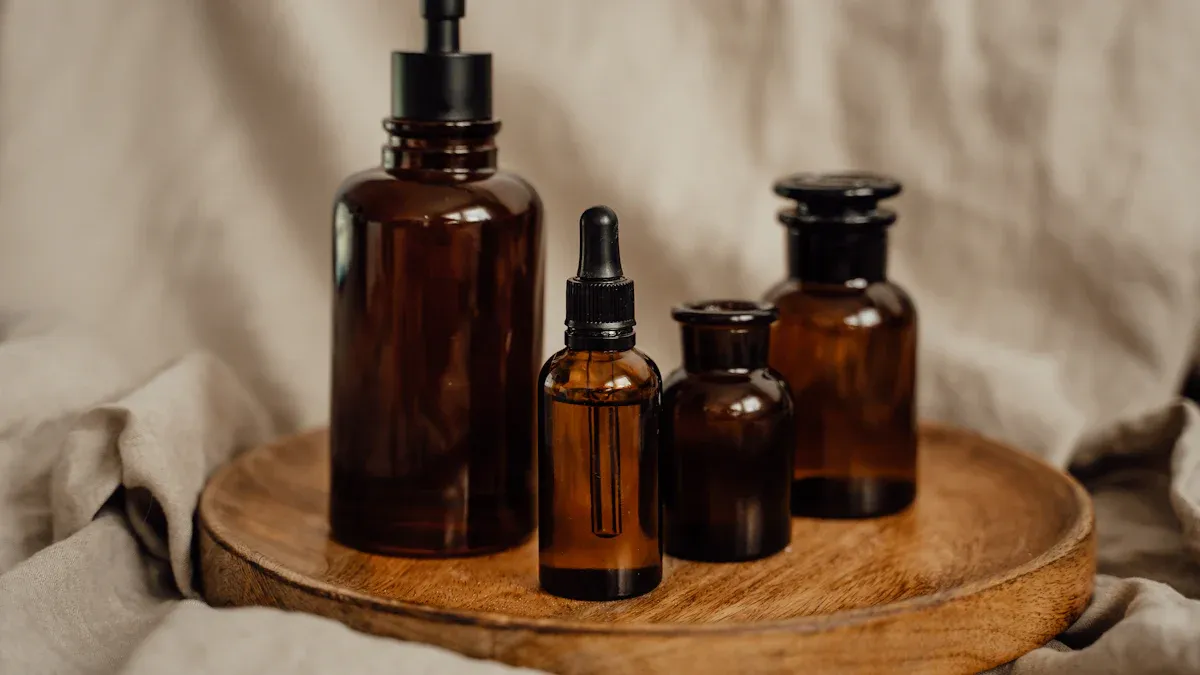
You can trust glass polymer bottles for cosmetics. They do not react with formulas or active ingredients. Glass keeps your products pure and effective. You avoid harmful substances that plastics may release. Sensitive skin users get a safer option because glass holds superior chemical stability. Products stored in glass polymer bottles stay fresh longer. You protect your beauty products from contamination and degradation.
Key Takeaways
- Glass polymer bottles keep cosmetics safe by preventing chemical reactions and contamination.
- Choosing glass packaging supports sustainability since it is 100% recyclable and reduces waste.
- Glass bottles enhance the appearance of products, appealing to consumers who prefer premium packaging.
- Proper storage and handling of cosmetics in glass bottles can extend their shelf life and effectiveness.
- Selecting high-quality glass polymer bottles ensures product integrity and safety for sensitive formulas.
What Are Glass Polymer Bottles?
Composition and Features
You find glass polymer bottles made from all-natural, sustainable raw materials. Manufacturers choose glass because it preserves product taste and integrity. The FDA recognizes glass as generally safe for cosmetic use. You can recycle glass endlessly without losing quality. When you select glass polymer bottles, you get packaging that protects your cosmetics and keeps them fresh.
- Glass comes from sand, soda ash, and limestone.
- It does not react with your cosmetic formulas.
- You enjoy a clean, hygienic container.
- Glass polymer bottles help you avoid contamination and keep your products stable.
Tip: If you want your cosmetics to last longer and stay pure, choose glass polymer bottles for their chemical stability.
Here is a quick look at the features that set glass polymer bottles apart:
| Feature | Description |
|---|---|
| Aesthetics | Glass bottles provide a luxurious and high-end appearance, ideal for premium products. |
| Compatibility | Being inert, glass does not react with contents, suitable for various formulations. |
| Recyclability | Glass is 100% recyclable and can be recycled endlessly without quality loss. |
| Fragility | Glass bottles are fragile and may break easily, necessitating protective packaging. |
Glass vs. Plastic Bottles
You may wonder how glass polymer bottles compare to plastic bottles. Glass polymer bottles offer enhanced durability and resist shattering. They protect your cosmetics from chemical reactions. You see a premium, clear appearance that stands out on your shelf. Plastic bottles, on the other hand, can degrade over time and may not resist chemicals as well.
| Feature | Glass Polymer Bottles | Plastic Bottles |
|---|---|---|
| Durability | Enhanced durability, shatter-resistant | Prone to degradation over time |
| Chemical Resistance | Resistant to chemical reactions | May not offer the same level of resistance |
| Appearance | Premium look, clear glass-like appearance | Common, less premium appearance |
- Glass polymer bottles keep your formulas safe and stable.
- Plastic bottles may break down and lose quality.
- You get a better look and longer-lasting protection with glass polymer bottles.
Safety of Glass Polymer Bottles
Material Interactions
You want your cosmetics to stay pure and effective. Glass polymer bottles help you achieve this goal. These bottles do not react with the ingredients in your skincare or makeup. You avoid unwanted changes in color, smell, or texture. Glass is chemically stable, so it does not break down or release substances into your products. This means you get a safe container for even the most sensitive formulas.
- Glass polymer bottles are shatter-resistant and lightweight, making them ideal for cosmetic storage.
- They provide a clear appearance similar to glass while being more durable.
- Glass offers an unmatched barrier that prevents contamination, ensuring the purity of the contents.
- Premium skincare and essential oils often use glass packaging for this reason.
You can trust that your products will not interact with the bottle. This keeps your cosmetics safe for your skin.
Chemical Leaching
You may worry about chemicals leaching into your cosmetics. With glass polymer bottles, you do not have to. Glass is non-reactive and does not contain BPA or other toxins. This property keeps your products free from harmful substances. You avoid the risks that come with plastic bottles, such as plasticizers or polymer residues.
| Evidence | Explanation |
|---|---|
| Glass is chemically inert and contains no BPA or toxins that could leach into products. | This property prevents harmful substances from contaminating cosmetic products, ensuring safety and integrity. |
| Glass packaging protects sensitive proteins and botanical extracts from degradation. | This protection helps maintain the quality and effectiveness of cosmetic formulations. |
| Glass bottles eliminate concerns about plasticizers and polymer residues disrupting scalp health. | By avoiding these issues, glass ensures a safer experience for users, free from potential irritants. |
Note: Glass bottles are chemically stable and do not leach harmful substances into products. They are non-reactive, which prevents interactions with cosmetic ingredients, ensuring product integrity.
Product Integrity
You want your cosmetics to last longer and work as intended. Glass polymer bottles help you achieve this by creating a strong barrier against air, moisture, and light. This barrier protects delicate ingredients and keeps them fresh. Research shows that products stored in glass can last about 25% longer before expiring compared to those in plastic. For example, vitamin C retains up to 80% of its original potency when stored in glass, while it breaks down faster in plastic.
- Glass is chemically inert, meaning it does not react with the contents inside.
- It creates an impermeable barrier that protects against air and moisture.
- Glass jars provide the highest level of protection from light and air.
- The choice of packaging is crucial for ensuring product longevity and consumer satisfaction.
You also get the benefit of a premium look and feel. Glass polymer bottles make your cosmetics look more attractive while keeping them safe. You can rely on these bottles to preserve the quality and effectiveness of your favorite products.
Sustainability and Recycling
Recyclability
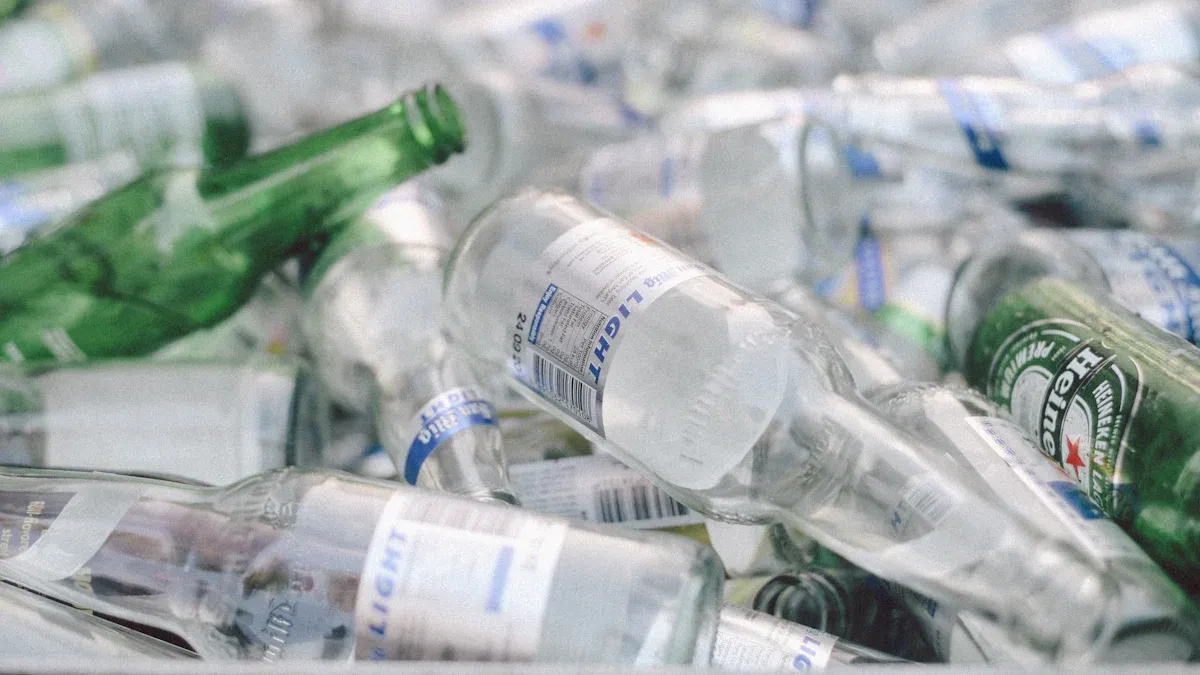
You want packaging that supports the planet. Glass polymer bottles offer strong recyclability. You can recycle glass endlessly without losing quality. Many recycling centers accept glass, so you help reduce waste. Unlike plastic, glass does not break down into harmful microplastics. You avoid toxins that plastics may release during recycling.
- Glass can be recycled over and over, keeping its strength and clarity.
- Traditional glass bottles in the U.S. have a recycling rate of about 31-33%.
- Plastic bottles only reach a recycling rate of around 9%.
- A glass bottle in a landfill wastes its potential, while a plastic bottle poses a long-term threat.
Tip: Always rinse your glass bottles before recycling. Clean bottles improve recycling outcomes.
Environmental Impact
You care about the environment when choosing cosmetic packaging. Glass polymer bottles require high temperatures to produce, which uses more energy. Plastic production uses less energy but involves chemical processing. Glass weighs more than plastic, so shipping glass creates more emissions. You help reduce carbon emissions by recycling glass.
| Packaging Type | Recycling Rate | Energy Use in Production | Environmental Risk |
|---|---|---|---|
| Glass Polymer Bottles | High | High | No toxins, recyclable |
| Traditional Glass | Moderate | High | Recyclable, heavy |
| Plastic Bottles | Low | Moderate | Toxins, microplastics |
You make a positive impact by recycling glass. Recycling one ton of glass avoids nearly a ton of carbon dioxide emissions. You conserve raw materials like sand and reduce energy use. Glass does not leach harmful chemicals, so you protect both yourself and the planet. Cosmetic brands that use glass packaging lower their carbon footprint.
Note: Choosing glass polymer bottles supports sustainability and helps keep the environment safe.
Practical Tips for Use
Choosing Quality Bottles
You want your cosmetics to stay safe and effective. Selecting high-quality glass polymer bottles makes a big difference. Look for bottles that meet strict chemical stability standards. These bottles keep your formulas pure and prevent ingredient breakdown. Surface treatment quality matters because it protects the bottle from scratches and wear. Neck finish accuracy ensures a tight seal, stopping leaks and keeping air out. Annealing quality strengthens the bottle, making it less likely to crack. Inspection standards guarantee the bottle looks good and performs well.
| Criteria | Details |
|---|---|
| Chemical Stability | Keeps formulas pure and stable. Look for Hydrolytic Class 1–2 glass. |
| Surface Treatment Quality | Durable finishing that resists wear and passes adhesion tests. |
| Neck Finish Accuracy | Meets GPI or FEA standards for tight seals and leak prevention. |
| Annealing Quality | Reduces internal stress, making bottles stronger and more durable. |
| Inspection Standards | Checks for appearance, dimensions, and performance to ensure safety and quality. |
You should also check for certifications and standards. Many bottles follow ISO 7086-1:2017, which tests for lead and cadmium release. FDA regulations require packaging to be free from harmful chemicals. Packaging must resist leakage and contamination. Brands comply with safety standards to protect you and your products.
- Stricter regulations ensure cosmetic packaging safety.
- ISO 7086-1:2017 tests for harmful substances.
- FDA rules keep packaging safe and non-reactive.
- Bottles must resist leaks and contamination.
Tip: Always choose bottles from reputable suppliers who follow industry standards.
Storage and Handling
Proper storage keeps your cosmetics fresh and effective. You should store products at stable temperatures. Avoid humidity to prevent mold and bacteria. Some ingredients need cooler temperatures, so a mini-fridge helps. Adjust storage conditions with the seasons to maintain stability. Professional brands use temperature control for sensitive products. Tight seals keep air out and stop oxidation. UV protection matters for light-sensitive ingredients. Pumps and droppers reduce contamination risks. Sustainable options appeal to eco-conscious users. Choose the right size for each product based on shelf life and usage.
| Best Practice | Description |
|---|---|
| Stable temperatures | Keep products at room temperature to avoid ingredient degradation. |
| Avoid humidity | Store in dry areas to prevent mold and bacteria. |
| Dedicated fridge | Use a mini-fridge for ingredients needing cooler temperatures. |
| Seasonal checks | Adjust storage for different seasons to maintain stability. |
| Professional storage | Follow brands that use temperature control for sensitive products. |
| Tight seals | Use containers that close tightly to keep air out. |
| UV protection | Choose opaque or UV-resistant bottles for light-sensitive formulas. |
| Dispensing mechanisms | Pumps and droppers help reduce contamination. |
| Sustainable options | Consider recycled or biodegradable containers. |
| Adjust sizes | Pick container sizes based on product shelf life and usage rate. |
Note: Good storage and handling practices help you get the most from your cosmetics and keep them safe.
You gain several advantages when you choose glass polymer bottles for cosmetics. These bottles keep your products safe by preventing chemical reactions and contamination. You support sustainability because glass is recyclable and aligns with eco-friendly trends. You enhance your brand image and meet consumer preferences for premium packaging. Consider glass polymer bottles if you want reliable protection and a positive environmental impact.
- Glass is non-reactive and protects sensitive formulas.
- Recyclable packaging supports sustainability.
- Premium look appeals to eco-conscious consumers.
Tip: Select glass polymer bottles for products that require purity and long-lasting quality.
FAQ
Are glass polymer bottles safe for all types of cosmetics?
You can use glass polymer bottles for most cosmetics, including creams, serums, and oils. These bottles do not react with ingredients. They keep your products stable and safe.
Can you recycle glass polymer bottles with regular glass?
You can usually recycle glass polymer bottles with other glass containers. Always check your local recycling rules. Clean the bottles before recycling to help the process.
Do glass polymer bottles break easily?
Glass polymer bottles resist shattering better than regular glass. You still need to handle them with care. They offer more durability than standard glass but less than plastic.
Tip: Use protective sleeves or packaging for extra safety during travel.
How do you clean glass polymer bottles for reuse?
You should rinse the bottle with warm water and mild soap. Let it air dry completely. For stubborn residue, use a bottle brush. Avoid harsh chemicals to keep the bottle in good condition.