


You see droppers and pipettes in beauty, labs, and food places. Droppers help you measure and move small amounts of liquid. Pipettes are for bigger amounts and are more exact. Glass droppers are good for essential oils, while plastic droppers are better for thin liquids. Graduated droppers have marks to help you measure accurately. Pipettes can move thick substances like lotions or creams. This guide to droppers helps you pick the right tool for each job. Knowing the types, uses, and safety tips ensures you achieve good results every time.
Key Takeaways
- Droppers are good for moving small amounts of liquid. You can use them to add drops to beauty products or medicine.
- Pipettes help you measure liquids very carefully. Use them when you need to be exact, like in lab experiments.
- Pick the right material for your dropper or pipette. Glass works well with strong chemicals. Plastic is better for lighter liquids.
- Always clean and store droppers and pipettes the right way. This stops germs from spreading and keeps them safe to use later.
- Think about the type of dropper or pipette you need. Different shapes work best for different liquids and jobs.
Guide to Droppers and Pipettes
What Are Droppers
Droppers help you move small amounts of liquid. You use them when you need just a few drops. Most droppers are simple to use. You squeeze the rubber bulb to pull up liquid. Then you let go to release drops. Some droppers have marks to help you measure better. Droppers come in many shapes and sizes. They are light and simple to handle. Many are made for one-time use. This helps stop germs from spreading in labs or with medicine.
- Main features of droppers:
- Clear materials let you see what is inside.
- Markings help you measure the liquid.
- The shape makes them easy to hold.
- Many sizes and styles fit different jobs.
- Standard dropper parts:
- The rubber bulb pulls up the liquid.
- The tube holds and lets out the liquid.
- The cap keeps the container closed.
You can pick from different types of droppers. Glass droppers are best for pure liquids. Plastic droppers are cheap and hard to break. Graduated droppers help you measure more exactly. Some droppers have special caps to keep kids safe or show if opened.
| Material/Design Type | Description |
|---|---|
| Glass | Used in beauty products, blocks UV light, keeps things safe. |
| Plastic (HDPE, PP, PET) | Light, strong, and good for travel. |
| Aluminum | Tough and better for the planet. |
| Straight Tip | Good for most uses. |
| Bent Tip | Helps you put drops in the right spot. |
| Ball Tip | Makes drops the same size each time. |
| Blunt Tip | Safe to touch your skin. |
| Bent Ball Tip | Good for careful and exact use. |
Tip: Pick a dropper that fits your liquid and how you want to use it. This guide helps you choose the best one.
What Are Pipettes
Pipettes are for measuring and moving liquids very carefully. You see pipettes in labs for tests that need exact amounts. Pipettes must follow rules like ISO 8655 to be correct. Many jobs, like making medicine or testing the environment, need pipettes that meet these rules.
There are many kinds of pipettes. Some have one channel for one liquid. Others have many channels for more samples at once. Some pipettes measure only one set amount. Others let you change the amount. Some pipettes work by hand. Others are electronic for more control.
| Type of Pipette | Distinguishing Features |
|---|---|
| Pasteur Pipettes | Move small amounts; made of glass or plastic with a bulb. |
| Volumetric Pipettes | Very exact for set amounts; used in science. |
| Graduated Pipettes | Have lines to show amounts; includes Mohr and serological pipettes. |
| Repeater Pipettes | Give the same amount many times; saves effort. |
| Single Channel Pipettes | One tip for careful work; can be manual or electronic. |
| Multichannel Pipettes | Many tips for handling more than one sample. |
| Fixed Volume Pipettes | Only one set amount; good for thick liquids. |
| Adjustable Volume Pipettes | You can change the amount; very useful. |
| Specific Purpose Pipettes | Made for special jobs, like hormone tests or big samples. |
Note: Pipettes need to be checked often to stay correct. Always use the right pipette for your job.
Key Differences
You may wonder how droppers and pipettes are different. The biggest difference is how exact they are. Droppers are easy for moving small amounts but are not as exact. Pipettes are made for jobs that need careful measuring.
| Instrument | Accuracy Range | Typical Use |
|---|---|---|
| Standard Dropper | ±5-10% | Close measurements |
| Precision Pipette | ±0.5-1% | Science experiments |
- Pipettes give very exact amounts, which is important for science.
- Droppers are good for simple jobs, like adding drops to makeup or medicine.
If you use a dropper for a job that needs to be exact, you might get the wrong answer. In a lab, using a dropper instead of a pipette can cause mistakes and waste. In a factory, using the wrong tool can mean losing products.
Remember: This guide helps you pick the best tool for your job. Always use the right tool for the best results.
Types and Uses
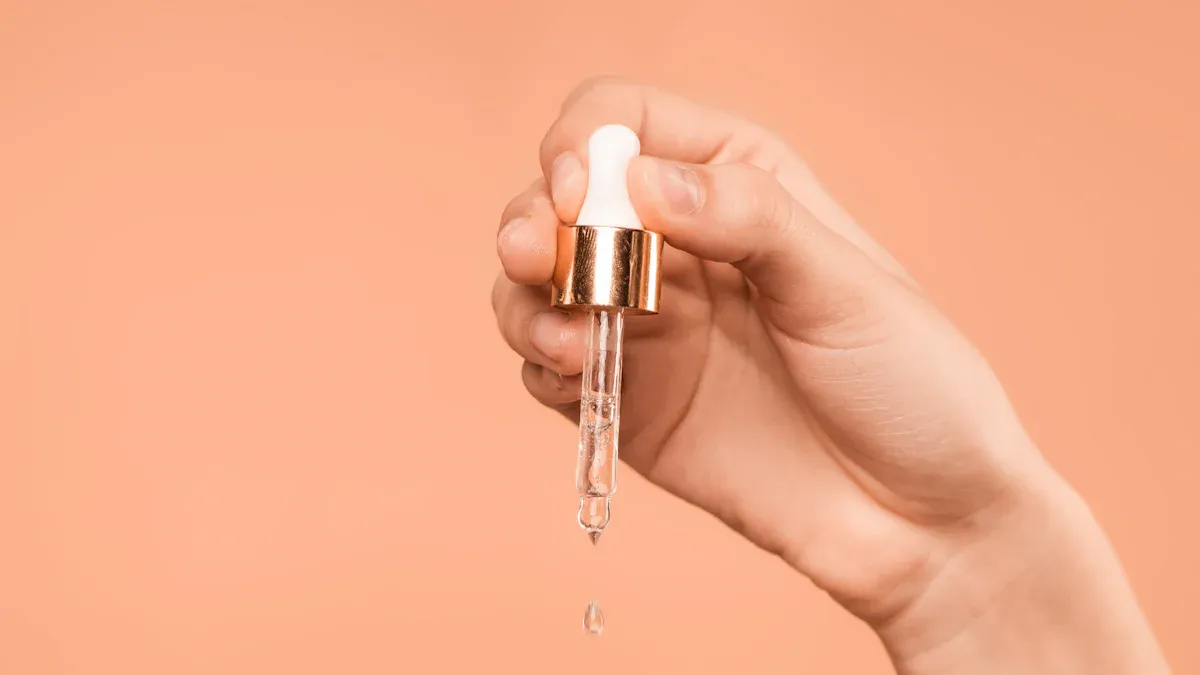
Dropper Types
There are many kinds of droppers for different jobs. Each kind works best for certain things.
- Plastic dropper bottles are good for e-liquids, eye drops, and DIY skincare. They are light and easy to take with you.
- Squeezable dropper bottles let you control the liquid amount. You see these with serums and lotions in makeup.
- Childproof dropper bottles help keep kids safe. These are used for medicine and cleaning products.
- Dropper bottles with tamper-evident caps protect what is inside. These are found in supplements and wellness items.
Droppers are made from different materials. The bulb can be butyl rubber or silicone for sealing and safety. The stem or pipette might be glass for a fancy look or plastic for strength. Caps can be plastic, metal, or have special linings to keep liquids fresh. Bottles can be glass, PET, or HDPE, and each has its own good points.
Tip: Pick the dropper type that fits your product and how you want to use it.
Pipette Types
Pipettes come in many shapes for different jobs. You use them in labs, clinics, and food testing.
| Pipette Type | Intended Use |
|---|---|
| Air Displacement Pipettes | Good for regular lab liquids like buffers and media. |
| Positive Displacement Pipettes | Used for thick, sticky, or dangerous liquids. |
| Molecular Biology Pipettes | Move tiny amounts for DNA or RNA work. |
| Microbiology Pipettes | Work with many liquids and help stop contamination. |
| Clinical Pipettes | Used for patient samples and must follow strict rules. |
Some pipettes use tips you throw away to stop germs from spreading. Others are part of machines for faster and better work.
Common Applications
Droppers and pipettes are used in many places. In beauty, droppers help you put on serums and oils carefully. In labs, pipettes help measure and move liquids for tests. In food, chefs use droppers to add flavors or colors to dishes.
| Industry | Application Description | Examples of Use |
|---|---|---|
| Beauty | Put serums and oils on with care. | Brands like The Ordinary, Drunk Elephant |
| Laboratory | Measure and move liquids for experiments. | Academic and professional labs |
| Food | Add flavors and colors to foods and drinks. | Chefs using droppers for extracts |
You might use a dropper for essential oils, medicine, or DIY perfumes. Pipettes help with research, healthcare, and food safety. This guide helps you pick the right tool for your job, no matter where you work.
Choosing the Right Tool
Application Needs
You should always match your tool to your task. If you need to avoid contamination, positive displacement pipettes work best. These tools help when you handle DNA or thick, sticky liquids in small amounts. Pasteur pipettes, which look like droppers, help you move liquids when you do not need exact measurements. Glass Pasteur pipettes resist chemicals, so you can use them with acids, solvents, or organic compounds. This keeps your samples safe and pure. In beauty or food, you may want a dropper for easy and gentle application. The guide to droppers helps you decide which tool fits your needs.
Tip: Think about what you want to do. Do you need to measure exactly, or just move liquid from one place to another?
Material and Volume
The material of your dropper or pipette matters. Glass works well for many chemicals and can be recycled. Rubber bulbs come in different types, such as natural rubber or nitrile rubber. Each type fits different liquids. Glass pipettes give you strong chemical resistance and help with quality control.
| Material Type | Benefits |
|---|---|
| Glass | Recyclable, strong against chemicals |
| Rubber Bulbs | Many options for different liquids |
| Dropper Pipettes | Glass gives best results for quality and safety |
You should also think about how much liquid you need to move. Small bottles work for serums or eye drops. Larger pipettes help in labs or factories.
Safety and Accuracy
You must follow safety rules when you use droppers and pipettes. Always choose the right tool for your experiment or product. Do not reuse droppers to stop contamination. Label each dropper if you use more than one liquid. Wear gloves and goggles to protect yourself. Dispose of used droppers the right way to avoid harming people or the environment.
- Main safety tips:
- Pick the right dropper for your liquid.
- Never mix up droppers.
- Follow lab or workplace rules.
The accuracy of a dropper or pipette depends on its design and how well it is made. Good suppliers check every step to make sure you get the right amount each time.
How to Use and Maintain
Usage Steps
You need to follow the right steps to use droppers and pipettes well. Start by choosing the right parts for your product. Pick a bulb size that matches the amount you want to draw up. A bigger bulb means you can pull up more liquid. Make sure the glass tube fits the bottle so you reach the bottom. If your dropper has a child-resistant cap, push down and turn to open it. Always check if your packaging needs to meet any rules for your product.
Here are the basic steps:
- Select the correct dropper or pipette for your liquid.
- Squeeze the bulb to let out the air.
- Place the tip in the liquid and release the bulb to draw up the liquid.
- Move the dropper or pipette to where you want to use it.
- Squeeze the bulb again to release the liquid.
Tip: Use glass for strong chemicals and plastic for biological samples.
Cleaning Tips
You should clean droppers and pipettes after every use. This keeps them safe and ready for next time. Take apart all the pieces so you can clean each one. Rinse everything under warm water to remove any leftover liquid. For tough stains, soak the parts in vinegar or a baking soda solution. Use a small brush or a cotton swab to reach inside the tube. Wash with mild soap and rinse well to remove all soap. Let all parts air-dry completely before putting them back together. You can use alcohol wipes for extra cleaning.
Recommended cleaning supplies:
- Warm water
- Mild dish soap
- White vinegar or baking soda
- Small brushes or cotton swabs
- Alcohol wipes
Note: Make sure everything is dry before you use it again. This helps stop mold from growing.
Safety Practices
You must follow safety rules to protect yourself and your products. Always clean droppers and pipettes after each use. Store them in a cool, dark place. Use airtight caps to keep out germs. Never mix droppers between different liquids. Wear gloves and goggles if you work with strong chemicals. Label each tool so you do not mix them up.
- Clean and dry all parts before storing.
- Keep tools in a safe place away from sunlight.
- Use the right tool for each job.
Safety first! Careful use and cleaning help you get the best results every time.
Manufacturing and Quality Control
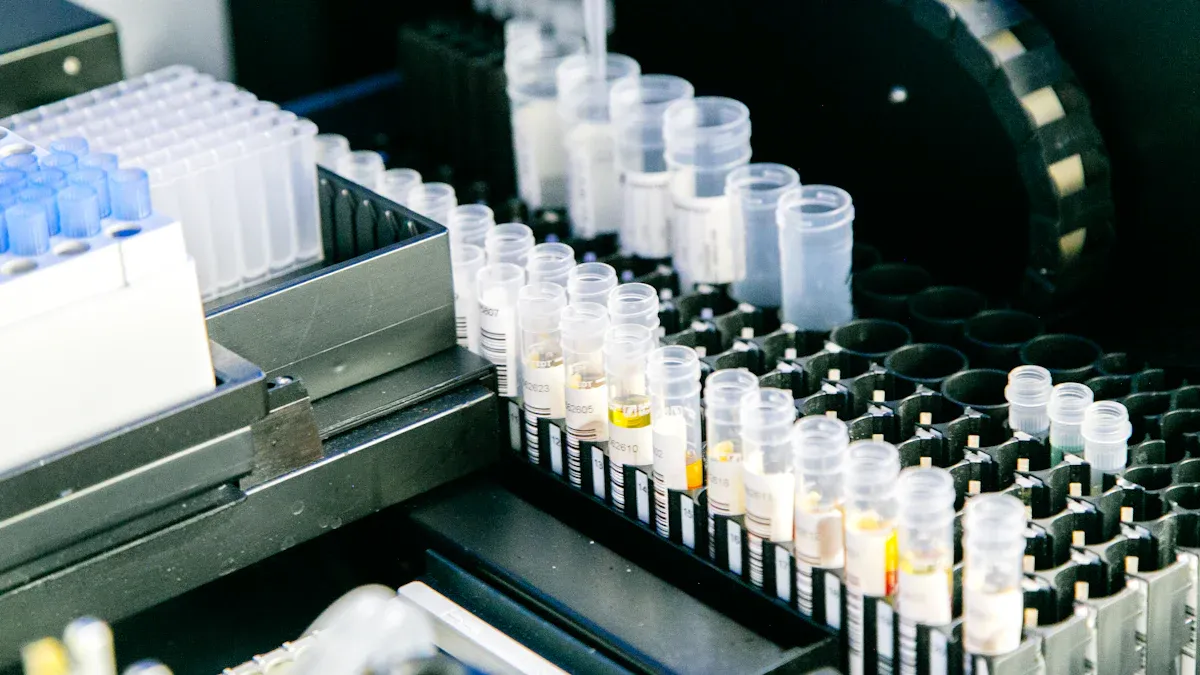
Production Process
Factories make droppers and pipettes using people and machines. The steps are simple but important. First, workers choose strong materials like borosilicate glass or plastics such as PE, PP, or PVC. Next, machines shape these into bottles. Glass blowing makes glass bottles. Plastic bottles are made by injection or blow molding. After that, workers or machines put together the pipette, rubber bulb, and cap. Inspectors then check each bottle for problems and make sure it works right. Last, staff add labels and pack the bottles for shipping.
Modern factories use smart machines and skilled workers. This helps every dropper and pipette meet high standards.
Quality Assurance
You want your droppers and pipettes to work well every time. Factories use many checks to keep quality high. They check the size, look, and strength of glass and plastic parts. Finished droppers are checked for damage, dirt, and size. They test if the dropper can pick up and release liquid smoothly. They also check for leaks at all connection points. Factories make sure the bottle and liquid do not react and stay safe.
These steps help you get safe, clean, and reliable products every time.
Customization Services
You might want droppers or pipettes that match your brand or product. Many factories let you choose custom options to fit your needs. You can pick eco-friendly or fancy glass for your droppers. You can choose from many sizes for your product. You can match your brand with special colors. You can add special tips or parts for better use. You can make unique sets with different bulbs, closures, and pipettes. Factories can give you custom solutions for your product’s needs. They control every part for high-quality assembly. You get smooth use and accurate drops every time.
Customization helps you stand out and gives your customers the best experience.
You now know how droppers and pipettes help you handle liquids with care. When you choose these tools, look for high-quality glass, stable shapes, and reliable dropper mechanisms.
- Pick bottles that offer UV protection.
- Check for Type III glass standards.
- Make sure the neck finish fits your needs.
Tip: Always match your tool to your task. Good choices lead to safe and accurate results.
FAQ
How do you choose between a dropper and a pipette?
You should think about how much accuracy you need. Use a dropper for simple tasks. Pick a pipette for precise measurements. Pipettes work best in labs. Droppers fit beauty or home use.
Can you reuse droppers and pipettes?
You can reuse glass droppers and pipettes if you clean them well. Plastic ones are often for single use. Always check for damage before using again.
What liquids can you use with droppers?
You can use droppers with oils, serums, medicines, and food extracts. Make sure the dropper material matches your liquid. Glass works for strong chemicals. Plastic fits lighter liquids.
How do you clean a dropper or pipette?
Rinse with warm water right after use. Use mild soap for sticky liquids. Dry all parts before storing. For tough stains, soak in vinegar or use alcohol wipes.