


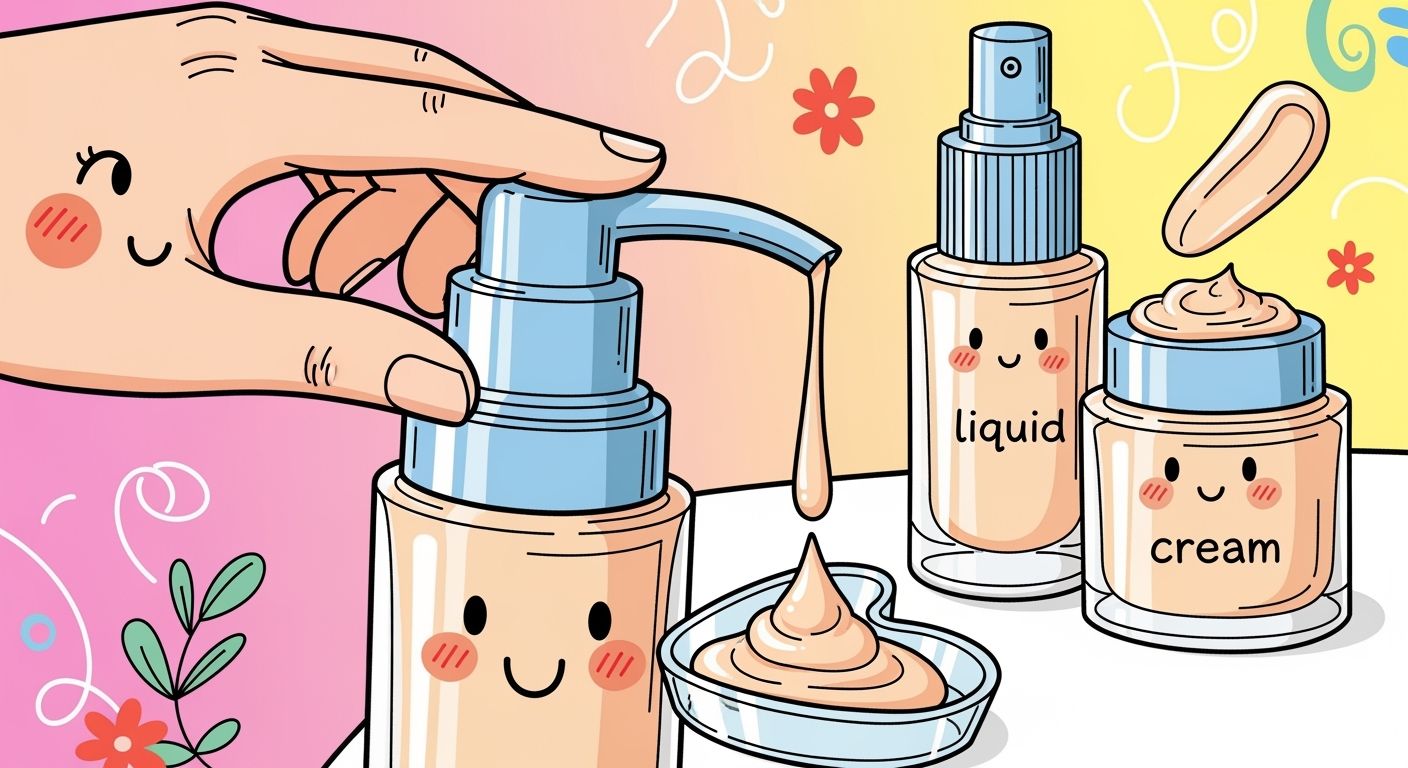
Matching pump output to formula texture in your foundation bottle matters more than you might think. You get accurate dosing, less waste, and a smoother experience every time. Take a look at this quick chart showing how pump performance affects satisfaction and formula protection:
Key Aspect | Impact on User Satisfaction and Waste |
|---|---|
Dosage Accuracy | Prevents over-dispensing, enhances user experience |
Consistent Dispensing | Reduces waste, keeps formula integrity |
User Expectations | Clean, consistent one-pump dosing is preferred |
Formula Protection | Vacuum pumps maintain active ingredients, reduce oxidation |
Brand Loyalty | Reliable packaging encourages repeat purchases |
If you’re sourcing packaging, getting the right pump preserves formula quality, limits air exposure, and boosts your brand’s reputation. For custom pump matching, decoration, or packaging structure support, Oulete’s custom cosmetic packaging services can help you choose a solution that fits your formula and brand positioning.
Key Takeaways
Choose the right pump to ensure accurate dosing and enhance user satisfaction. This builds trust and encourages repeat purchases.
Match pump output to your formula’s texture to minimize waste and protect product integrity. This helps maintain quality and reduces costs.
Use airless pump systems for sensitive formulas to prevent oxidation and contamination. This extends shelf life and preserves active ingredients.
Test pump compatibility with your actual formula to avoid dispensing issues. Sampling helps ensure smooth operation and customer satisfaction.
Collaborate with packaging suppliers early to discuss customization options and minimum order quantities. This ensures timely production and successful launches.
Part1: Why Pump Output Must Match Formula Texture
1.1 User Experience and Brand Impact
When you choose the right pump for your Foundation Bottle, you create a smooth and professional experience for your customers. The right pump output feels intuitive and reliable. It gives users the right amount of product every time, which builds trust in your brand.
The right pump creates an intuitive user experience that feels professional and carefully considered. It dispenses the right amount without waste, works reliably from first use to last and feels appropriate for your product’s price point and positioning. These details might seem small individually, but collectively they build the trust that transforms first-time buyers into loyal customers.
If your packaging feels premium and works well, customers remember your brand for all the right reasons.
1.2 Product Waste and Cost Efficiency
Matching pump output to formula texture helps you control costs and reduce waste. If the pump dispenses too much or too little, you risk frustrating your customers and losing money.
A 0.5cc pump on a body lotion requires multiple presses, leading to customer frustration and a perception of poor value.
A 2.0cc pump on a $60 vitamin C serum dispenses excessive product, causing quicker depletion and feelings of being ripped off, which can deter repurchases.
Mismatched viscosity can lead to clogging, resulting in product waste and increased return rates.
For beauty brands and packaging buyers, these issues can impact your bottom line and reputation. Choosing the right pump means fewer returns and happier customers.
1.3 Formula Protection and Air Exposure
Protecting your formula is just as important as delivering the right dose. Airless pump systems offer strong protection for sensitive foundations and skincare products.
Airless systems prevent air from entering the product, which is essential for protecting sensitive formulations.
Airless systems significantly reduce air intake compared to traditional dispensing systems, enhancing formula protection.
Airless pump tubes improve hygiene and allow for more controlled dispensing, which contributes to better product integrity.
The use of advanced vacuum technology in pump bottles minimizes air exposure, which helps reduce oxidation and contamination risks.
Controlled dispensing mechanisms limit contact with air and hands, further decreasing contamination risks associated with manual dispensing.
Airless pump bottles utilize a non-pressurized vacuum dispensing system that prevents air contact.
This design helps to extend the shelf life of sensitive formulations by reducing the risk of contamination.
Airless dispensers are particularly beneficial for liquid products and active ingredients that degrade when exposed to air.
When you match the pump output to your formula texture, you protect your product, reduce contamination risk, and maintain quality from the first pump to the last.
Part2: Foundation Bottle Texture and Pump Output Guide
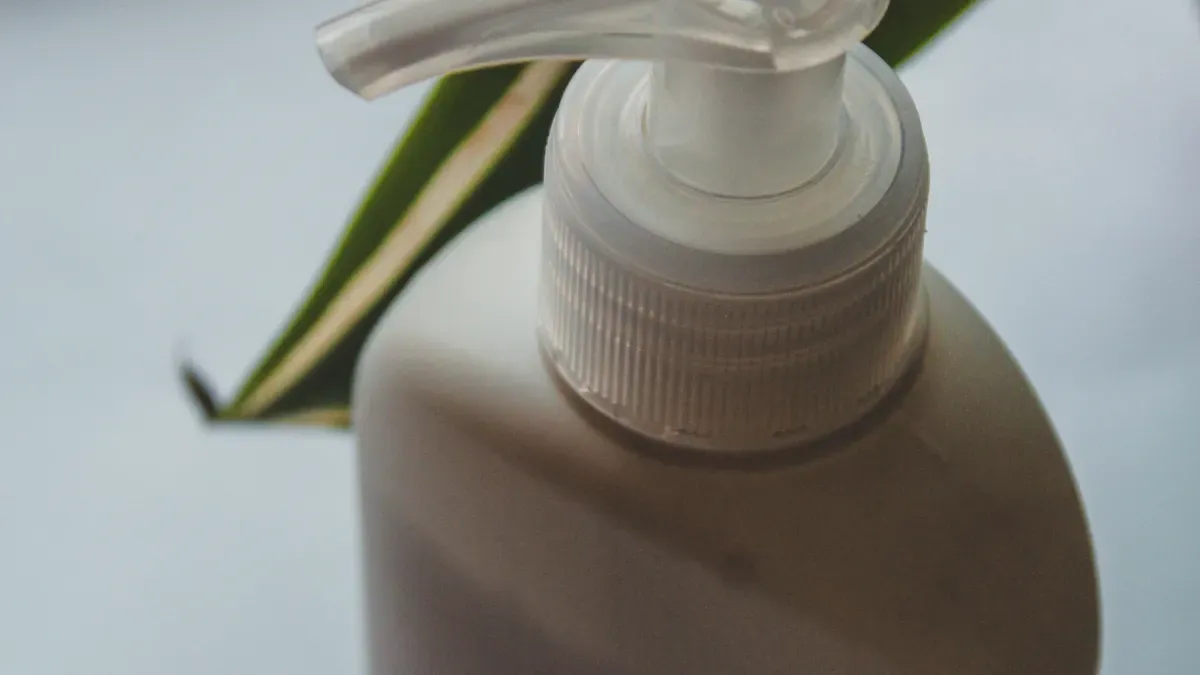
Choosing the right pump for your Foundation Bottle starts with understanding your formula’s texture. You want a pump that dispenses the perfect amount, keeps your product fresh, and delivers a consistent experience. Let’s break down the most common foundation textures and see which pump outputs work best.
Quick-Reference Chart: Foundation Texture vs. Pump Output
Foundation Texture | Recommended Pump Output | Typical Application Example |
|---|---|---|
Watery/Fluid | 0.2cc – 0.5cc | Lightweight serum foundations |
Liquid | 0.5cc – 1.0cc | Standard liquid foundations |
Creamy/Mousse | 1.0cc – 2.0cc+ | Whipped, dense, or mousse types |
Specialty/Custom | Custom (0.2cc – 2.0cc+) | Hybrid, multi-phase, or unique formulas |
You can use this chart as a starting point when sourcing pumps for your Foundation Bottle. Now, let’s dive deeper into each texture and see why pump output matters.
2.1 Watery and Fluid Textures: Low Output Pumps
Watery foundations need pumps with low output. You want to avoid flooding the applicator or wasting product. Low-output pumps (0.2cc–0.5cc) give you precise control and prevent messy dispensing.
Proper pump output ensures you get the right amount every time, which boosts satisfaction.
If you mismatch pump output and viscosity, you risk dispensing failures. This frustrates users and can push them toward competitors.
Foundation viscosity varies, so you need to specify pump components carefully for consistent performance.
Tip: When you work with watery formulas, always test pump compatibility. Even small changes in viscosity can affect dispensing.
2.2 Liquid Foundations: Medium Output Pumps
Liquid foundations are the most popular. You want a pump that delivers a controlled, buildable dose. Medium-output pumps (0.5cc–1.0cc) work best for these formulas.
Pump Output Size | Application |
|---|---|
0.5cc – 1.0cc | Liquid foundations (controlled, buildable application) |
0.12cc – 0.5cc | Eye creams, concentrated facial serums |
Medium-output pumps help you avoid over-dispensing. You get a clean, single press that matches user expectations. If you use a pump that’s too strong, you waste product and risk clogging. If you use a pump that’s too weak, users need multiple presses, which feels inefficient.
Note: Always sample pumps with your actual formula. Small changes in viscosity or packaging material can affect how the pump performs.
2.3 Creamy and Mousse Textures: High Output Pumps
Creamy and mousse foundations need high-output pumps. These formulas are dense and require more force to dispense. High-output pumps (1.0cc–2.0cc+) ensure you get a smooth, consistent dose.
Feature | Impact on Product Integrity |
|---|---|
Precision Air-to-Liquid Calibration | Ensures consistent foam density, crucial for creamy and mousse foundations. |
Mechanical Propellant-Free Action | Maintains high pressure for instant lather without chemical aerosols, preserving product integrity. |
High-Density Micro-Mesh Filters | Customizable to formula viscosity, allowing for tailored foam texture that maintains integrity during dispensing. |
If you mismatch pump output, you risk clogging or inconsistent foam. You want a pump that maintains pressure and delivers the right texture every time. For mousse or whipped foundations, consider pumps with micro-mesh filters and air-to-liquid calibration.
Callout: High-output pumps are ideal for creamy formulas, but always check compatibility with your packaging material and decoration. If you need custom decoration or branding for foundation bottles, Oulete’s custom cosmetic packaging services can help your product stand out.
2.4 Specialty or Custom Textures: Tailored Solutions
Specialty foundations—like hybrid, multi-phase, or serum-based formulas—need custom pump solutions. You want dispensers that match your formula’s unique requirements. Custom pumps offer controlled product release and airless mechanisms for precise dosing and minimal waste. You can tailor these pumps to your brand’s colors and design, which boosts market appeal.
If you’re developing a unique Foundation Bottle, work with your packaging supplier to create a pump that fits your formula. Ask about advanced functionalities, airless systems, and custom decoration. Sampling and prototyping are key steps before final production.
Pro Tip: Custom dispensers can solve tricky compatibility issues. They help you deliver a premium experience and protect your formula from air and contamination.
Matching pump output to foundation texture isn’t just about user experience. It’s about protecting your formula, reducing waste, and supporting your brand’s reputation. When you choose the right pump, you make your Foundation Bottle stand out in the market.
Part3: Selecting and Testing the Right Pump
3.1 Assessing Formula Viscosity
You need to know your formula’s viscosity before you pick a pump. Viscosity tells you how thick or runny your foundation is. You can measure viscosity using specialized tools:
Viscometers give you a single value under set conditions.
Rheometers analyze viscosity under different conditions, offering a deeper look.
Common methods include rotational, capillary, and cone-plate tests. Each works best for different cosmetic products.
If you get accurate viscosity data, you can select a pump that dispenses your Foundation Bottle formula smoothly and consistently.
3.2 Pump Output Standards and Customization
Formula viscosity affects pump output and bottle design. High-viscosity foundations need pumps with larger outputs and stronger mechanisms. Bottle geometry also changes how much product you can evacuate and how much waste remains.
Bottle Geometry | Residual Volume (ml) | Waste Percentage | Evacuation Rate (ER) |
|---|---|---|---|
Standard Cylindrical | 1.2 | 4.0% | 96.0% |
Sharp Square | 4.8 | 16.0% | 84.0% |
Soft Square (Rounded) | 2.5 | 8.3% | 91.7% |
Spherical/Ball Shape | 0.9 | 3.0% | 97.0% |
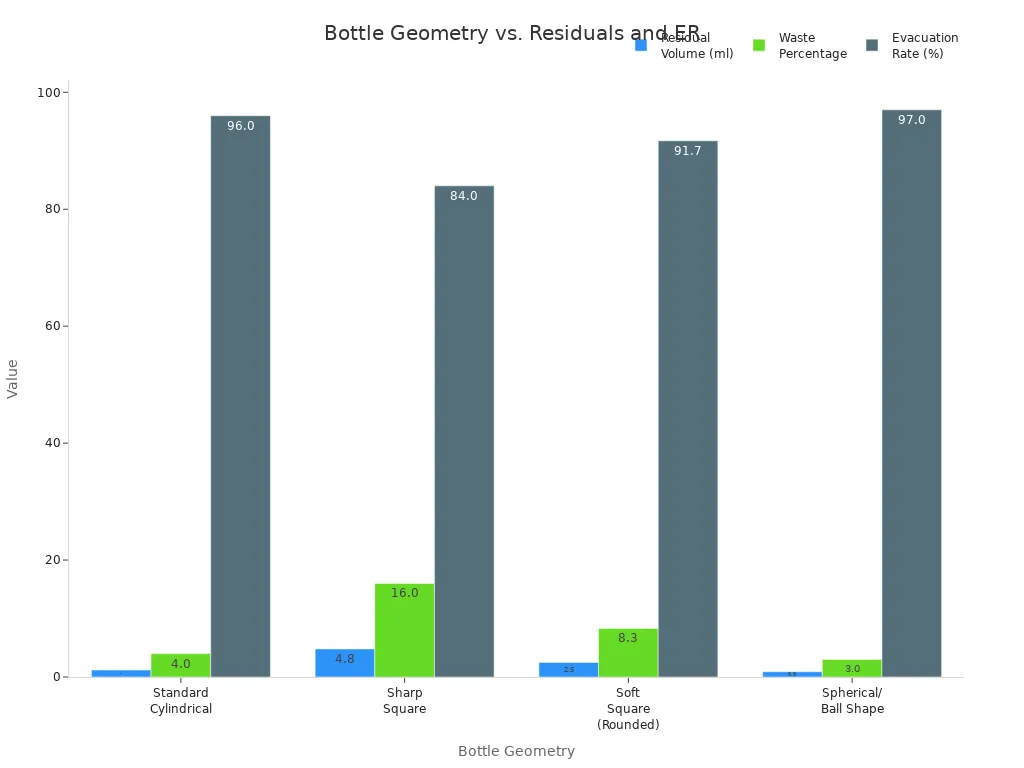
You want to minimize waste and maximize evacuation. Custom pumps and bottle shapes help you achieve this. If you need unique outputs or shapes, ask your supplier about customization options.
3.3 Sampling, Prototyping, and Quality Checks
Always test pumps with your actual formula. Request samples and run prototyping trials. Check for smooth dispensing, no clogging, and consistent output. Quality checks should include:
Compatibility with formula viscosity
Air exposure and contamination risk
Decoration and branding durability
You can avoid costly mistakes by sampling before full production.
3.4 Supplier Collaboration: MOQ and Lead Time
When you work with suppliers, discuss minimum order quantities (MOQ) and lead times early. MOQs can range from 10 to 10,000 pieces for standard packaging. Custom decorated bottles often start at 5,000 pieces. For in-mold colored or aluminum bottles, MOQs usually run from 10,000 to 20,000 pieces.
Tip: If you need custom solutions or want to explore decoration options, reach out to Oulete’s customization team for guidance and quotes.
Lead times depend on customization, decoration, and supply chain factors. Plan ahead to ensure timely launches and smooth procurement.
Part4: Troubleshooting Pump and Texture Issues
When you match a pump to a foundation formula, things don’t always go as planned. Sometimes, you see over-dispensing or under-dispensing. Other times, you need to tweak the pump or check for long-term compatibility. Let’s walk through the most common issues and how you can solve them.
4.1 Over-Dispensing or Under-Dispensing
If your pump dispenses too much or too little, you risk product waste or unhappy customers. You can solve these issues by choosing the right dispensing method for your formula. Here’s a quick guide:
Dispensing Solution | Description |
|---|---|
Dropper bottles | Allow precise dosing by dispensing small droplets, preventing waste. |
Airless dispensing | Protects products from contaminants and ensures no product is wasted by using a vacuum mechanism. |
Dispensable tubes | Versatile and practical, can be tailored for precise dispensing with various cap options. |
Foam dispensers | Transform liquids into foam, reducing the amount needed for application, making it cost-effective. |
Pump bottles | Simple and easy to use, allowing for quick dispensing of a variety of liquid cosmetics. |
4.2 Adjusting Pump Output or Structure
Sometimes, you need to adjust the pump after production. You have several options to stabilize flow and improve dispensing:
Add pulsation dampeners to absorb flow energy and keep dispensing steady.
Install pressure relief valves or bypass lines to protect against overpressure.
Adjust the viscosity or density of your formula to help the pump work better.
Optimize pipe materials and sizes to reduce friction and improve flow.
These tweaks can help you fix issues without starting over with a new packaging run.
4.3 Ensuring Long-Term Compatibility
You want your packaging to work from the first use to the last. Always test pumps with your actual formula over time. Watch for clogging, leaks, or changes in dispensing. If you see problems, talk to your supplier about retrofitting pumps or switching to a different dispensing system. Sampling and quality checks help you avoid costly recalls or unhappy clients.
Tip: Keep a close relationship with your packaging supplier. Early feedback and regular testing help you catch issues before they reach the market.
If you need tailored solutions or want to discuss custom pump adjustments, Oulete’s team can guide you through sampling, MOQ, and lead time planning for your next project.
You know that matching pump output with your foundation’s texture keeps your product quality high and your customers happy. This step protects your formula and strengthens your brand. If you want to make smart packaging decisions, focus on pump-formula compatibility. Here’s what you can do next:
Consult packaging experts for advice on materials and structure.
Request samples and test pumps with your actual formula.
Reach out to Oulete’s contact page for quotes or technical support.
You set your brand apart when you test thoroughly and choose the right components.
FAQ
What factors should you consider when choosing a pump for a new foundation formula?
You need to check viscosity, compatibility with packaging material, desired output per pump, and air exposure risk. Always request samples and test with your actual formula before finalizing your packaging decision.
How can you minimize product waste in foundation packaging?
Select pumps with outputs that match your formula’s texture. Use airless systems to reduce residue. Test evacuation rates for your bottle shape. This approach helps you maximize product use and lower costs.
What is the typical MOQ for custom foundation bottles with pumps?
Most suppliers set MOQs between 5,000 and 10,000 units for custom-decorated bottles. For unique colors or shapes, expect higher MOQs. Always confirm with your supplier early in the process.
How do you ensure pump and formula compatibility during development?
You should run compatibility tests with your actual formula. Check for clogging, leaks, and consistent output. Collaborate with your supplier for prototyping and quality checks. This process helps you avoid costly issues later.
Where can you find tailored airless packaging solutions for sensitive formulas?
You can explore Oulete’s airless bottle manufacturer page for customizable airless packaging. These solutions help protect sensitive formulas, reduce air exposure, and support your brand’s quality standards. For pump matching, samples, or project evaluation, you can also contact Oulete for a quote.