


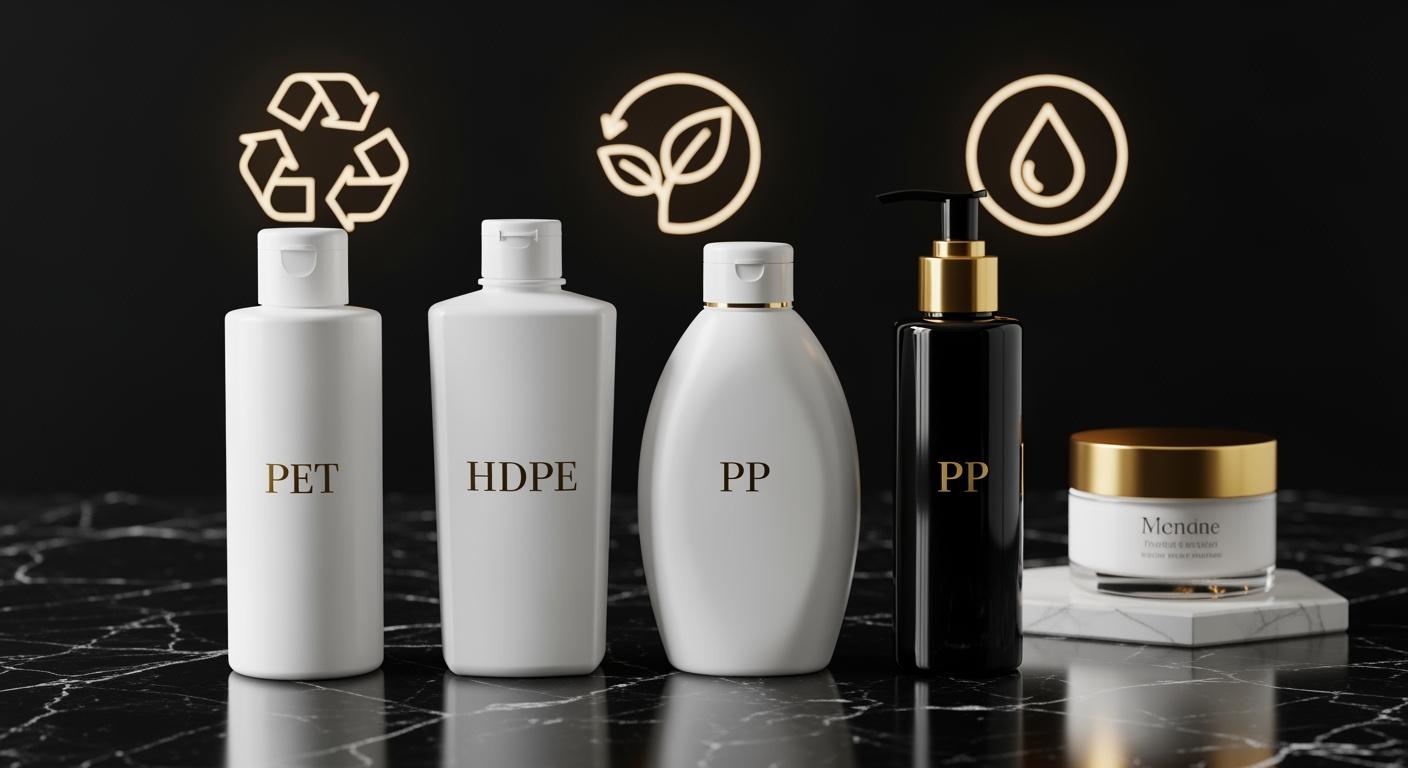
You see PCR Plastic Bottles as a key solution for cosmetic packaging. PCR plastics come from recycled materials, helping brands lower their environmental footprint. PET, HDPE, and PP stand out as the main options because they deliver reliable performance and support sustainability goals. When you choose these materials, you benefit from:
Reduced energy use and greenhouse gas emissions
Less fossil fuel consumption
Strong product compatibility
These advantages make PCR plastics relevant for you if you aim to meet eco-friendly standards in the cosmetic industry.
Key Takeaways
PCR plastics, made from recycled materials, help cosmetic brands reduce their environmental impact and meet sustainability goals.
Choosing the right material—PET, HDPE, or PP—depends on your product’s needs for clarity, chemical resistance, and flexibility.
Using PCR bottles can significantly lower energy use and greenhouse gas emissions compared to virgin plastics, supporting a circular economy.
Stay informed about safety regulations and ensure your packaging meets compliance standards to protect your brand and customers.
Blending PCR with virgin materials can enhance performance while maintaining a sustainable approach to cosmetic packaging.
Part1: PCR Plastic Bottles Overview
1.1 What Is PCR?
You see PCR, or post-consumer resin, as a recycled material that comes from used plastic products. In the context of cosmetic packaging, PCR Plastic Bottles use this resin to create new containers for shampoos, creams, and other beauty products. Many brands now choose PCR because you want to meet sustainability goals and respond to growing environmental concerns in the industry.
1.2 How PCR Plastic Bottles Are Made
You follow a clear process to turn used plastics into PCR Plastic Bottles. The steps include:
Collection and transportation: You gather used plastic bottles from recycling bins and programs.
Sorting: You sort plastics by type, such as PET, HDPE, and PP, to ensure quality.
Cleaning and processing: You wash, shred, and melt the sorted plastics into resin pellets.
Blending: You mix PCR resin with virgin plastic, depending on the performance needs of your bottles.
This process helps you transform waste into valuable packaging for your cosmetic products.
1.3 Benefits for Cosmetics
You gain several advantages when you use PCR Plastic Bottles in your cosmetic line:
You reduce the need for virgin materials and lower your reliance on fossil fuels.
You cut energy use and water consumption during production.
You help divert waste from landfills and oceans, supporting a circular economy.
You meet the expectations of environmentally conscious clients and partners.
Using PCR Plastic Bottles allows you to reinforce your commitment to sustainability and responsible sourcing.
The environmental impact is significant. By switching to PCR, you can save energy and reduce emissions compared to using virgin plastics. The table below shows the energy and emissions reductions for each material:
Plastic Type | Energy Reduction | Emissions Reduction |
|---|---|---|
PET | 79% | 67% |
HDPE | 88% | 71% |
PP | 88% | 71% |
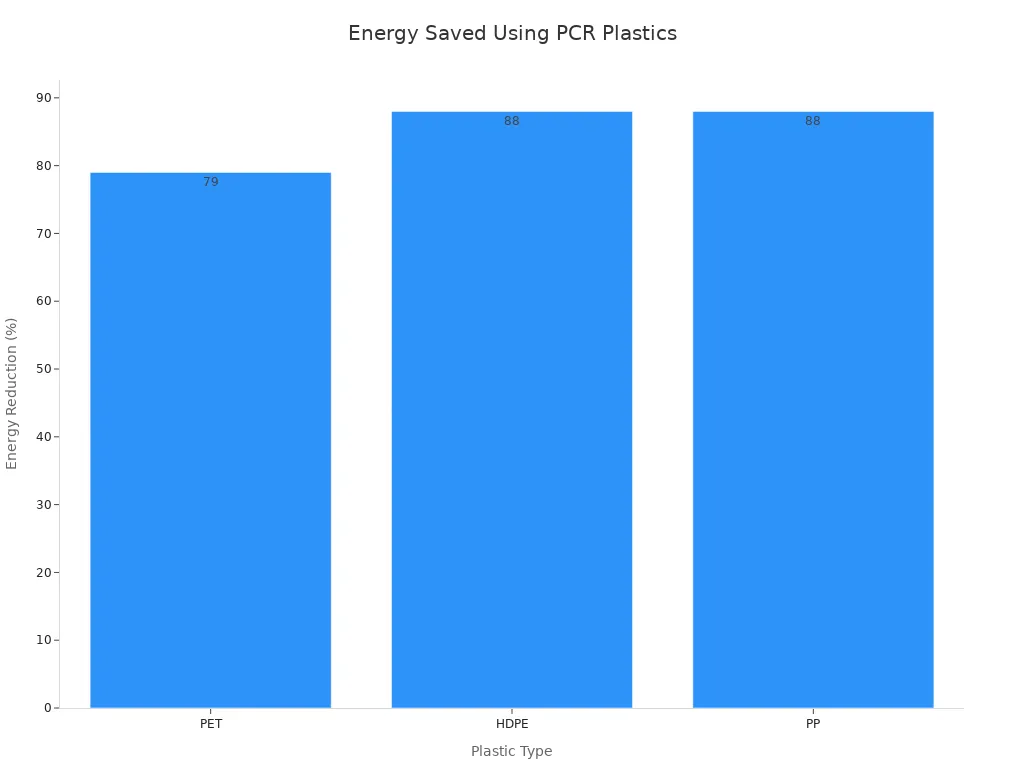
You see that PCR Plastic Bottles offer a practical way to improve your environmental performance and meet industry standards.
Part2: PET, HDPE, and PP Materials
2.1 PET Properties and Uses
You find PET (polyethylene terephthalate) as a popular choice for PCR Plastic Bottles in cosmetics. PET offers high clarity, good strength, and excellent barrier properties. These features help protect your products from moisture and oxygen. PET bottles are lightweight and shatter-resistant, making them easy to handle and transport.
You can use PCR PET bottles for a wide range of cosmetic and personal care products, including:
Personal care products
Beauty and skincare products
Hair care liquids
Healthcare liquids
Wellness products
Home care products
Room sprays and mists
Supplement liquids
PET bottles work well for both clear and colored packaging, supporting your brand’s visual identity.
2.2 HDPE Properties and Uses
You see HDPE (high-density polyethylene) as another leading material for PCR Plastic Bottles. HDPE provides strong chemical resistance and durability. It is less transparent than PET, but it offers a robust solution for products that need protection from light.
Many brands, such as Aveda, use PCR plastic in their HDPE bottles, often with at least 80% recycled content. You can use HDPE bottles for:
Lotions
Serums
Creams
HDPE bottles and jars come in various shapes and sizes. You can choose options with pumps or droppers to fit your product needs.
2.3 PP Properties and Uses
You use PP (polypropylene) for PCR Plastic Bottles when you need flexibility and heat resistance. PP bottles are lightweight and have good chemical resistance. The quality of recycled PP can affect color, transparency, and durability. You may notice some differences in appearance compared to virgin materials, but the bottles still perform well.
PP bottles are suitable for:
Lip gloss bottles
Blush compacts
Other cosmetic packaging
You can rely on PP for both functional and decorative packaging.
2.4 Limitations of Each Material
You should consider some challenges when choosing PCR Plastic Bottles for your cosmetic line.
Challenge | Description |
|---|---|
Higher cost | PCR plastic is often more expensive than virgin plastic due to collection and processing costs. |
Less clarity | PCR plastic may have reduced clarity compared to virgin plastics, affecting aesthetic appeal. |
Quality challenges | Variations in recycled materials can lead to inconsistent quality, including color consistency issues. |
Limited supply | High-quality PCR plastic supply is constrained by recycling rates and infrastructure limitations. |
Color Variations | Natural tint of PCR plastics may not meet brand standards for appearance, requiring blending solutions. |
Note: You may need to adjust your packaging design or blend PCR with virgin materials to achieve the desired look and performance.
Part3: PCR Plastic Bottles Comparison
3.1 Sustainability and Energy Savings
You want to lower your environmental impact when choosing packaging for your cosmetic products. PCR Plastic Bottles help you achieve this goal by reducing energy use and greenhouse gas emissions. When you use recycled PET, HDPE, or PP, you support a circular economy and decrease your reliance on fossil fuels.
Here is how these materials compare in terms of energy savings and carbon footprint reduction:
Type of Plastic | Energy Savings | Carbon Footprint Reduction |
|---|---|---|
PCR PET | Lower energy use than virgin plastic | Smaller carbon footprint |
PCR HDPE | Lower energy use than virgin plastic | Smaller carbon footprint |
PCR PP | Lower energy use than virgin plastic | Smaller carbon footprint |
Using PCR plastic significantly reduces greenhouse gas emissions.
You decrease your reliance on fossil fuels.
You support a more sustainable, circular economy.
You also need to consider recycling rates. PET bottles have a 29% recycling rate in the U.S., which can reach over 85% in states with deposit programs. HDPE bottles have similar acceptance, while PP bottles have lower recycling rates. Higher recycling rates make it easier for you to source quality PCR material for your packaging.
Tip: Choosing materials with higher recycling rates can help you secure a steady supply of PCR resin for your cosmetic bottles.
3.2 Safety and Compliance
You must ensure that your packaging meets strict safety standards. PCR Plastic Bottles for cosmetics require careful reprocessing and traceability. You need to track the source of your materials and follow quality control measures.
You must comply with both EU and FDA regulations for cosmetic packaging.
The quality of the base resin and the recycling process affect compliance.
The intended use of your product (cosmetic or food contact) determines the certification needed.
You should use virgin resins when necessary to minimize contamination risks. Avoid harmful additives and choose FDA-approved options. Automated inspections and batch testing help you maintain high safety standards.
Region | Regulation Type | Recycled Content Targets |
|---|---|---|
North America | California Standards | Minimum recycled content for beverage bottles and rigid containers |
Europe | EU Packaging and Packaging Waste Regulation | 30% for contact-sensitive PET (excluding single-use bottles), 10% for non-PET packaging, 30% for single-use beverage bottles, 35% for non-contact-sensitive packaging |
The EU requires all packaging to be recyclable by 2030.
The U.S. aims for a 25% reduction in single-use plastic packaging by 2032.
Note: You should stay updated on regional regulations to ensure your packaging remains compliant.
3.3 Performance and Compatibility
You need bottles that protect your cosmetic products and maintain their quality. Each material offers different performance features:
PET bottles provide excellent barriers against oxygen and carbon dioxide. This keeps your products fresh and extends shelf life. PET is shatterproof and has good impact resistance.
HDPE bottles offer strong moisture barriers and resist a wide range of chemicals. They provide excellent UV protection, making them ideal for light-sensitive products. HDPE is highly durable and resists cracking.
PP bottles have moderate oxygen barrier properties and good moisture resistance. They withstand high temperatures and repeated use. PP is robust and chemically resistant.
However, you may face some compatibility issues. For example, using PCR PET in multilayer bottles can reduce clarity and strength compared to virgin resin. This can affect the premium look of your packaging. HDPE and PP are less transparent but provide strong protection for many cosmetic formulations.
Tip: Test your cosmetic products with different bottle materials to ensure compatibility and maintain your brand’s quality standards.
3.4 Choosing the Right Material
You should consider several factors when selecting the best PCR bottle for your cosmetic line. The table below summarizes key properties and environmental impacts:
Plastic Type | Key Properties | Environmental Impact |
|---|---|---|
PCR PET | High impact resistance, excellent barrier properties, recyclable | More environmentally friendly than some plastics |
HDPE | High strength-to-density ratio, chemical resistance, UV protection, recyclable | Sustainable option due to recyclability |
PP | Robust, chemical resistance, withstands high temperatures | Versatile but less transparent than PET |
To choose the right material, ask yourself:
Does your product need high clarity and a premium look? PET may be best.
Do you need strong chemical resistance and UV protection? HDPE is a good choice.
Do you want flexibility and heat resistance? PP can meet your needs.
You can blend PCR with virgin resin to balance performance and appearance. Work with your packaging supplier to find the best solution for your brand.
By understanding the strengths and limitations of each material, you can select PCR Plastic Bottles that align with your sustainability goals and product requirements.
You gain clear advantages by choosing PCR PET, HDPE, or PP bottles for your cosmetic packaging. PET gives you high clarity and strong barriers. HDPE offers durability and chemical resistance. PP provides flexibility and heat tolerance. You support sustainability and meet safety standards. The market for PCR bottles is growing fast. See the table below for future trends:
Metric | Value |
|---|---|
Projected Market Size | USD 6743.3 million |
CAGR (2026-2036) | 12.7% |
Key Trends | High-quality PCR, mono-material formats, digital traceability |
You improve your brand’s reputation and meet industry demands by making smart, sustainable choices.
FAQ
What is the minimum PCR content you can use in cosmetic bottles?
You can use as little as 10% PCR content in bottles. Many brands choose 25% to 100% PCR, depending on performance needs and regulations. Higher PCR content supports stronger sustainability claims.
Do PCR bottles affect the shelf life of cosmetic products?
You get similar shelf life with PCR bottles as with virgin plastic bottles. PET and HDPE PCR bottles maintain strong barrier properties. Always test your product with the chosen bottle to confirm compatibility.
Can you customize PCR bottles with colors and finishes?
Yes, you can customize PCR bottles with various colors, finishes, and labeling options. Some color variations may occur due to recycled content. Work with your supplier to achieve your brand’s desired appearance.
Are PCR bottles safe for sensitive cosmetic formulas?
You can safely use PCR bottles for most cosmetic formulas. Ensure your supplier follows strict quality controls and meets FDA or EU standards. Always request compliance documentation for peace of mind.
How do you source reliable PCR bottle suppliers?
You should look for suppliers with certifications, transparent sourcing, and proven experience in PCR bottle manufacturing. Request samples and quality reports. Reliable partners help you meet both sustainability and performance goals.