


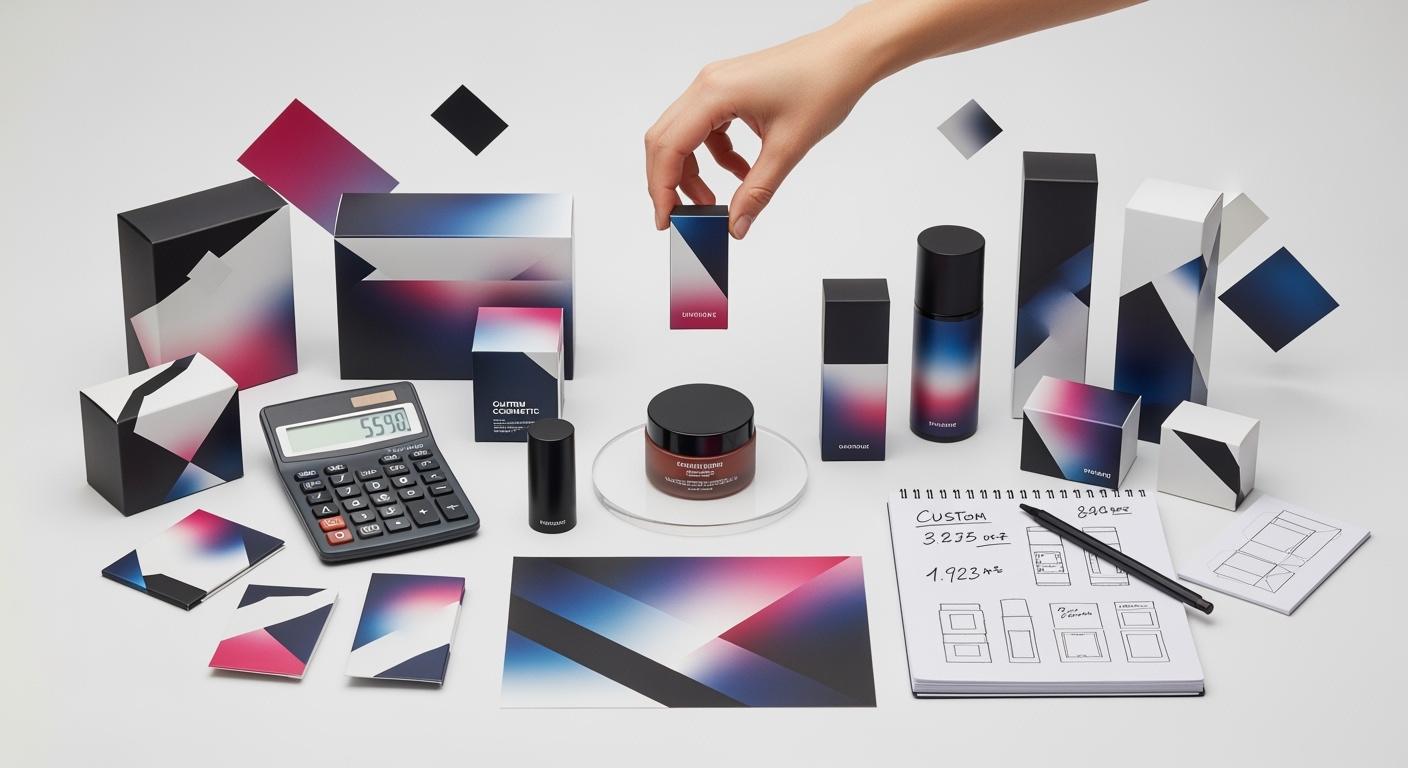
You deal with many things that change the unit cost of custom cosmetic packaging. These things are:
- Material costs
- Order quantity
- Customization
- Printing
- Shipping
- Compliance and sustainability
- Design and prototypes
- Labor
- Freight
Knowing these things helps you make better choices. If you control packaging cost, you can raise your average order value. You can also increase your gross profit for each order. The table below shows how unit cost changes important business numbers:
| Metric | Description |
|---|---|
| Average Order Value | Checks money made per sale. It affects how much you earn. |
| Gross Profit per Order | Shows how well your product does. It helps you pick products. |
| Contribution Profit per Order | Shows all costs in a sale. It changes your plan. |
| Marketing Expense Impact | Tracks how ads change profit. It helps you improve your plan. |
Key Takeaways
- The material you pick changes how much packaging costs. Eco-friendly materials cost more money. They make your brand look better.
- How many you order changes the unit cost. If you order more, each unit costs less. This happens because of economies of scale.
- Simple designs and stock packaging cost less money. They also help you launch your product faster.
- Handling logistics and tariffs can stop surprise cost jumps. It also makes things work better.
- You need to balance quality and cost. High-quality materials cost more money. They help bring in more customers.
What Affects Unit Cost in Custom Packaging
Material Choice
The material you pick has a big effect on your packaging’s unit cost. Glass and aluminum usually cost more than regular plastics. If you pick recycled or eco-friendly materials, expect to pay 10–30% more because these materials are harder to find. For example, post-consumer recycled (PCR) plastics cost extra but help your brand be more eco-friendly.
Materials also change how easy it is to recycle and their impact on the environment. Glass can be recycled many times but is heavy, which can make shipping cost more. Metals like aluminum recycle well but cost more at first. Plastics like PET and PP are light and recyclable but might not attract all buyers. Decorations like foil labels or spray coatings can make recycling harder and add to costs.
Tip: Using simpler materials or mixing recycled with new materials can help balance cost and eco-friendliness.
| Cost Driver | What It Means for Your Budget |
|---|---|
| Material Type | Glass and aluminum cost more than plastics. PCR adds 10–30% premium. |
Packaging Type and Size
The kind and size of your packaging directly change the unit cost. Bigger containers need more materials, which raises your cost. Odd shapes need special cutting tools and cause more waste, making costs higher.
Different packaging types, like jars, bottles, or tubes, have different prices. For example, a new company ordering 1,000 pieces might pay $3.00 each, while a big brand ordering 10,000 units could pay $1.50 each. This happens because suppliers spread fixed costs over more items.
| Aspect | Impact on Cost |
|---|---|
| Packaging Size | Bigger sizes need more materials, raising total costs. |
| Packaging Shape | Unusual shapes need special tools, causing higher production costs. |
Design Complexity
How complex your packaging design is changes the unit cost a lot. Multi-color printing and sharp graphics cost more than simple one-color prints. Custom shapes and special coatings add to your costs but can make your brand stand out.
Complex designs need more design work and take longer to set up. For example, foil stamping can add $0.15 to $0.50 per unit, and embossing can add $0.20 to $0.60 depending on details. Using both effects, like embossing a foiled logo, costs even more.
- Multi-color printing and detailed graphics raise cost.
- Special coatings and custom shapes increase expenses.
- Complex designs need more work and higher manufacturing costs.
Order Volume & MOQ
How many you order and the minimum order quantity (MOQ) affect unit cost a lot. Ordering more lowers the price per unit because suppliers spread fixed costs over more pieces. Low MOQs make the price per unit much higher, which can hurt your budget.
Finding the right balance between MOQ and your needs is important. You can mix stock and custom packaging or work with suppliers who offer low MOQs to save money and stay flexible. Remember, higher MOQs mean spending more upfront but lower unit cost.
| Cost Driver | What It Means for Your Budget |
|---|---|
| Order Volume (MOQ) | Ordering more lowers unit cost by spreading fixed costs. |
Customization & Decoration
Customization adds value but also raises packaging costs. Custom molds can cost $2,000 to $15,000 or more. They usually need higher MOQs and longer wait times. Stock packaging is cheaper and faster but less unique.
Decoration methods like hot stamping, water transfer, metallization, and multi-layer finishes cost more than simple silk screening or labeling. For example:
- Combo stamping (emboss + foil) costs $0.30 to $1.00 per unit.
- Spot UV coating costs $0.05 to $0.20 per unit.
These decorations make your brand look better but add to your price.
Tariffs and Supply Chain
Tariffs and supply chain problems can raise your packaging costs without warning. Tariffs on materials, especially from China, can increase prices by 10% to over 60%. These fees add to your unit cost and might force you to raise retail prices.
Supply chain delays cause longer wait times and higher shipping costs. Some companies keep extra packaging stock or work with suppliers to handle these risks. Making products locally is faster but usually costs more per unit. Making overseas lowers unit cost but adds shipping, duties, and risk.
Note: Planning your shipping well and working closely with your supplier can help manage tariffs and supply chain problems.
Knowing these factors helps you control your packaging budget better. You can make smarter choices about materials, design, order size, and suppliers to keep your unit cost low without losing quality or brand appeal.
How to Estimate and Control Cosmetic Packaging Costs
Calculating Unit Cost
To figure out unit cost, add up all costs for each package. First, write down the cost of materials like plastic or glass. Next, include design fees and how much it costs to make the package. Then, add shipping, customs, and labor costs. You can use tools like cost calculators or Excel sheets to keep track. Here is an easy way to do it:
- List what materials you need, like plastic or metal.
- Add in the cost for design and special tools.
- Count how many you will make and the minimum you must order.
- Remember to add shipping, customs, and storage costs.
| Tool/Software | Description |
|---|---|
| Packaging cost calculator | Figures out the price for each piece using your data. |
| Excel spreadsheet templates | Lets you keep track of packaging costs for every product. |
| Online cost calculators | Gives you a price for each unit based on size, material, and amount. |
Tip: Set aside 2–10% of your total product cost for packaging.
Negotiating MOQ and Bulk Orders
Knowing about moq helps you pay less per package. Suppliers have a minimum order, but you can ask for changes. Build trust by starting with small orders first. Use facts from the market to help your case. Talk about your future plans to show you are serious. Buying in bulk can lower the price by up to 15%. Suppliers with low moq are good for small brands.
- Learn how moq works and what suppliers need.
- Use bigger orders to get better prices.
- Ask for payment plans to lower your risk.
Choosing Stock vs. Custom Packaging
Stock packaging costs less and arrives faster. It is good for brands with small budgets or little space. Custom packaging costs more but makes your brand look special. Stock packaging with low moq gives you more choices and saves money at first. Custom packaging is best if you want a unique style.
| Scenario | Benefit | Cost Impact |
|---|---|---|
| Low moq cosmetic packaging | Fast, cheap, and flexible | Lower packaging costs |
| Custom cosmetic packaging | Special look and better quality | Higher cost to make |
Simplifying Design for Savings
Simple designs help you spend less on packaging. Use one type of material to make recycling simple. Make packages smaller to use less material. Lighter packages save money on shipping and materials. Using machines in production also cuts costs.
- Make packages the right size and shape.
- Use fewer colors and finishes.
- Pick materials that are easy to find.
“Lighter packages use less material, help the planet, and save money.”
Managing Logistics and Tariffs
Plan how you ship to avoid extra charges. Making products closer to home can lower tariff risks. Use special warehouses to wait before paying taxes. Track your stock with software so you do not buy too much. Trade deals and knowing where things come from can cut import costs. Always check the full cost, including shipping, insurance, and customs.
- Work with different suppliers and places to make products.
- Use tech to manage stock and shipping.
- Try to get better shipping prices.
Strategies to Optimize Your Custom Packaging Budget
Balancing Quality and Cost
You must find a good balance between quality and cost. Many brands have hard choices when picking packaging materials. High-quality materials can cost up to three times more than regular ones. Look at your target market and decide what matters most to your customers. Most buyers judge products by their packaging. Simple designs and smart decoration help you save money and keep a premium look. The table below shows how experts suggest balancing quality and cost:
| Strategy | Benefit |
|---|---|
| Align order size with sales velocity | Cuts cost per unit by up to 30%. It stops extra inventory. |
| Simplify structure and decoration | Keeps a premium look while cutting costs by 30-40%. |
| Supplier benchmarking | Finds 10-25% savings chances. |
| Plan ahead to avoid air freight costs | Stops spending $2,500–$10,000 on air freight for big orders. |
Tip: Simple packaging often looks nicer and costs less. Using fewer colors and decorations saves money.
Working with Suppliers
You can lower cosmetic packaging costs by working well with your supplier. Suppliers set minimum order quantity, which changes your packaging costs. Bigger orders usually mean lower cost per unit. You can mix stock and custom packaging to stay flexible and keep costs low. Supplier benchmarking helps you find savings up to 25%. Try to switch suppliers during natural reorder times to avoid supply problems.
- Supplier benchmarking finds 10–25% savings.
- Change suppliers with reorder cycles for smooth changes.
“Economies of scale help you save money. Meeting minimum order quantity is key for cost efficiency.”
Avoiding Common Pitfalls
Many brands make mistakes that raise packaging costs. Do not make your design too complicated. Simple packaging works best and keeps your brand clear. Low-quality materials can hurt your reputation. Customers link packaging quality to product quality. Inconsistent branding confuses buyers. Packaging must protect your product. If you ignore functionality, you risk damaged goods and unhappy customers. The unboxing experience matters. Good presentation can lead to more shares on social media.
- Complicated design causes clutter and higher costs.
- Low-quality materials hurt your brand image.
- Inconsistent branding weakens customer trust.
- Ignoring functionality causes product damage.
- Bad unboxing experience misses marketing chances.
Tip: Check your packaging often to find mistakes and make your design better.
You now know that many things can change how much cosmetic packaging costs. Things like material, design, order size, and supply chain all matter. If you manage these things well, you can keep costs low and make more profit. The table below shows that good inventory steps can help your business save money:
| Practice | Result |
|---|---|
| Effective inventory steps | 68% cost reduction |
- You should look at more than just the first price.
- You need to watch out for problems with supply and quality.
- One mistake when buying can hurt your product launch.
Follow these tips to check your packaging and make smart choices for your next product.
FAQ
What is the biggest factor in custom cosmetic packaging cost?
Material choice often has the largest impact. Glass and metal cost more than plastic. Design and order size also change your total packaging cost.
How can you lower your packaging cost for a new product?
You can choose stock packaging, order in bulk, and keep your design simple. These steps help you save money and launch faster.
Does eco-friendly packaging always cost more?
Eco-friendly options usually cost more at first. Over time, you may save money by using less material or lighter designs. Customers may also value your green choices.
How do you know if your packaging protects your product?
You can ask your supplier for drop tests or shipping trials. Good packaging keeps your product safe from damage during transport and storage.