


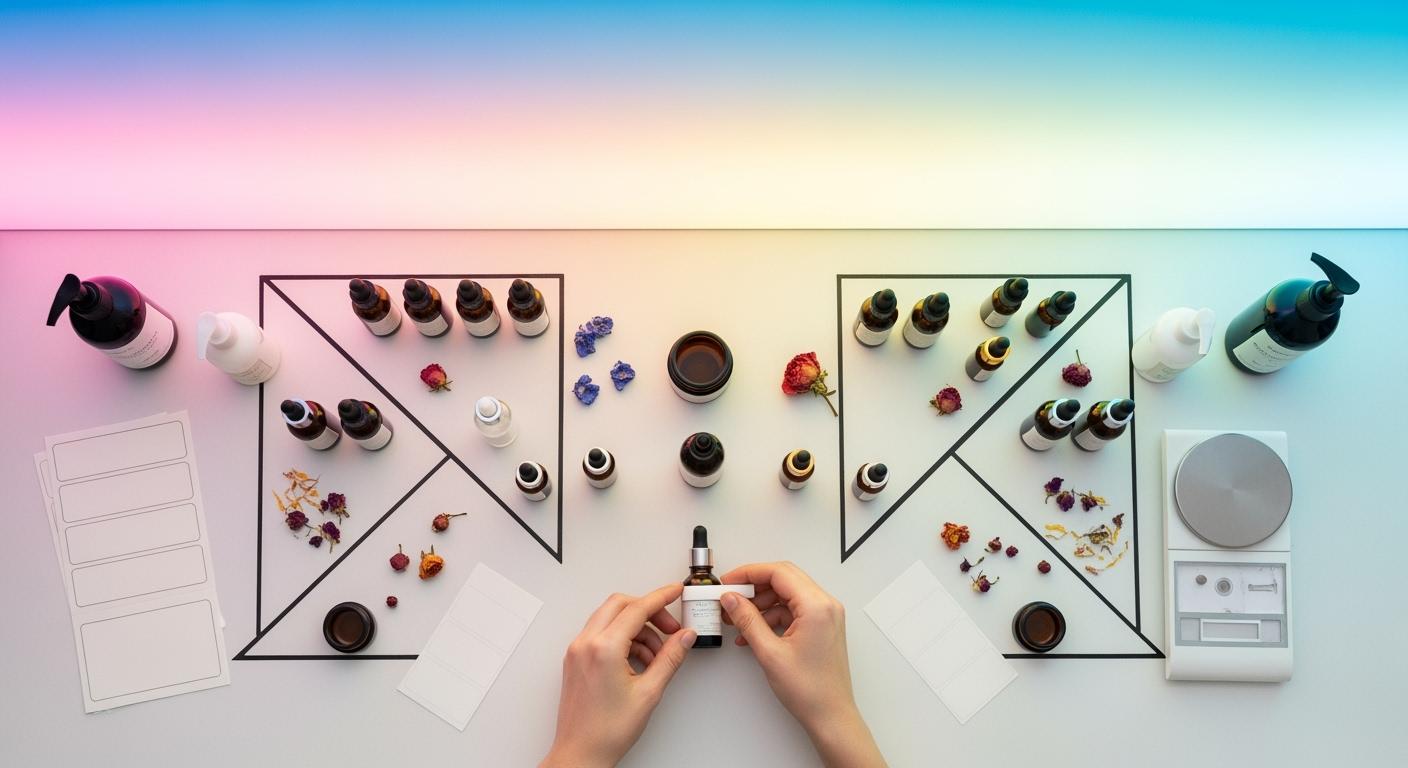
For small batch production, you usually get the best results by using cosmetic packaging with stock options and not much customization. You should find low MOQs, fast samples, and containers that can help your business grow later. Sustainability is important. Pick eco-friendly cosmetic packaging and refillable containers to help the environment and support simple packaging design.
Key Takeaways
- Pick stock cosmetic packaging to save money and lower risk. This lets you order fewer items and skip big starting costs.
- Look for eco-friendly and refillable packaging choices. These help the planet and attract buyers who care about the environment.
- Choose packaging that matches your brand and can grow with your business. Using the same packaging helps people know and trust your brand.
Small batch production: unique packaging needs
MOQ and development cost
When you start small batch production, you face new problems. Big projects often make you buy 5,000 or even 10,000 units for each SKU. For small batches, some suppliers let you order only 50 or 100 units. This helps you try new products without spending a lot of money. You do not have to pay for molds if you use stock cosmetic packaging. This keeps your costs down and lowers your risk. Many buyers also want packaging made from cosmetic-grade post-consumer recycled materials that are safe to use.
- Friendly MOQ (minimum order quantity)
- No mold cost for standard packaging
- Lower upfront investment
- Focus on eco-friendly options
Lead time and sampling
You must act fast when you launch a new product. Sampling speed is important. Small batch customization lets you get samples faster than big projects. The average lead time for small batch samples is much shorter.
| PRODUCTION SCALE | TYPICAL LEAD TIME |
|---|---|
| Small Batch | 4-6 weeks |
| Large Scale | 8-12 weeks |
Faster samples mean you can change your design or formula before you order more.
Brand image and scalability
Packaging does more than just hold your product. It shows your brand’s style and what you care about. As your brand grows, you want your cosmetic packaging to look the same and be easy to spot. Scalable packaging systems help you keep your brand strong as you make more products. Many new brands have trouble with plain packaging or suppliers who do not support their ideas. Pick packaging that fits your brand now and can grow with you later.
- Aesthetic consistency across batches
- Ability to scale up without changing your packaging system
- Support for eco-friendly and refillable solutions
Stock cosmetic packaging: advantages for small batches
No mold cost, lower risk
You can lower your financial risk by choosing stock cosmetic packaging for small batch projects. You do not need to pay for new molds. This makes your initial investment much smaller. You also avoid buying more units than you need. You can manage your cash flow and reduce the chance of losing money on unsold products. Here are the main benefits:
- No mold cost means you keep your budget under control.
- Lower minimum order quantities help you avoid extra inventory.
- Less risk if your product does not sell as expected.
Fast customization and sampling
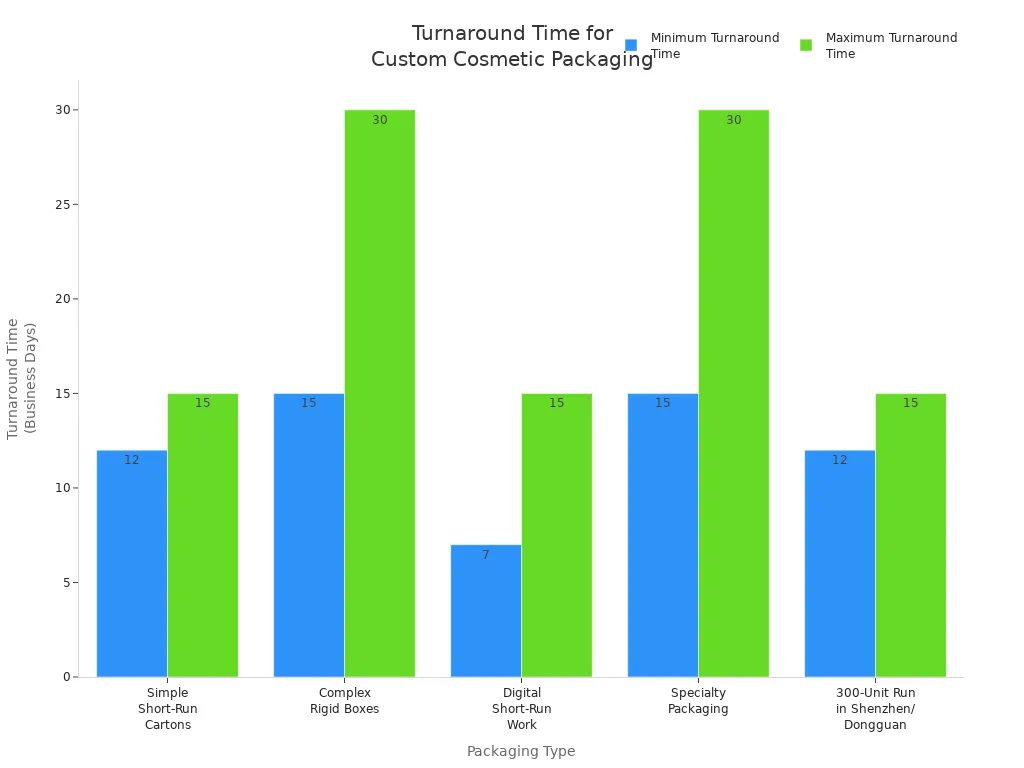
You need speed when you test new products or launch a new brand. Stock luxury cosmetic packaging lets you get samples and custom decoration quickly. You can see the typical turnaround times in the table below:
| Type of Packaging | Turnaround Time (Business Days) |
|---|---|
| Simple Short-Run Cartons | 12-15 |
| Complex Rigid Boxes | 15-30 |
| Digital Short-Run Work | 7-15 (if straightforward) |
| Specialty Packaging | 15-30 |
| 300-Unit Run in Shenzhen/Dongguan | 12-15 |
You can adjust your design or formula before you commit to a larger order. This flexibility helps you stay ahead in the market.
Upgrade options for brand growth
You can start with stock luxury cosmetic packaging and upgrade as your brand grows. Many small brands choose these options:
- Custom designs to make your packaging stand out.
- Eco-friendly materials like kraft or cardboard to attract modern buyers.
- More choices in size, material, and finish as your product line expands.
You can also control costs by picking the right materials and printing methods. Bulk orders can lower your price per unit. Stock cosmetic packaging gives you a strong base for future growth and helps you build a professional image from the start.
Choosing the right cosmetic packaging types
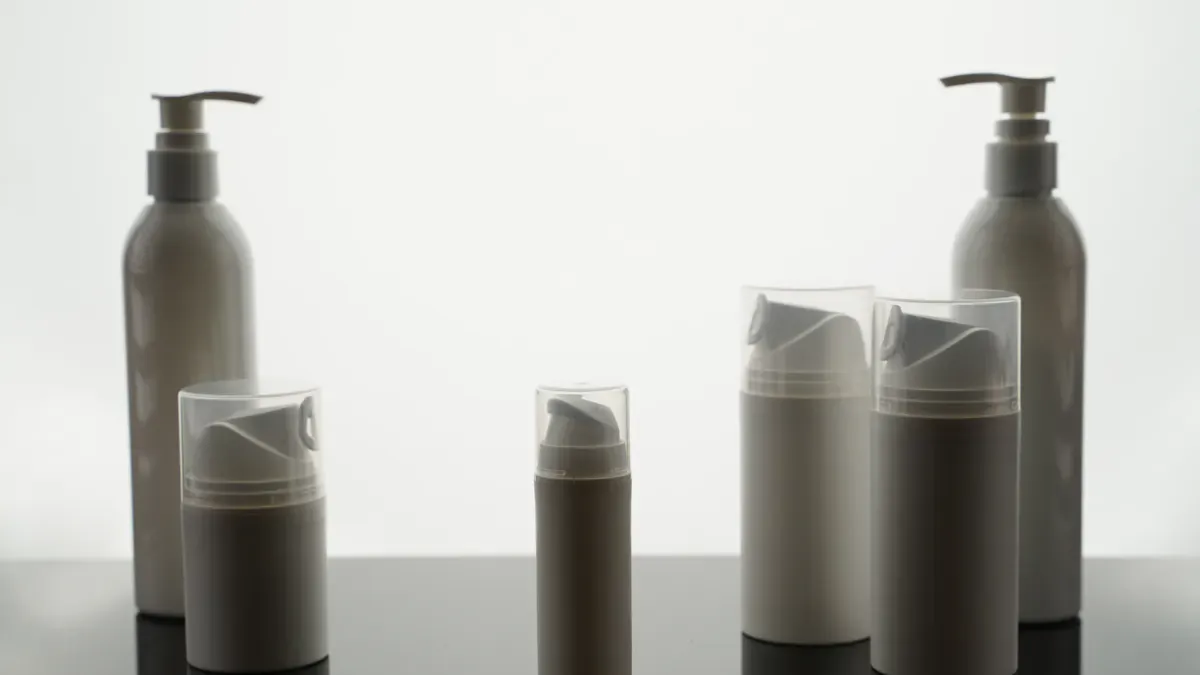
Picking the right cosmetic packaging for your small batch project depends on your product, your brand’s stage, and your growth plans. You need packaging that keeps your formula safe, fits your budget, and matches your brand image. There is not one “best” choice for everyone. You should pick each packaging type based on your product’s needs and your business plan.
Below is a table that lists popular materials used in cosmetic packaging and their main features:
| Material | Characteristics |
|---|---|
| Polyethylene Terephthalate (PET) | Customizable colors, semi-rigid containers, resistant to chemical degradation. |
| Glass | Recyclable, durable, classy, but breakable and heavier for shipping. |
| Polypropylene Plastic (PP) | Eco-friendly, recyclable, BPA-free, flexible for various cosmetic packaging needs. |
You can also notice trends in cosmetic packaging design. These include using sustainable materials, bold graphics, and smart shapes. These trends help your products stand out and meet what buyers want.
Airless bottles for skincare
Airless bottles are good for skincare that needs protection from air and light. You can use them for creams, lotions, and serums with active ingredients. Airless pump bottles keep your formula fresh by blocking oxygen and stopping germs from getting in. This can make your product last up to 30% longer. You also lower the chance of bacteria getting inside, which matters for sensitive formulas.
Tip: Airless bottles help keep your product quality high and cut down on waste, especially if you sell high-performance skincare.
- Airless bottles slow down oxidation and keep your product stable.
- They limit how much light and air touch your product, so it lasts longer.
- You can use them for small batch launches and when you grow bigger.
Dropper bottles for serums
Dropper bottles let you control how much serum, oil, or liquid you use. They are great for products that need careful dosing. You can pick glass or PET dropper bottles, depending on your brand image and shipping needs. Glass feels fancy and can be recycled, but PET is lighter and less likely to break.
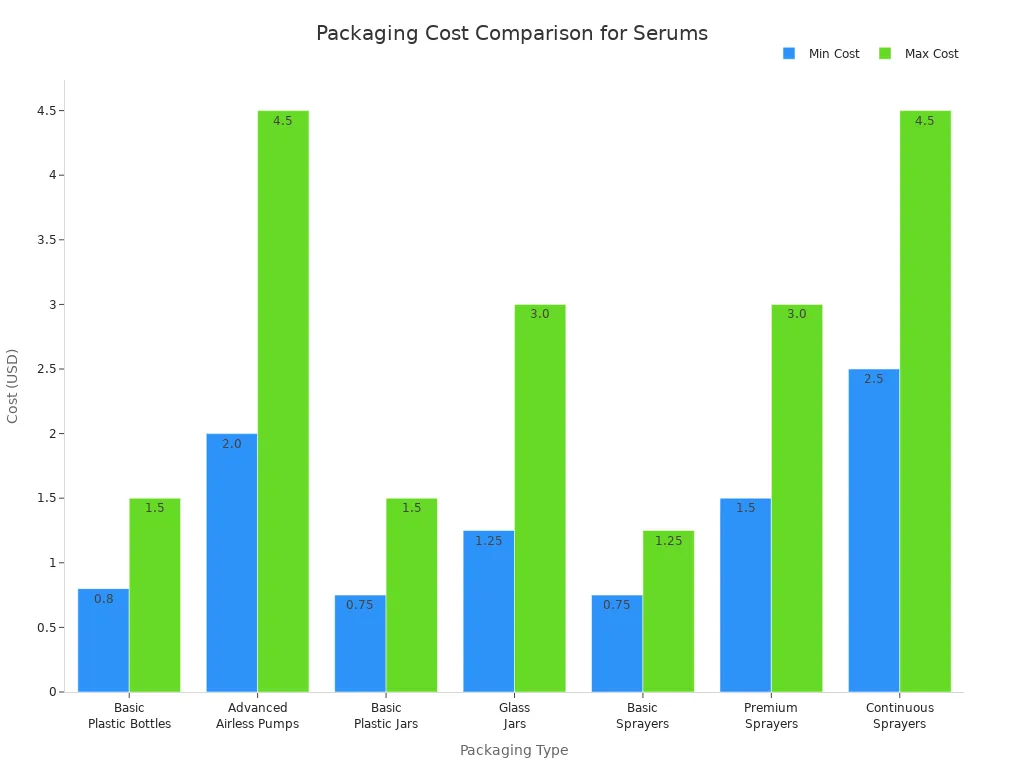
Here is a table that compares cost ranges for different packaging types:
| Packaging Type | Cost Range |
|---|---|
| Basic Plastic Bottles | $0.80 – $1.50 |
| Advanced Airless Pumps | $2.00 – $4.50 |
| Basic Plastic Jars | $0.75 – $1.50 |
| Glass Jars | $1.25 – $3.00 |
| Basic Sprayers | $0.75 – $1.25 |
| Premium Sprayers | $1.50 – $3.00 |
| Continuous Sprayers | $2.50 – $4.50 |
Note: Dropper bottles look professional and are not too expensive, so they are a smart pick for small batch serums.
Cosmetic tubes for creams
Cosmetic tubes are a smart choice for creams, cleansers, and sunscreens. You can fill and seal them fast, which helps you work quickly. Tubes keep your product safe from air and light, so active ingredients last longer. People like tubes because they are easy to use and keep the product clean.
- Tubes lower the risk of germs because you do not touch the product.
- You can control how much comes out, so you waste less.
- Tubes work for both new and high-end brands.
Tip: If you want to launch many SKUs or try new formulas, tubes give you speed and flexibility.
Jars for masks and balms
Jars are a classic pick for masks, balms, and thick creams. You can choose glass or plastic jars, depending on your brand’s green goals and shipping needs. Jars let you show off rich textures and special formulas. But you should think about hygiene and keeping your product safe. Tubes protect better from air and germs, but jars feel fancy and let you get creative with cosmetic packaging design.
Things that affect your choice between jars and tubes are:
- Hygiene and product safety
- How easy and nice they are to use
- If they can be recycled or reused
- How your brand looks and feels
Note: If you want to show off texture and luxury, jars are a good choice. If you need more safety and ease, tubes might be better for your small batch project.
In summary:
Pick your cosmetic packaging based on your product, your brand’s stage, and your growth plans. Airless bottles protect sensitive skincare. Dropper bottles are best for precise serums. Tubes are clean and flexible for creams. Jars show off luxury for masks and balms. Always think about your budget, your timeline, and the image you want for your brand.
Eco-friendly cosmetic packaging and refillable containers
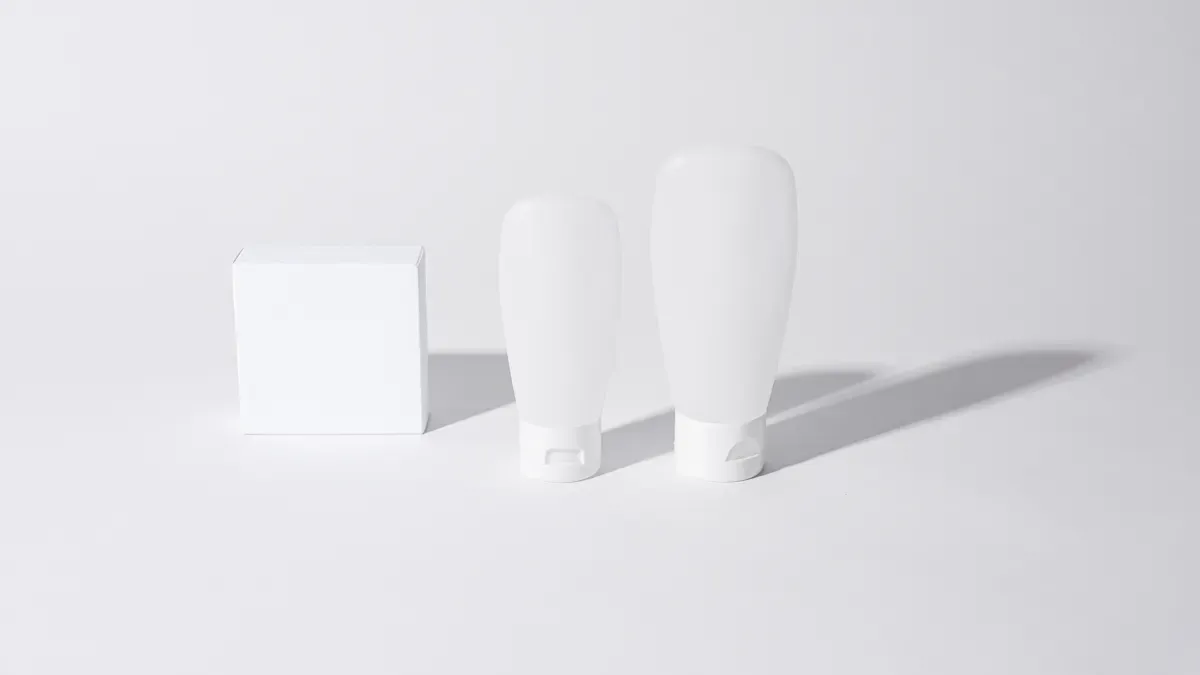
Sustainability is very important in cosmetic packaging today. Many brands and buyers want eco-friendly cosmetic packaging. They want to help the planet and make less waste. You can pick from many recyclable cosmetic packaging materials. There are also sustainable labeling options. These choices show your customers that you care about the Earth.
Sustainable materials: bamboo, glass, plastic
You have a few good choices for sustainable cosmetic packaging. Bamboo, glass, and recycled plastic are popular picks. Each one has its own price and benefits. You can see the differences in the table below:
| Packaging Type | Cost Range (per unit) |
|---|---|
| Plastic packaging | $0.30–$1.20 |
| Glass packaging | $0.80–$3.50 |
| Metal components | $1.00–$5.00 |
| Luxury packaging | $5.00–$15.00+ |
Bamboo and glass look fancy and can be used again. Recycled plastic costs less and still helps the planet. You can also use special labels to make your packaging unique.
Refillable cosmetic containers for small brands
Refillable cosmetic containers help you use less packaging. Many small brands use them to show they care about the planet. You can refill jars, bottles, or tubes instead of throwing them away. This helps the environment and makes customers want to come back.
There are some problems with refillable cosmetic containers:
- Sustainable materials and refill systems can cost more.
- You need to teach customers how to reuse containers.
- Cleaning and reusing packaging can be tricky.
- You might need to spend more on shipping and storage.
- It can be hard to find honest vendors for eco friendly cosmetic packaging.
- There are not always clear rules for what is sustainable packaging.
You can fix these problems by starting small. Work with suppliers who know about sustainable packaging.
Balancing sustainability and cost
You need to think about both cost and sustainability when you pick eco-friendly cosmetic packaging. Technology can help you save money. Pick materials that are strong and can be recycled. Many small brands buy in bulk and use refill systems to save money. You can also use biodegradable materials like kraft paper with PLA. These choices help you make less waste and protect the planet.
Tip: Pick packaging that is easy to recycle, can be used again, and helps the planet. This will help your brand grow and keep costs low.
Small changes can make a big difference. Choose eco-friendly cosmetic packaging, refillable cosmetic containers, and special labels. These steps help your brand and the environment.
Limited customization vs. full custom development
Standard packaging with custom decoration
When you start a small batch, keep it simple. Use standard packaging and add your own style. You can pick bottles, jars, or tubes that are already made. Then you add your logo, pick a color, or choose a special finish. This helps your products look professional without spending a lot. You also do not have to wait a long time.
Many small brands use limited customization like this:
- Custom cosmetic packaging for small batches is great for new brands or special launches.
- Special designs and labels help your brand get noticed.
- Custom cosmetic boxes can be ordered in small amounts, from 100 to 5,000.
This way, you can try out your ideas and not spend too much. You can keep your brand looking good and grow later without changing your packaging.
When to consider full customization
Full custom development means you design everything from the start. This can be exciting, but it costs a lot and is risky. For small batches, you need to pay for new molds, special machines, and design software. The table below shows some usual costs:
| Description | Cost |
|---|---|
| Initial capital expenditure (CAPEX) | $268,000 |
| Production equipment investment | $150,000 |
| Packaging design software | $15,000 |
| Cash expense for raw materials | $20,000 |
| Monthly operating expenses | $7,700 |
You should only pick full custom cosmetic packaging if you have lots of money, a product that sells well, and a plan to grow big. For most small batch brands, using standard containers with your own decoration is the best way. It gives you more choices, saves money, and is faster.
Procurement tips for small batch cosmetic packaging
MOQ and supplier selection
Pick suppliers who know what small batch buyers need. Check if they offer a low MOQ. Some let you mix colors or sizes in one order. Others let you try small batches or buy leftover stock in small amounts. Some suppliers have private label options or print on demand. You can get better deals if you pay a bigger deposit or share big orders with other brands.
| Criteria | Description |
|---|---|
| Customization Options | Ready-made bottles, jars, and tubes with label or print customization |
| Mixed Orders | Multiple colors or sizes within the same MOQ |
| Long-term Partnership | Lower MOQ for brands with growth potential |
| Upfront Deposit | Larger deposit may lower MOQ |
| Competitive Quotes | Contact several suppliers to negotiate better terms |
| Small-batch Trial Runs | Test production before full order |
| Simple Branding Methods | Simple branding helps keep MOQ low |
| Supplier Size | Smaller manufacturers are more flexible |
| Private Label Options | Ready-made packaging for startups |
| On-demand Printing | Digital printing reduces MOQ |
| Shared Bulk Orders | Share orders with other brands to lower MOQ |
| Excess Inventory | Buy leftover stock at lower MOQ |
| Packaging Brokers | Brokers connect you with flexible factories |
Sample confirmation and process stability
Always get samples before you order a lot. Fast samples help you check quality and design. Test the decoration on your real packaging. This makes sure color, print, and finish match on every item. To avoid problems, ask for samples from past small batch jobs. Good suppliers talk clearly and fix things fast.
Tip: Use simple branding for your first order. This keeps things easy and lowers mistakes.
Consistency for repeat orders
You want every batch to look the same. Use clear steps to keep picking and packing right. Barcode scanning helps you track each product. Organize your SKUs to cut down on errors. Real-time tracking helps you manage stock and plan ahead. Warehouse Management Systems can do tasks for you and keep orders steady as you grow.
Note: Consistent cosmetic packaging helps customers trust you and makes your brand stronger.
Common mistakes in small batch packaging projects
When you start a small batch packaging project, you want to avoid common mistakes that can slow you down or cost you money. Many new brands make the same errors. You can learn from these and keep your project on track.
Overcomplicating customization
You might think that a unique design will make your brand stand out. If you add too many custom features, you can run into problems. Complex designs increase costs and make production take longer. You may also face more errors and delays. The table below shows how complexity affects your project:
| Factor | Impact on Cost and Timeline |
|---|---|
| Design Complexity | Raises production costs and extends lead times. |
| Box Style Changes | Changes in style can increase costs and require new setups. |
| Quantity | Simple designs keep costs low; complex ones drive costs up. |
| Setup Fees | Extra setup steps add hidden costs. |
| Timeline Factors | More finishing steps and approvals can stretch timelines from weeks to months. |
Tip: Start with a simple design and focus on clear branding. You can always upgrade later as your brand grows.
Spreading budget across too many SKUs
If you split your budget over many SKUs, you can run into cash flow problems. High minimum order quantities (MOQs) tie up your money in unsold stock. You lose flexibility and cannot react quickly to market changes. Brands that start small and treat early batches as research can adjust faster and avoid waste.
- Spending too much on high MOQs can freeze your cash.
- Too many SKUs make it hard to manage inventory.
- Small, focused launches let you learn and improve.
Ignoring replenishment and series extension
You need to plan for future growth. If you do not think about replenishment or adding new products, you may face problems later. You might not match colors or finishes in new batches. You could struggle to extend your line if your packaging system is not flexible.
- Plan for repeat orders to keep your brand consistent.
- Choose packaging that allows for easy series extension.
- Work with suppliers who support both small and large orders.
Note: Careful planning helps you avoid costly mistakes and keeps your brand ready for growth.
Finding the right supplier for small batch production
Mature packaging solutions
You need a supplier who knows about small batch cosmetic packaging. Pick mature packaging solutions that fit your product and brand goals. A good supplier helps you pick materials that stop leaks or rust. They also help you find packaging that matches your brand, whether you want it fancy or simple. You should think about cost and eco-friendly choices. Think about how your products will ship and how people will use them.
Here are important things about mature packaging solutions:
- Pick materials that keep your product safe.
- Make sure the packaging style fits your brand.
- Balance price and being eco-friendly.
- Think about shipping and how people use it.
You can ask for simple designs, bright graphics, or packaging with QR codes to help your brand stand out.
Customization and sample support
Suppliers who help small batch buyers offer flexible choices and quick samples. You can choose from many decoration options, like digital printing for clear pictures or foil stamping for shiny logos. The table below shows common ways to customize:
| Customization Type | Description |
|---|---|
| Digital Printing | Fast, flexible, and great for small batches. |
| Foil Stamping | Adds a glossy, metallic look to logos and accents. |
| Embossing/Debossing | Creates texture and a premium feel. |
| UV Coating | Gives a shiny, protective finish. |
| Custom Structure | Tailored shapes and sizes for your needs. |
You should always get real samples before you order a lot. Try the packaging with your product. Ask your team or customers what they think. Change things if you need to. Only order a big batch when you are sure.
Scalability and partnership
A good supplier helps your brand grow. Look for partners who know your product type. They should follow safety rules and make sure your product works with the packaging. Good suppliers can handle bigger orders as you grow. They keep quality high and help you at every step.
| Supplier Attribute | Why It Matters |
|---|---|
| Category Experience | Knows your product’s needs |
| Regulatory Compliance | Meets safety and retail standards |
| Formula-to-Packaging Fit | Prevents leaks or product issues |
| Scalability | Handles growth without losing quality |
Oulete helps small batch brands with mature packaging, flexible choices, and good sample services. You can start small and order more as you grow. This lowers risk and helps you build a strong brand.
You get the best results when you choose stock cosmetic packaging with limited changes. This helps small brands save money, move fast, and keep a strong image. Focus on what your project needs now. Pick proven packaging types. Work with suppliers who help small brands grow. Oulete supports you with samples, custom decoration, and easy scaling.
FAQ
What is the best way to lower packaging costs for small batches?
- Pick stock packaging to save money.
- Do not add too many custom features.
- Buy only the amount you need.
- Ask suppliers about minimum order and sample choices.
How can you make sure your packaging supports brand growth?
Choose packaging that can grow with your brand. Start with basic shapes first. Add special decoration later as your brand gets bigger. Work with suppliers who help with both small and big orders.
Why should you confirm samples before placing a full order?
| Reason | Benefit |
|---|---|
| Check quality | No surprises with your order |
| Test decoration | Make sure colors always match |
| Review fit | Make sure your product fits |