


Airless pump bottles use a vacuum-driven piston to dispense cosmetic products without exposing them to air. According to an industry packaging test, vitamin C serum stored in airless containers oxidized at only 5% over six months, compared with over 40% in conventional open-cap bottles. The same source reported 0% microbial contamination in airless packaging over 28 days, versus 15% in traditional open containers.
These numbers point to a clear conclusion: for brands formulating with retinol, vitamin C, niacinamide, or preservative-free systems, airless packaging is a formulation-level decision that directly impacts shelf life and product efficacy.
At Oulete, we have manufactured airless pump bottles since 2017 from our production facility in Shaoxing, Zhejiang Province. This guide draws on our hands-on experience — 20 injection molding machines, dedicated spraying and electroplating lines, and an annual output of 20 million sets — to walk B2B buyers through the technical decisions involved in selecting, specifying, and sourcing airless cosmetic packaging.
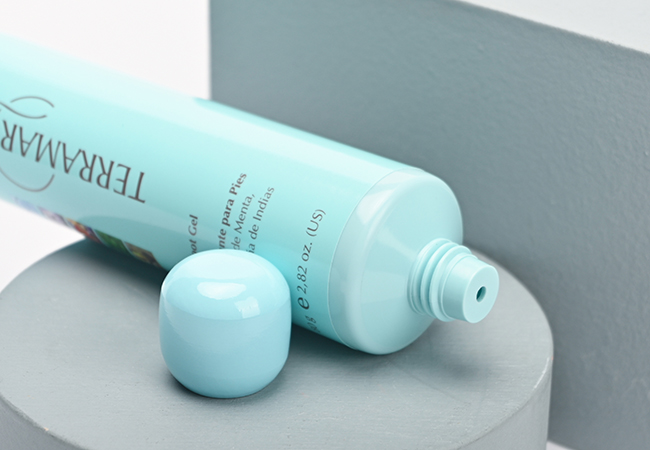
How Do Airless Pump Bottles Work?
Understanding the mechanism helps you make better sourcing decisions. Here is what happens inside an airless bottle each time a consumer presses the pump.
The Vacuum-Piston Mechanism
Traditional lotion pumps rely on a dip tube to draw product upward. Airless pump bottles replace the dip tube with an internal piston (or diaphragm) seated at the base of the cylinder. Each press of the pump head creates a vacuum that lifts the piston, pushing product toward the nozzle without allowing air to backflow into the container.
Three Advantages That Matter to Formulators
Near-complete evacuation. The piston physically pushes product upward, so there is no “dead zone” at the bottom. Industry estimates place the dispensing rate at 95% or higher, compared with dip-tube pumps that can leave 10–15% of product unreachable.
Oxygen exclusion. Because the piston continuously rises to fill the void left by dispensed product, no air pocket forms inside the bottle. This is critical for oxygen-sensitive actives like L-ascorbic acid (vitamin C), retinol, and peptides, which degrade rapidly when exposed to air.
Contamination barrier. The sealed system eliminates the air exchange that introduces airborne bacteria into the formula. Unlike jars that require users to dip fingers into product, or dropper bottles that draw air in with each use, airless pumps dispense product without direct contact. Research in cosmetic packaging science generally supports the finding that closed-system dispensing significantly reduces microbial ingress compared to open containers (see International Journal of Cosmetic Science and Packaging Technology and Science for relevant studies).
Oulete Internal Process: We test every airless pump batch for vacuum seal integrity on our production line. Each pump head undergoes cycle testing to verify consistent dispensing force and no air ingress over extended use. The piston-to-cylinder fit must be tight enough to hold vacuum yet loose enough to glide smoothly — achieving this balance is where injection molding precision and quality control matter most.
Which Products Need Airless Packaging?
Not every cosmetic formula justifies the cost of airless packaging. The technology delivers the greatest value for formulations that are sensitive to oxidation, contamination, or both.
Best Candidates for Airless Bottles
| Product Type | Why Airless Matters | Typical Capacity |
|---|---|---|
| Vitamin C serums | L-ascorbic acid oxidizes rapidly on air contact, losing potency within weeks in open containers | 15ml – 30ml |
| Retinol creams | Retinoids degrade under oxygen and light exposure, reducing anti-aging efficacy | 30ml – 50ml |
| Peptide complexes | Peptide-based formulas are susceptible to microbial degradation in open containers | 15ml – 30ml |
| Preservative-free formulas | Without chemical preservatives, microbial protection must come from the packaging itself | 15ml – 50ml |
| Foundation liquids & BB creams | Emulsion stability depends on consistent viscosity; air pockets accelerate separation | 30ml – 50ml |
| Eye creams | Small-dose, high-value products where waste reduction and hygiene are critical | 5ml – 15ml |
| Essence & ampoules | Concentrated actives require precise dosing and zero contamination per use | 5ml – 15ml |
When Standard Packaging Is Sufficient
Products that typically do not require airless technology include cleansers, body lotions, and shampoos — high-volume, lower-sensitivity formulas where standard pump or flip-cap bottles are more economical.
At Oulete, our airless bottle range covers capacities from 5ml to 200ml, with our most requested sizes being 15ml, 30ml, and 50ml for serums and treatment products, and 80ml–120ml for foundations and primers. See our full product catalog for available models.
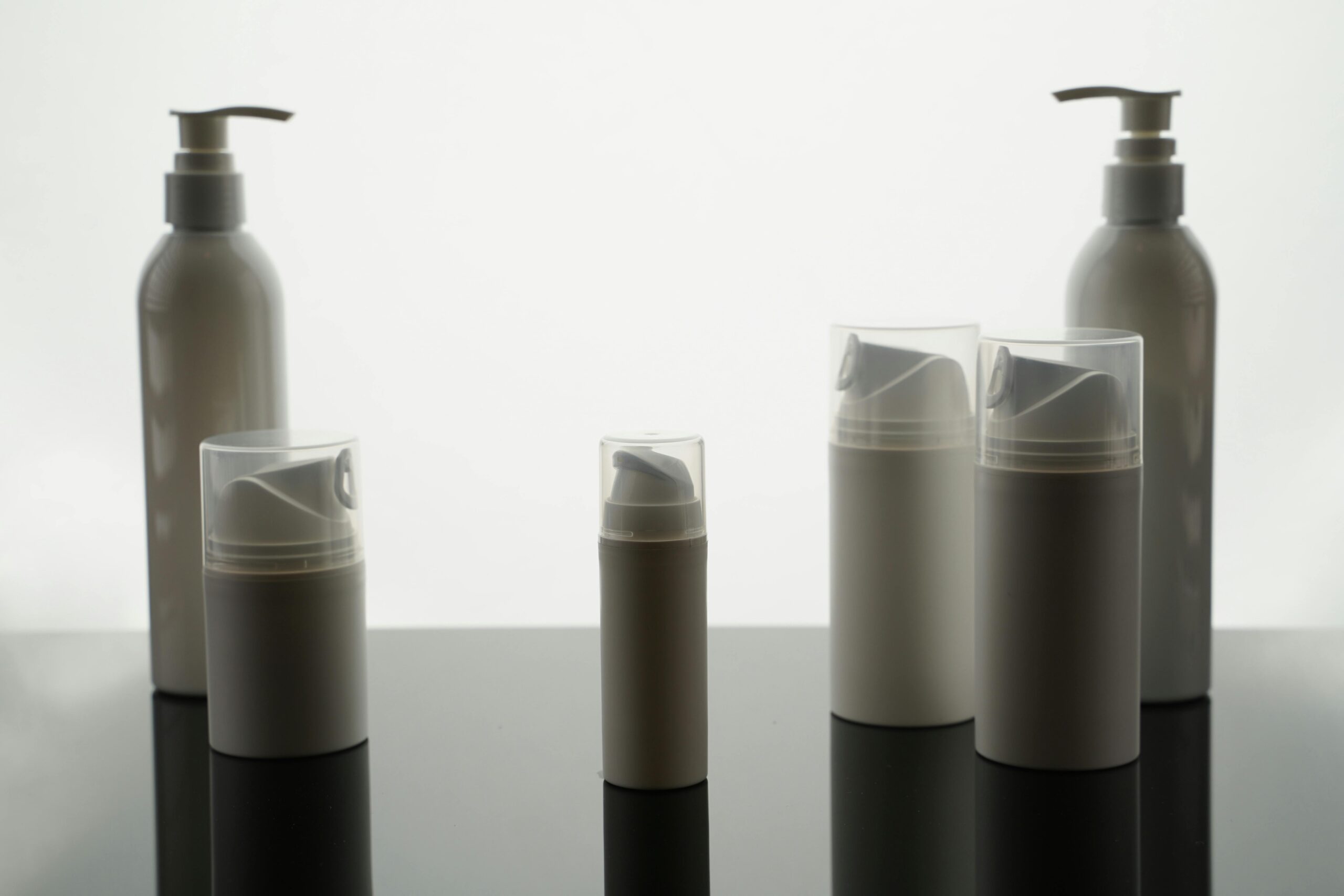
Choosing the Right Material: PP vs. PETG vs. Acrylic
Once you have confirmed that airless packaging suits your formula, the next decision is material. The choice affects chemical compatibility, visual impact, sustainability credentials, and landed cost.
Material Comparison Table
The following comparison is based on our production experience at Oulete (current as of 2026):
| Property | PP (Polypropylene) | PETG | Acrylic (PMMA) |
|---|---|---|---|
| Transparency | Translucent to opaque | High clarity, glass-like | Highest clarity |
| Chemical resistance | Excellent — compatible with most cosmetic formulas at typical use concentrations | Good — avoid high-concentration alcohol (>70%) | Moderate — sensitive to alcohol and acetone |
| Impact resistance | High | High | Lower — can crack on drop |
| Recyclability | Widely recyclable (#5 PP) | Recyclable in specialized streams | Limited recyclability |
| PCR availability | Yes — PCR-PP available | PCR-PET available; PCR-PETG emerging | Limited |
| Wall construction | Single-wall standard | Single-wall or double-wall | Typically double-wall (inner PP + outer acrylic) |
| Cost (relative) | ★☆☆ Most economical | ★★☆ Mid-range | ★★★ Premium |
| Best for | Everyday skincare, clinical brands | Premium serums, brand differentiation | Luxury and prestige lines |
Our Recommendation
For most B2B buyers, we recommend PP inner cylinders paired with your choice of outer shell material. The PP cylinder directly contacts the formula and offers the broadest chemical compatibility, while the outer shell (PP, PETG, or acrylic) controls shelf presence and brand perception.
This is the approach we use in our ZK-series airless bottles — models like ZK29, ZK31, ZK33, and ZK38 all feature PP inner construction with various outer finishes. For brands prioritizing PETG packaging, we also produce PETG blow-molded bottles (models PETG35, PETG41, PETG45) that pair with pump closures for a high-gloss, lightweight aesthetic.
Surface Treatment and Decoration Options
Raw injection-molded bottles rarely match a brand’s visual identity. Most orders require one or more surface treatments — and controlling these processes in-house is one of the key advantages of working directly with a manufacturer.
Available Processes at Oulete
All of the following are handled on-site at our Shaoxing facility (current equipment configuration as of 2026):
Spray coating — Matte, glossy, soft-touch, gradient, or frosted finishes applied via our automated spray line. We maintain dust-controlled booth conditions to prevent particle inclusion.
Electroplating — Metallic finishes (gold, silver, rose gold, chrome) applied through our dedicated electroplating line, with protective topcoats to prevent oxidation and fingerprint marks during consumer use.
Hot stamping — Foil application for logos, text, and decorative elements using our 4 hot stamping machines. We support gold, silver, holographic, and custom-color foils.
Silk-screen printing — Multi-color printing (up to 4 colors per pass) on our 10 printing presses, using UV-cured inks for durability and resistance to cosmetic formulas.
Color injection molding — Custom Pantone-matched colors mixed directly into the resin during injection. This produces a more consistent and durable color than spray coating, and is our recommendation for high-volume, single-color SKUs.
Procurement Tip: When requesting quotes, specify your decoration requirements upfront. A “30ml airless bottle” can range significantly in unit price depending on whether you need raw PP, single-color spray, or full electroplating + hot stamping + silk screen. We ask new clients to send a reference image or competitor sample so we can quote accurately from the first interaction.
Sustainability: PCR Options and Regulatory Landscape
Sustainability has moved from a marketing differentiator to a procurement requirement. If you are selling into the United States or Europe, here is what you need to know about recycled-content expectations and how they apply to cosmetic packaging.
U.S. Regulatory Direction
California’s Assembly Bill 793 (AB 793) sets PCR content mandates for plastic beverage containers: 15% by 2022, 25% by 2025, and 50% by 2030 (CalRecycle). These requirements currently target beverage packaging rather than cosmetic containers directly. However, major U.S. retailers — including Sephora, Ulta, and Target — are already applying similar PCR sourcing standards to beauty brands, which means the practical impact on cosmetic packaging procurement is real and growing.
EU Requirements
The EU Packaging and Packaging Waste Regulation (PPWR) is introducing mandatory recycled-content and recyclability requirements for plastic packaging placed on the EU market. Specific targets vary by packaging category and implementation timeline, so brands exporting to Europe should monitor updates from the European Commission as the regulation moves into enforcement.
Brand-Level Benchmarks
Leading beauty companies are setting aggressive PCR targets that cascade through their supply chains:
- L’Oréal targets 50% PCR plastic in packaging by 2025 (L’Oréal Sustainability Commitments)
- Estée Lauder plans 25%+ PCR incorporation (GreyB Report)
- Aveda already uses 80%+ PCR content in its HDPE bottles (GreyB Report)
What Oulete Offers: PCR Material Specifications
We supply airless bottles and cosmetic containers using PCR-PP, PCR-PE, and PCR-PET resins at adjustable blending ratios. Here are the specifications we currently support:
| Specification | Detail |
|---|---|
| PCR resin types | PCR-PP, PCR-PE, PCR-PET |
| Blending ratio | 10% to 50% PCR content by weight |
| Color impact | Slight gray or amber tint at higher PCR ratios; spray coating or color injection available to match target brand colors |
| Mechanical performance | Comparable drop-test and compression results to virgin resin at standard blending ratios |
| Documentation | Material COA (Certificate of Analysis) and traceability records provided per batch |
| Custom requirements | For PCR ratios above 50% or specific retailer compliance needs, contact us for technical consultation |
Oulete Internal Process: A common misconception is that PCR bottles look “recycled” or low-quality. At blending ratios up to 30–50%, PCR-PP is virtually indistinguishable from virgin material after spray coating or color injection. For higher PCR percentages, we recommend an opaque or frosted finish to achieve a premium shelf appearance.
The Sourcing Checklist: 5 Decisions Before You Order
Selecting an airless bottle involves more than picking a shape from a catalog. Here are the five technical decisions we walk every new B2B client through during the quoting process.
1. Match the Pump to Your Formula’s Viscosity
Thin serums require a standard-output pump with lower spring tension. Thick creams and foundations need a high-viscosity pump with stronger spring force and a wider dispensing channel.
Mismatching pump to product viscosity is one of the most common errors we see from first-time buyers — it results in either dripping (pump too strong for thin formula) or incomplete dispensing (pump too weak for thick formula).
2. Select Capacity from Stock Molds Where Possible
Our standard airless molds cover 5ml, 10ml, 12ml, 15ml, 20ml, 25ml, 30ml, 40ml, 50ml, 75ml, 80ml, 100ml, 120ml, 150ml, and 200ml. Using a stock mold reduces lead time compared to custom tooling, which requires additional weeks for mold development. For a detailed guide, see our article on how to choose the right airless bottle.
3. Plan Decoration Layers in Advance
Each decoration layer — spray coating, electroplating, hot stamping, silk screen — adds cost and production time. Plan the full decoration specification at the quoting stage so your supplier can provide an accurate unit price. We recommend starting with a sample order to evaluate finish quality before committing to mass production.
4. Specify Sustainability Requirements Upfront
If PCR content is required, the resin sourcing and color matching process differ from virgin material production. Let us know your PCR percentage target (10–50% available), any retailer-specific packaging requirements, and whether you need batch-level material traceability documentation.
5. Run Compatibility Testing Before Mass Production
Before committing to a full order, we strongly recommend a compatibility test where your filled formula sits in the target bottle under accelerated aging conditions — typically 40°C / 75% relative humidity for 8–12 weeks, following standard stability testing protocols (as outlined in ASTM packaging conditioning guidance). This identifies potential issues with piston swelling, pump clogging, discoloration, or formula separation. Exact shelf-life extension must be verified through formula-specific stability testing — no packaging supplier can guarantee a fixed number of additional months without testing your specific product.
Real-World Example: A U.S. indie skincare brand approached us for a 30ml airless bottle for their vitamin C + niacinamide serum. They initially requested an acrylic outer shell for a luxury appearance, but compatibility testing revealed that their formula (containing 15% L-ascorbic acid at low pH) caused micro-crazing on the acrylic after 8 weeks. We recommended switching to a PP outer shell with frosted spray coating, which passed the full 12-week stability test and achieved the same premium look at a lower unit cost. This is exactly the kind of issue that only surfaces through proper testing.
5 Common Mistakes When Sourcing Airless Bottles
After years of supplying skincare brands, contract fillers, and packaging traders, we have seen the same errors repeat. Here is how to avoid them:
Mistake #1: Skipping the formula compatibility test. Airless bottles interact with your formula differently than jars or tubes. The piston, pump mechanism, and inner cylinder all contact your product directly. We provide sample bottles for testing — use them before committing to bulk. Learn more about how airless bottles work.
Mistake #2: Choosing decoration before confirming the base bottle. Brands sometimes fall in love with a finish (e.g., matte black with gold hot stamp) before confirming that the bottle model suits their formula viscosity and fill volume. Start with function, then layer on aesthetics.
Mistake #3: Overlooking pump quality. The pump is the most technically critical component of an airless bottle. A low-quality pump fails after limited actuations, leaks, or delivers inconsistent doses. Ask any potential supplier about their pump testing protocol — if they cannot answer with specifics, that is a red flag.
Mistake #4: Underestimating MOQs for custom colors. Stock models in standard colors (white, clear, black) are available at our base MOQ of 1,000 units. Custom Pantone-matched spray colors require higher minimums due to spray line setup, color mixing, and quality calibration.
Mistake #5: Ignoring refillable design options. The refillable packaging trend is accelerating. Not all airless bottle designs support refilling — some are permanently sealed. If refillability matters to your brand or retail partners, specify this at the start. See our article on refillable airless pump bottles for which designs support this feature.
Frequently Asked Questions
Q: What is the minimum order quantity (MOQ) for airless pump bottles? A: Our MOQ starts at 1,000 units for stock models in standard colors. Custom mold development, Pantone color matching, or complex decoration may require higher minimums. Lead times are project-dependent — contact us with your project details for a specific quote.
Q: Can airless pump bottles hold liquid products like toners or essences? A: Yes. Airless technology works with viscosities ranging from water-thin essences to thick creams. The key is matching the pump specification to your formula’s viscosity. For a full overview, read our guide on what you can put in airless pump bottles.
Q: How much do airless bottles extend product shelf life? A: Airless packaging can meaningfully extend effective shelf life by reducing oxidation and microbial contamination. However, the exact improvement depends on your formula composition, preservative system, and storage conditions. No packaging supplier can promise a specific shelf-life extension without formula-specific stability testing.
Q: Do you provide OEM/ODM services? A: Yes. We offer full OEM (your design, our manufacturing) and ODM (our design library, your branding) services. Our in-house capabilities cover mold design, injection molding, blow molding, spray coating, electroplating, hot stamping, and silk-screen printing — all under one roof at our Shaoxing facility.
Q: What certifications does Oulete hold? A: Our facility has passed ISO 9001 quality management system certification, CE compliance testing, and SGS full testing. We provide material COA (Certificate of Analysis) and compliance documentation as required for your destination market. Visit our About Us page for current certification details.
Q: Why source from a manufacturer instead of a trading company? A: Working directly with a manufacturer like Oulete gives you control over material selection, production timelines, decoration quality, and pricing — without a middleman markup. When quality issues arise, you communicate directly with factory engineers who can diagnose and resolve problems quickly, rather than relaying messages through an intermediary.
About Oulete
Oulete is a high-end cosmetics packaging manufacturer established in 2017, located at No. 25, Majia Road, Ludong Industrial Estate, Shangyu, Shaoxing, Zhejiang Province, China.
Production capabilities (as of 2026): 20 injection molding machines, 1 automated spraying line, 1 electroplating line, 10 printing presses, and 4 hot stamping machines — with a combined annual output of 20 million sets.
Certifications: ISO 9001, CE, SGS full testing.
Core products: Airless pump bottles, PETG blow-molded bottles, cosmetic tubes, and PP/PETG jars — serving foundation, serum, essence, BB cream, CC cream, eye cream, and primer packaging applications.
Ready to source airless pump bottles for your brand? Contact our team for samples and a project consultation.
Sources and Further Reading
- SNPacks — “Why Do Most Skincare Products Tend to Use Airless Pump Bottles” (vitamin C oxidation and microbial contamination data): snpacks.com
- CalRecycle — California Plastic Recycled Content Requirements (AB 793): calrecycle.ca.gov
- European Commission — EU Packaging and Packaging Waste Regulation (PPWR): environment.ec.europa.eu
- GreyB — “5 Cosmetic Packaging Trends Steering a Sustainable Future” (L’Oréal, Estée Lauder, Aveda PCR targets): greyb.com
- International Journal of Cosmetic Science — Cosmetic formulation stability research: Wiley Online Library
- Packaging Technology and Science — Airless pump systems and packaging innovation: Wiley Online Library
- ASTM International — Standards for packaging testing and conditioning: astm.org
- Grand View Research — Global Cosmetic Packaging Market Report: grandviewresearch.com