


 The packaging industry is seeing a revolution with PCR plastic leading the way. Market projections show an impressive jump from $17.61 billion in 2023 to $47.48 billion by 2033 in the U.S. market. This move toward eco-friendly packaging options makes perfect sense, and with good reason too.
PCR materials (post-consumer recycled plastic) offer a sustainable alternative to traditional packaging. These materials come from recycled plastic that manufacturers collect and reprocess into resin to create new packaging. PCR packaging substantially reduces environmental damage compared to virgin material packaging. The numbers tell an impressive story – PCR cuts energy use by at least 79% compared to traditional packaging production. On top of that, it helps shrink our carbon footprint by cutting greenhouse gas emissions. Recent research shows that using 73-75% PCR materials in products saved roughly 636 metric tons of CO₂ emissions in just one year.
Our team has tracked PCR plastics’ development and their growing use in various industries. This piece will reveal PCR plastic’s hidden properties through detailed lab testing results. We’ll show how they stack up against virgin plastics and tackle the quality standardization challenges. These insights explain why major packaging companies have doubled their PCR usage from 2018 to 2021.
Understanding PCR Plastic and Its Composition

Image Source: PRM Taiwan
“”When we began our initial study over five years ago, we assumed that most goals would be developed for a broad portfolio of packaging formats and variety of materials and that we would be able to drill down into demand and supply curves for all those materials,”” — Rob Keith, Membership and Policy Director at AMERIPEN, leader in packaging sustainability and PCR research
PCR plastic is reshaping the scene of packaging materials. The PCR materials manufacturing process takes used consumer products through several stages to create new packaging solutions.
What is PCR plastic and how is it made?
PCR plastic comes from products that have completed their consumer lifecycle and would otherwise end up in landfills. Regular pre-consumer recycling processes manufacturing scraps, but PCR targets materials that consumers throw away.
The creation of PCR involves a multi-step process:
- Collection from recycling programs and consumer waste streams
- Sorting and separation by plastic type
- Full cleaning and removal of contaminants
- Processing through grinding, melting and extrusion
- Formation into pellets (also called regranulates) for manufacturing
This process gives plastics a new life after their original use. The PCR materials’ quality depends on how well sorting and cleaning work, since consumer waste often has food residue, spice stains, sticky labels, or other contaminants.
Common sources: PET, HDPE, and rHDPE
These three sources make up most PCR plastic:
PET (polyethylene terephthalate) – This clear, strong, lightweight plastic makes up over 90% of all plastic containers used and is universally accepted at recycling facilities. The United States recovers about 1.8 billion pounds of PET bottles and containers annually for recycling. Recycled PET becomes rPET or PET PCR resin, which works great for transparent packaging.
HDPE (high-density polyethylene) – This sturdy, opaque plastic found in milk jugs, laundry detergent bottles, and pipes is easy to recycle with roughly 30 million tons recycled yearly. Scientists recently studied 23 different HDPE resins (3 virgin, 20 PCR) to understand their performance better.
PP (polypropylene) – PP is a lightweight, durable plastic used in caps, straws, and food containers. More recycling streams now include it, though it gets less attention than PET or HDPE.
PCR plastic vs virgin and PIR plastic
PCR plastic is different from both virgin and PIR (Post-Industrial Recycled) plastics:
| Type | Origin | Quality/Consistency | Cost | Environmental Impact |
| PCR | Consumer waste | Variable, may contain contaminants | Generally higher than virgin plastic | Highest environmental benefit |
| PIR | Manufacturing waste | More consistent, cleaner | Often less expensive than PCR | Moderate environmental benefit |
| Virgin | Raw petrochemicals | Highly consistent, predictable properties | Variable based on oil prices | Highest environmental impact |
Virgin plastics have stable properties and consistent quality. PCR materials can vary between batches. Manufacturers often blend PCR with virgin materials to meet performance standards.
PIR plastic comes from industrial waste during production, such as cutting residues or production errors. Since companies recycle PIR directly in manufacturing facilities before reaching consumers, it offers more predictable quality but fewer environmental benefits than PCR.
PCR materials degrade with each recycling cycle. The long molecular chains in the plastic get shorter, like “taking a chain necklace, cutting some links, and putting it back together”. These structural changes affect material properties and explain why some applications can’t use 100% PCR content.
Testing Methodologies Used by Top Labs
Quality control for PCR plastic materials relies heavily on thorough laboratory testing. The best labs use advanced analytical techniques to measure hidden properties that determine how materials perform in real-life applications.
Thermal degradation analysis using TGA
Thermogravimetric Analysis (TGA) is a vital screening tool that evaluates PCR plastic stability. This method measures weight loss as temperature rises and reveals decomposition patterns unique to specific polymers. Lab tests show the temperature at which degradation begins drops with more recycling cycles. To name just one example, see LDPE testing with different catalyst loads, where the degradation temperature falls from 416.3°C in virgin material as catalyst percentages rise. TGA tests also help calculate crystallinity levels, which affect the material’s hardness, impact resistance, and transparency.
Color consistency testing under UV exposure
UV stability poses a significant challenge for PCR plastics, especially outdoors. Labs run accelerated UV chamber tests that mimic long-term sun exposure. Scientists test samples at 1,000 and 2,000-hour intervals. Lab* measurements help measure color changes after exposure, and calculated dE numbers show color stability. UV-VIS spectrophotometers check transmittance values against specified criteria. These tests matter because recycled polymers often lose their structural integrity after long sun exposure.
Mechanical strength testing: tensile and impact resistance
PCR plastics go through standardized mechanical tests to check their structural integrity. ASTM D638 tensile testing measures key properties like tensile strength, modulus, and elongation. Scientists use “dogbone” shaped specimens at tensile rates of 1-500 mm/min until they break. High-speed tensile tests provide valuable data about impact characteristics. Both PCR and virgin materials show higher tensile strength at faster test speeds.
Labs conduct tensile impact tests following ISO 8256 or ASTM D1822 standards to check impact resistance. These tests work great for flexible PCR materials that might be too thin for regular Charpy or Izod impact methods. Results help manufacturers predict how PCR packaging handles drops or sudden forces.
Contaminant detection using FTIR and GC-MS
Finding contaminants is crucial for PCR quality assessment. Fourier Transform Infrared Spectroscopy (FTIR) offers quick, non-destructive analysis of chemical functional groups. Small amounts of contaminants can be hard to detect. Gas Chromatography-Mass Spectrometry (GC-MS) combined with thermogravimetric analysis provides better contaminant identification. This combination lets labs analyze pyrolytic products and find specific compounds that might affect PCR plastic performance.
Food safety compliance: FDA and EFSA protocols
PCR materials used in food packaging must meet regulatory standards. FDA and EFSA have created protocols to ensure recycled plastics are safe. Migration studies confirm that potential contaminants stay below threshold levels. Some food contact applications need extra testing beyond standard protocols, especially with high-PCR-content materials.
Hidden Material Properties Revealed Through Testing

Image Source: Infinita Lab
Lab analysis has revealed several hidden properties of PCR plastic that affect its performance in applications of all types. These findings gave an explanation to manufacturers who want to optimize PCR material usage.
Microstructural changes after multiple recycling cycles
PCR plastic goes through major microstructural changes with each recycling cycle. The long molecular chains in the plastic get shorter—like in “taking a chain necklace, cutting some links, and putting it back together”. This molecular breakdown changes the material’s overall performance, though not always for the worse.
Scientists tested PHBV biocomposites through multiple processing cycles and learned that tensile strength stayed fairly stable, dropping only 1.8% after five recycling cycles. Notwithstanding that, the material became more brittle as stiffness went up and deformability went down. The repeated processing can sometimes improve certain properties because multiple cycles help spread fillers better and make the structure more uniform.
Effect of PCR percentage on transparency and hue
The amount of PCR content changes how the final product looks. PCR materials are usually less clear and often show a slight color tint—mostly greenish-brown or blue. You’ll notice these visual differences more as PCR content increases.
The needed reheating process to create PCR plastics changes color and clarity fundamentally. Many manufacturers limit PCR content to keep the look they want. To name just one example, a product with 25% PCR and 75% virgin resin looks more like a pure virgin bottle. On top of that, when products need higher PCR percentages, manufacturers can add dyes to hide color differences.
Residual stress and warping in molded PCR packaging
Residual stress—internal tension that stays after molding—is a vital challenge in PCR plastic manufacturing. We noticed this stress comes from uneven shrinkage and molecular orientation during processing. These stresses slowly relax over time and cause size changes in the molded product.
The uneven spread of residual stress throughout the product causes warping and distortion. This becomes a significant issue especially when you have products needing specific looks or dimensions. Surface defects like silver streaks might show up as residual stresses create tiny cracks or change how light bends through the material.
Barrier properties for moisture and oxygen
Barrier properties show how well PCR packaging blocks moisture and gas movement. Moisture vapor transmission rate (MVTR) and oxygen transmission rate (OTR) are the foundations of these measurements. These properties help keep products fresh and last longer.
MVTR shows how many grams of moisture pass through packaging material in 24 hours, while OTR measures oxygen movement in the same time. It’s worth mentioning that PCR content affects these barrier properties because recycled materials might have different crystallinity and molecular structure than virgin plastics.
Polymers with high crystallinity or more fillers usually let less gas through and have lower permeation rates. The tight packing of crystalline areas blocks gas molecules. So manufacturers must balance PCR content with barrier needs carefully, especially for products sensitive to moisture or oxygen.
Performance Comparison with Virgin and PIR Plastics
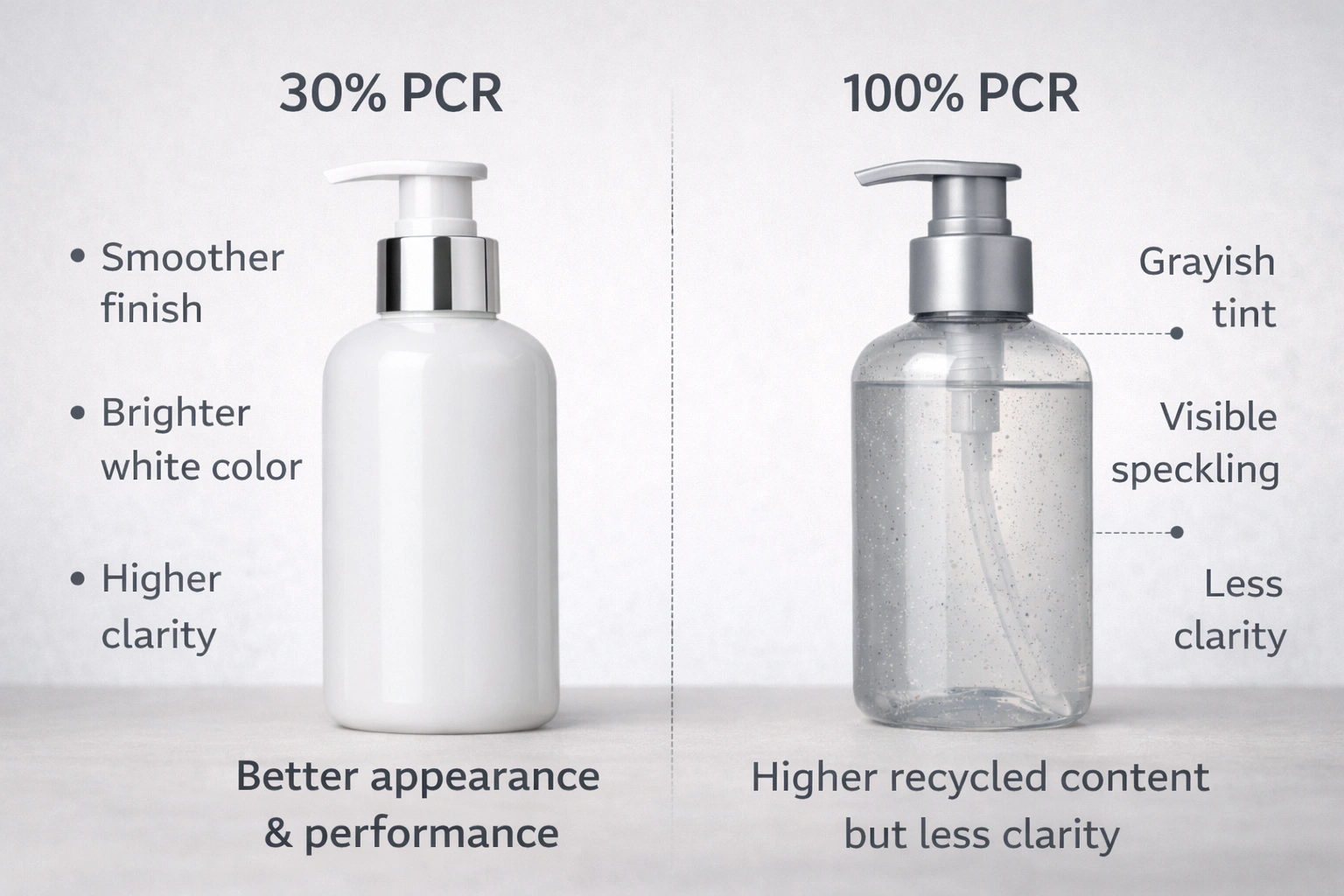
Image Source: Othilapak
A close look at PCR, virgin, and PIR plastic materials shows key differences in how they perform. These differences help determine the best uses for each type of material.
Tensile strength retention: PCR vs virgin resin
Tests show PCR plastics keep much of their tensile strength after recycling. Research on PCR polycarbonate with 50% and 75% recycled content managed to keep similar yield strength (~57 MPa) and maximum tensile strength (~70 MPa) as virgin materials with similar melt flow rates. Both PCR and virgin materials lost 10-13% of their strength after 500 hours of aging.
PE films with just 5% PCR showed tensile strength similar to virgin MDO films. This makes them good enough for premium packaging. PCR materials change slowly over time rather than failing suddenly.
Color stability in high-PCR vs low-PCR blends
Color consistency remains the biggest problem for PCR adoption. Recycled materials can show different shades from yellow to green or gray. Poor color mixing affects both how products look and how strong they are.
Blends with high PCR content show more color variation than those with less PCR. This happens because of contamination from inks, labels, and materials that can’t be recycled. Many companies avoid using PCR just because of how it looks, even though it works well enough.
Recyclability after multiple use cycles
PCR plastic degrades in predictable ways when processed multiple times. Polyethylene stays flexible even after six processing cycles. Polypropylene becomes more brittle and breaks much more easily after several cycles.
The mechanisms behind this involve polymer chains breaking into shorter pieces, which changes how the material behaves. This breakdown limits how many times we can recycle materials while keeping them useful.
Impact of additives and stabilizers on PCR durability
Stabilizers make PCR materials last much longer. Adding carbon black to recycled PE blends made them 180% more resistant to oxidation. Antioxidants help prevent oxidative degradation that leads to cracking and failure.
Adding just 3% compatibilizers boosted notched crack resistance by 16.7%. These additives help use PCR in high-end products instead of just low-value ones. The right stabilizers help companies use more PCR content while meeting tough performance standards.
Challenges in Standardizing PCR Quality Across Batches
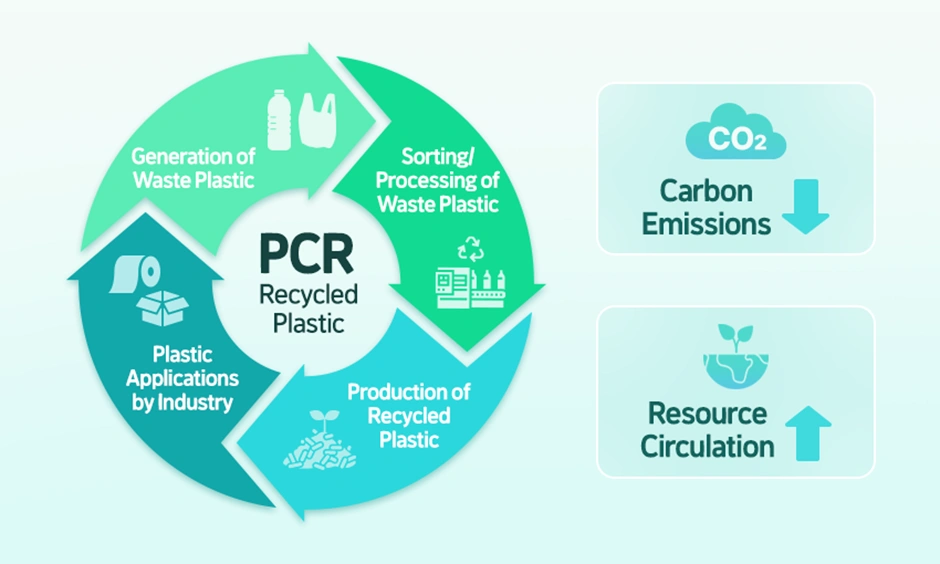
Image Source: Othilapak
“However, additional support—through stronger collection systems, clearer regulatory guidance, and greater investment in U.S. recycling infrastructure is essential to sustaining progress.” — Patrick Krieger, Senior Vice President of Sustainability and Policy at PLASTICS, expert in plastics recycling and PCR content
PCR plastic manufacturing faces tough challenges that affect quality consistency. Manufacturers need new ways to make their products more reliable.
Variability in feedstock and its effect on consistency
Consumer waste patterns change with seasons and this changes PCR feedstock makeup throughout the year. People throw away more beverage bottles in summer, while food packaging waste peaks during holidays. These changes lead to major variations in PCR makeup, including polymer types, contaminants, and molecular weight patterns. Changes in material makeup affect how it behaves during processing. This can cause warpage, phase separation, and surface finish problems. PCR mixtures with milk bottle grades make it harder to produce detergent bottles than PP caps do.
Limitations in achieving 100% PCR in closures and caps
Closures with high PCR content come with unique challenges. Recycled HDPE shows much lower environmental stress cracking resistance (ESCR), which limits its use in rigid packaging. Each recycling cycle makes polymer chains shorter and changes material properties. Additives, pigments, and multilayer blends add more complications to reuse.
Supply chain issues affecting PCR availability
Food-grade PCR remains scarce across the country. Companies report quality issues and higher costs compared to virgin resins. The U.S. lacks enough reclamation capacity to meet 2025 plastics packaging goals because collection rates are too low. Poor infrastructure makes it hard for industries to get enough supply.
Certification and traceability of PCR sources
Different PCR sources need different certification paths. Path 1 certification needs three testing batches for post-industrial regrinds. Path 2 requires five batches with more testing for post-consumer plastics. Quality PCR plastic production depends heavily on traceability. The Recycled Plastics Traceability Certification scheme checks both material sources and exact recycled content percentages. This certification matches standards EN 15343:2007 and ISO 22095:2020.
Conclusion
PCR plastics are reshaping sustainable packaging. The market shows this transformation with projections to grow from $17.61 billion in 2023 to $47.48 billion by 2033. In this piece, we tucked into these materials’ complex properties through lab testing and compared them to traditional virgin plastics.
The way PCR materials are made affects their performance by a lot. These materials change at a microscopic level after multiple recycling cycles. These changes alter their tensile strength, transparency, and overall durability. In spite of that, PCR plastics show surprising resilience through these transformations.
Lab results show PCR materials can keep substantial mechanical properties while being better for the environment. Thermal degradation analysis, color consistency tests, and mechanical strength evaluations point to PCR’s viability as a green alternative. Smart use of additives and stabilizers improves PCR material performance dramatically. This allows higher recycled content without quality loss.
Major challenges exist for wider PCR adoption. Feedstock variations create batch inconsistencies. Getting to 100% PCR content is tough, especially for closures and caps. Supply chain problems make it harder to get food-grade materials.
PCR plastics’ future depends on fixing these standardization issues. Quality control needs proper certification and traceability systems. Without doubt, more investment in collection systems and a strong infrastructure will help advance this field.
PCR plastics are more than just a trend – they show a basic transformation toward circular economy in packaging. Rigorous testing reveals their hidden properties, showing both limits and unexpected strengths. While perfect replacement of virgin plastics remains tough, PCR materials offer a real way to cut plastic waste and environmental impact in industries of all types.
Key Takeaways
Laboratory testing reveals that PCR plastics offer a viable sustainable alternative to virgin materials while maintaining surprising performance characteristics despite recycling challenges.
• PCR plastics retain 90%+ tensile strength after multiple recycling cycles, making them suitable for high-performance packaging applications despite molecular chain degradation.
• Advanced testing methods like TGA and FTIR are essential for quality control, revealing hidden properties that affect transparency, barrier performance, and structural integrity.
• Strategic additive use dramatically improves PCR durability – carbon black increases oxidative resistance by 180%, enabling higher recycled content without performance loss.
• Feedstock variability remains the biggest challenge for standardization, with seasonal waste fluctuations and contamination creating batch-to-batch inconsistencies.
• Certification and traceability systems following EN 15343:2007 and ISO 22095:2020 standards are crucial for verifying recycled content and ensuring quality control.
The PCR plastic market’s projected growth to $47.48 billion by 2033 reflects both the material’s proven capabilities and the industry’s commitment to circular economy principles, despite ongoing challenges in achieving consistent quality across all applications.
FAQs
Q1. Is PCR plastic safe for food packaging? PCR plastic can be safe for food packaging when it meets strict FDA guidelines. This involves a rigorous purification process to ensure the material is free from contaminants and suitable for food contact applications.
Q2. How does PCR plastic compare to virgin plastic in terms of strength? PCR plastics can retain over 90% of their tensile strength even after multiple recycling cycles. This makes them suitable for many high-performance packaging applications, though there may be some gradual changes in properties over time.
Q3. What are the main challenges in using PCR plastic? The biggest challenges include variability in feedstock quality, which can lead to inconsistencies between batches, and difficulties in achieving 100% PCR content for certain applications like bottle closures and caps. Supply chain issues and limited availability of food-grade PCR also pose challenges.
Q4. How is the quality of PCR plastic ensured? Advanced testing methods such as Thermogravimetric Analysis (TGA) and Fourier Transform Infrared Spectroscopy (FTIR) are used to assess PCR plastic quality. Additionally, certification and traceability systems following international standards help verify recycled content and ensure quality control.
Q5. What are the environmental benefits of using PCR plastic? Using PCR plastic significantly reduces energy consumption and greenhouse gas emissions compared to virgin plastic production. Manufacturing products from recycled PET, HDPE, and PP can save more electricity than is consumed annually in a large city like Los Angeles.