


You use airless pump bottles to keep your products fresh and easy to dispense. These bottles use a vacuum system with a moving piston or disc at the bottom. When you press the pump, the piston rises. This action pushes the product up without letting any air inside. You get a smooth, consistent amount every time, and your product stays protected from air.
Key Takeaways
- Airless pump bottles use a vacuum system. This keeps products fresh. It stops air from getting in. This helps active ingredients work well. These bottles give you the same amount each time. This cuts down on waste. You use almost every drop. The airtight design keeps your skincare safe. It stops contamination and oxidation. Airless bottles are great for sensitive ingredients. Vitamin C and retinol need extra care. Store airless bottles standing up. Tap the base gently before using. This helps push out the last bit. Pick airless pump bottles for your cosmetics. They keep ingredients stable and working longer.
How airless pump bottles work
Vacuum System Explained
When you use airless pump bottles, you rely on a special vacuum system to keep your product fresh and easy to use. This system creates a sealed environment inside the bottle. No air can get in, so your product stays safe from oxygen and germs. You do not see a dip tube like in regular pumps. Instead, the vacuum system pushes the product up from the bottom.
Here is how the vacuum system works step by step:
- The bottle stays sealed, so air cannot re-enter after you pump.
- When you press the pump, you create a small amount of air pressure inside.
- This pressure moves the product upward, not downward.
- The internal piston rises each time you use the pump.
- You get a measured dose every time, which helps prevent waste.
Tip: Airless pump bottles help you use almost every drop of your product. You do not have to worry about leftover cream or lotion stuck at the bottom.
This vacuum system also keeps your product isolated from the outside world. In lab tests, airless pump bottles kept more of the active ingredients, like retinol, compared to glass bottles. By keeping air out, these bottles help your product last longer and work better.
Piston and Disc Mechanism
The piston or disc at the bottom of the bottle is the key part of the airless system. When you press the pump, the piston moves up. This action pushes the product toward the nozzle and out of the bottle. The piston fits tightly inside the bottle, so no air can sneak in from below.
Here are some important facts about the piston and disc mechanism:
- The piston rises smoothly, making sure you get a steady flow of product.
- The tight seal keeps air out, which protects your product from oxidation and germs.
- The system works until almost all the product is gone, so you waste less.
You can see the engineering principles in action in the table below:
| Principle | Description |
|---|---|
| Atmospheric Pressure | Works with the pump to create a low-pressure state inside the bottle. |
| Precise Fit | The piston moves without leaks or friction, keeping the seal strong. |
| Vacuum Effect | Stops air from entering, so your product stays fresh and safe. |
Many skincare products need protection from air. Airless pump bottles help keep ingredients like vitamin C and retinol stable. By blocking air, the piston and disc mechanism keeps your product effective and safe to use.
Note: Airless pump bottles do not just keep air out. They also make sure you get the same amount of product every time you pump, so you do not use too much or too little.
Components of airless pump bottles
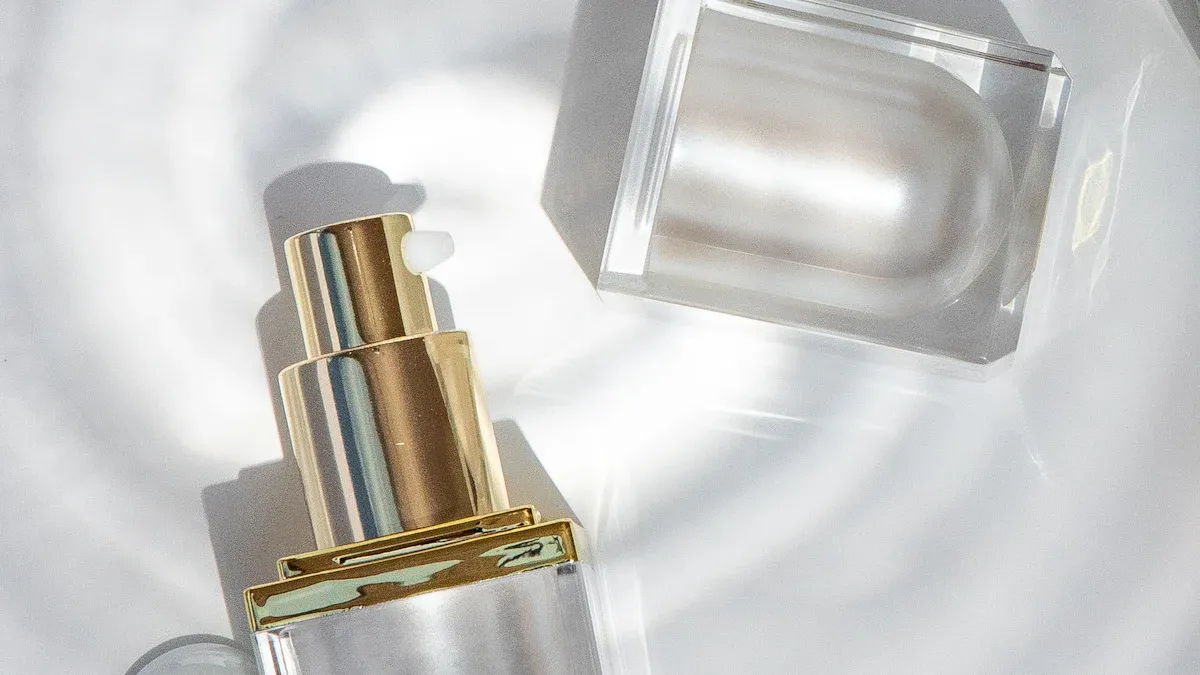
Airless pump bottles have a clever design. They keep your products safe and easy to use. Each part works together. This helps protect your formula. It also makes sure you use every last drop.
Pump and Nozzle
The pump and nozzle are at the top of the bottle. You press the pump to get the product out. The nozzle controls how much comes out each time. These parts use special materials. This keeps your product pure and safe. Here is a table that shows common materials and what they do:
| Material | Properties | Impact on Performance |
|---|---|---|
| Polypropylene | Chemical stability, corrosion resistance | Stops reactions with your cosmetics |
| Polyethylene | Oxidation and heat resistance | Keeps your product safe during use |
| Stainless Steel | High durability, contamination resistance | Maintains purity and prevents contamination |
You can use airless pump bottles for thick creams. They also work for serums or gels. The pump works well with thick products. It does not clog easily. You always get a smooth and controlled dose.
Internal Piston or Disc
Inside the bottle is a piston or disc. This part moves up as you use the product. The piston makes a vacuum chamber. It pushes the formula toward the nozzle. Air cannot get in. The airtight seal keeps your product fresh. It stops germs from entering. The piston helps you use almost all the product. This means you waste less.
- The piston makes a vacuum chamber inside the bottle.
- Each pump moves the piston up and pushes out the product.
- The airtight seal keeps the formula safe from air and light.
Sealed Container
The container holds all the parts together. It stays tightly sealed. This blocks out air and protects the ingredients. The design keeps your skincare or cosmetic products fresh. This lasts from the first pump to the last. You do not touch the product inside. This helps avoid contamination. The sealed container slows down bacteria growth. It also stops oxidation. Oxidation can ruin active ingredients like vitamins and antioxidants.
Tip: Most airless pump bottles use recyclable plastic. This makes them a smart choice for your skin and the environment.
Airless pump bottles vs. regular pumps
Operation Differences
When you look at airless pump bottles and regular pumps, you can see they work in different ways. Airless bottles use a vacuum system with a piston that moves up. Regular pumps have a dip tube that pulls the product from the bottom. The table below shows how each bottle works:
| Feature | Airless Bottles | Traditional Pump Bottles |
|---|---|---|
| Air Exposure | Minimal to none after initial priming | Significant air intake with each dispense |
| Product Integrity | High preservation of active compounds | Risk of oxidation and degradation |
| Contamination | Reduced risk of external microbial introduction | Higher risk of contamination |
| Product Waste | Nearly 100% product evacuation | Often leaves residual product |
Airless bottles let you use almost all the product inside. Regular pumps usually leave some product you cannot reach. Airless bottles keep air out, so your product stays fresh for a longer time.
Product Preservation
You want your skincare or makeup to last as long as possible. Airless pump bottles help protect important ingredients like vitamins and antioxidants. These bottles stop air from getting in. This means less oxidation and less damage to your product. Regular pumps let air in every time you use them. This can make your product weaker and spoil faster.
Tip: Pick airless bottles for products with sensitive ingredients. You will see better results and your product will last longer.
Usability
Airless bottles are easy to use. The pump gives you the same amount every time. You do not need to shake or turn the bottle upside down. You can use thick creams, gels, or serums without clogging. Regular pumps might clog or stop working when the bottle is almost empty. Airless bottles work until you use almost all the product. You waste less and get more for your money.
Note: Airless bottles also stop you from touching the product inside. This keeps your formula clean and safe.
Benefits of airless technology
Reduced Waste
You want to use every drop of your skincare or cosmetic product. Airless technology helps you do that. These bottles push the product up from the bottom, so almost nothing gets left behind. You do not need to scoop or shake the bottle. You get a steady amount each time you press the pump.
Here is a table that shows how much less product you waste with airless packaging:
| Packaging Type | Product Waste Reduction | Residue Left |
|---|---|---|
| Airless Pump Bottles | 18% | 2% |
| Traditional Jars | N/A | 15-20% |
You can see that airless bottles leave only about 2% of the product inside. Regular jars can leave up to 20%. This means you save money and get more value from your purchase.
Extended Shelf Life
You want your products to last longer and stay fresh. Airless technology helps with that. These bottles keep air and oxygen out. When you use the pump, no air enters the container. This design protects your creams and serums from oxidation. Oxidation can make active ingredients weaker or spoil them.
Airless pump bottles create a vacuum inside. The product moves up and out without letting air in. This keeps the formula strong and effective. You can trust that your sensitive ingredients, like vitamin C or retinol, will stay potent for a longer time.
Protection from Contamination
You care about safety and cleanliness. Airless technology gives you both. These bottles use a sealed system that stops germs and dirt from getting inside. You do not touch the product with your fingers, so you lower the risk of spreading bacteria.
- Airless bottles use a non-pressurized vacuum system.
- They prevent contact with air and reduce contamination risk.
- You get precise doses every time.
- These bottles work well for sensitive formulas.
You can use airless pump bottles for products that need extra care. They keep your skincare safe, clean, and ready to use.
Troubleshooting airless pump bottles
Pump Not Working
You may notice your airless pump bottle stops working or feels hard to press. This happens for several reasons. Sometimes, the bottle needs priming before it starts dispensing. You should press the pump slowly and repeatedly, usually 10 to 15 times, to build up pressure. Hold the bottle upright during this process. If the pump still does not work, gently tap the base to help the piston rise.
Many users report that the pump feels stiff or stops working after a few uses. Product residue around the pump head or a blocked nozzle can cause this. Clean the nozzle with a soft cloth to remove any buildup. Store your bottle at a stable temperature to prevent formula separation. Avoid overfilling the bottle, as this can make the pump stick.
Here is a quick troubleshooting table to help you solve common problems:
| Problem | What You Should Try |
|---|---|
| Pump not dispensing | Prime by pressing pump several times; tap base gently |
| Pump feels stiff | Clean nozzle and pump head; avoid overfilling |
| Uneven product flow | Shake bottle; store upright; check for blockages |
| Pump stops after a few uses | Repeat priming; inspect for defective seal |
Tip: Do not try to open the bottle. Airless pump bottles have a sealed design. Opening them can damage the mechanism.
Maximizing Product Use
You want to use every drop of your product. Airless pump bottles help you do this, but sometimes a small amount remains inside. To get the most out of your bottle, always store it upright. Tap the base gently before your final use. This helps the piston move up and pushes out the last bit of product.
If you notice the bottle stops dispensing before it looks empty, remember that the internal piston may have reached its maximum height. Some bottles have opaque designs, so you cannot see inside. Do not worry—airless bottles usually leave less than 2% of product behind.
You can follow these steps to maximize product use:
- Store the bottle upright.
- Tap the base gently before each use.
- Dispense slowly and steadily.
- Avoid shaking too hard, which can create air pockets.
Note: Some airless bottles are not designed for refilling. If you want a reusable option, look for bottles labeled as refillable.
You can enjoy fresh, clean, and long-lasting products by following these simple tips.
You get lots of good things with airless pump bottles.
- You get the same amount each time you use it.
- You can use the bottle sideways or upside down.
- This makes it simple and handy for you.
- The bottle keeps air and germs out.
- Your product stays fresh for a longer time.
- You use almost all the product, so you waste less.
Knowing how these bottles work helps you choose the best packaging.
It keeps your products safe and makes using them better.
FAQ
How do you prime an airless pump bottle?
You press the pump several times to build pressure. Hold the bottle upright. If nothing comes out, tap the base gently.
Tip: Priming helps the piston move up and start dispensing your product.
Can you refill airless pump bottles?
Most airless pump bottles are not designed for refilling. You should check the label for “refillable” before trying.
- Some brands offer refillable options.
- Regular bottles may break if you force them open.
Why does my pump stop working before the bottle is empty?
You may see the pump stop if the piston reaches its highest point. Some product may remain inside.
Note: Airless bottles usually leave less than 2% of product behind.
Are airless pump bottles safe for sensitive ingredients?
Yes, airless pump bottles protect sensitive ingredients like vitamin C and retinol. The sealed system keeps air and germs out.
🧴 Your product stays fresh and effective longer.